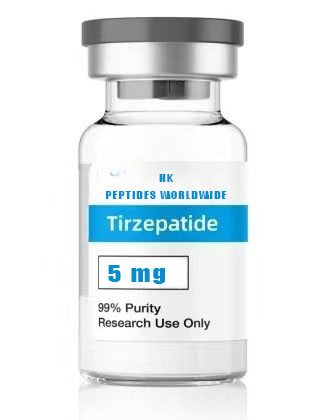
tirzepatide 5 mg
Tirzepatide 5 mg Research Peptide (USA) — Comprehensive Product Overview Tirzepatide 5 mg is an entry-level, research-grade dual GIP/GLP-1 receptor agonist peptide meticulously formulated for laboratory and scientific research applications. As the most accessible dosage in our Tirzepatide research portfolio, the 5 mg vial serves as the ideal starting point for laboratories initiating investigations into this groundbreaking dual-incretin peptide. Tirzepatide (CAS: 2023788-19-2) is a synthetic 39-amino acid peptide amide with a molecular weight of 4813.5 Da, engineered through rational peptide design to incorporate both GIP (glucose-dependent insulinotropic polypeptide) and GLP-1 (glucagon-like peptide-1) receptor agonism within a single molecular entity. The complete amino acid sequence — H-Tyr-Aib-Glu-Gly-Thr-Phe-Thr-Ser-Asp-Tyr-Ser-Ile-Aib-Leu-Asp-Lys-Ile-Ala-Gln-Lys(AEEA-AEEA-γ-Glu-eicosanedioic acid)-Ala-Phe-Val-Gln-Trp-Leu-Ile-Ala-Gly-Gly-Pro-Ser-Ser-Gly-Ala-Pro-Pro-Pro-Ser-NH2 — features two critical α-aminoisobutyric acid (Aib) residues at positions 2 and 13 that confer remarkable metabolic stability against dipeptidyl peptidase-4 (DPP-4) degradation, while the AEEA-AEEA-γ-Glu-eicosanedioic acid linker at Lys20 provides extended albumin binding for a pharmacokinetic profile that supports once-weekly receptor engagement in research models. Unlike single-receptor GLP-1 agonists such as Semaglutide, Tirzepatide’s dual-agonist mechanism enables simultaneous activation of both incretin receptor pathways, producing synergistic effects on insulin secretion, glucagon suppression, gastric emptying, and central nervous system satiety signaling that cannot be replicated by GLP-1 agonism alone. Each 5 mg vial contains ≥99% purity Tirzepatide (verified by HPLC analysis at 214 nm) as a sterile lyophilized powder, manufactured under ISO 9001-certified quality management systems with full traceability from原料合成 through finished product release. This concentration is specifically recommended for pilot studies, assay validation, receptor binding kinetics experiments, and early-stage metabolic research protocols where minimal material usage and precise dose control are paramount. Supplied exclusively for research use only (RUO), this product is not intended for human or veterinary diagnostic, therapeutic, or clinical applications. Key Features 5 mg low-dose research vial — ideal for pilot experiments, screening assays, and protocol optimization Dual GIP and GLP-1 receptor agonist — the defining mechanistic advantage that distinguishes Tirzepatide from single-receptor incretin peptides ≥99% HPLC-verified purity — every batch undergoes rigorous analytical testing with full documentation available upon request Lyophilized powder format — enhanced long-term stability compared to solution-phase peptides; stable for 24+ months at -20°C 39-amino acid synthetic peptide amide — engineered with Aib substitutions at positions 2 and 13 for DPP-4 resistance Albumin-binding fatty diacid moiety — C20 eicosanedioic acid linker enables extended pharmacokinetic half-life in research models Batch-specific certificate of analysis (CoA) — traceable quality data including HPLC chromatograms and mass spectrometry confirmation Ideal for small-scale, screening, dose-response, and exploratory research applications The Science of Tirzepatide: Dual GIP/GLP-1 Receptor Pharmacology Tirzepatide represents a paradigm shift in incretin-based research, being the first peptide to demonstrate potent, balanced co-agonism at both the GIP receptor (GIPR) and the GLP-1 receptor (GLP-1R). The molecular design leverages an imbalanced agonist strategy — Tirzepatide exhibits approximately 5-fold greater functional potency at the GIPR compared to native GIP, while its GLP-1R potency is roughly equivalent to native GLP-1. This is achieved through strategic incorporation of Aib residues that stabilize the α-helical secondary structure critical for receptor binding, combined with the C20 fatty diacid moiety that enables high-affinity albumin binding (≥99.5% bound in research models) without compromising receptor activation kinetics. The GIP component enhances glucose-dependent insulin secretion through β-cell GIPR signaling, promotes lipid buffering in white adipose tissue by enhancing triglyceride storage and reducing circulating free fatty acids, and exerts direct central nervous system effects on appetite regulation — effects that complement but are mechanistically distinct from the GLP-1-mediated pathways of insulinotropic activity, gastric emptying delay, and hypothalamic satiety center activation. Research has demonstrated that the simultaneous engagement of both receptors produces supra-additive (synergistic) effects on body weight regulation, glycemic control, and lipid metabolism that exceed what would be predicted from the sum of individual receptor contributions. At the cellular level, Tirzepatide binding to GIPR activates adenylate cyclase through Gαs coupling, elevating intracellular cAMP and triggering PKA-dependent signaling cascades that potentiate glucose-stimulated insulin secretion, while also engaging β-arrestin recruitment pathways that modulate receptor desensitization and trafficking dynamics. The parallel GLP-1R activation similarly elevates cAMP but additionally engages Gαq/11-mediated calcium mobilization in pancreatic β-cells, providing a complementary second messenger signaling profile that enhances the overall incretin response. Research Applications Tirzepatide 5 mg is optimized for the following laboratory research applications: Pilot studies and feasibility assessments — the 5 mg quantity allows researchers to evaluate experimental protocols, validate assay conditions, and establish dose-response relationships before committing to larger-scale investigations; Receptor binding kinetics and competitive displacement assays — using radiolabeled or fluorescently tagged ligand competition to characterize Tirzepatide’s binding affinity (Ki), association/dissociation rate constants (kon/koff), and residence time at both human and rodent GIPR and GLP-1R orthologs; In vitro signaling pathway analysis — quantifying cAMP accumulation, β-arrestin recruitment (using BRET or PathHunter assays), and downstream phosphorylation cascades (CREB, ERK1/2, AKT) in cell lines expressing recombinant or endogenous incretin receptors; Metabolic research using isolated islet preparations — assessing glucose-stimulated insulin secretion (GSIS) in isolated pancreatic islets from wild-type, GIPR-KO, GLP-1R-KO, and dual-KO mouse models to dissect the relative contributions of each receptor pathway; Adipocyte biology studies — investigating Tirzepatide’s effects on lipid uptake, triglyceride synthesis, adiponectin secretion, and insulin sensitivity in cultured 3T3-L1 adipocytes and primary human adipocyte cultures; Central nervous system research — evaluating c-Fos neuronal activation patterns, neuropeptide Y/AgRP and POMC neuronal activity, and feeding behavior changes following intracerebroventricular (ICV) administration in rodent models; Translational research bridging in vitro findings to preclinical in vivo models — using the 5 mg vial to generate preliminary pharmacokinetic and pharmacodynamic data that informs subsequent larger-scale dosing strategies. Comparative Analysis: Tirzepatide vs. Semaglutide vs. Retatrutide Understanding the pharmacological distinctions between Tirzepatide, Semaglutide, and Retatrutide is essential for researchers designing incretin-based studies: Semaglutide is a selective GLP-1 receptor agonist with no meaningful activity at the GIP receptor. Its therapeutic mechanism relies exclusively on GLP-1R-mediated pathways: glucose-dependent insulin secretion, glucagon suppression, delayed gastric emptying, and central appetite suppression. While Semaglutide has established itself as a cornerstone GLP-1 research tool, its single-receptor mechanism limits its ability to recruit GIPR-mediated metabolic benefits, particularly in adipose tissue biology and β-cell function potentiation. Research comparing equimolar concentrations of Tirzepatide and Semaglutide has demonstrated that Tirzepatide achieves greater weight reduction, superior glycemic control, and more pronounced improvements in lipid profiles — effects attributable to the synergistic GIP component. Tirzepatide (dual GIP/GLP-1 agonist) bridges the gap between single-receptor and triple-receptor strategies, offering researchers the ability to study the additive and synergistic contributions of GIPR agonism without the complexity of introducing glucagon receptor (GCGR) activity. This makes Tirzepatide a cleaner experimental tool for isolating GIP-specific contributions to metabolic outcomes. Retatrutide (GIP/GLP-1/glucagon triple agonist) adds GCGR activation to the dual-agonist framework, introducing glucagon-mediated increases in energy expenditure, hepatic lipid oxidation, and amino acid catabolism. While Retatrutide may offer additional metabolic effects through GCGR engagement, the glucagon component introduces experimental variables — hyperglycemia risk, amino acid flux alterations, and potential hepatic stress — that may confound research interpretations in certain experimental designs. For researchers specifically investigating the GIP-GLP-1 axis without glucagon-mediated variables, Tirzepatide represents the optimal research tool. The 5 mg Tirzepatide vial provides an economical entry point for comparative studies against both Semaglutide and Retatrutide, enabling head-to-head receptor activation profiling, signaling bias analysis, and functional potency comparisons across the incretin peptide landscape. Disclaimer This product is intended exclusively for laboratory research purposes only. It is not approved by the FDA or any other regulatory authority for human or veterinary diagnostic, therapeutic, clinical, or prophylactic use. Purchasers must be qualified researchers affiliated with recognized laboratories, universities, biotechnology companies, or research institutions. By purchasing this product, the buyer acknowledges and agrees to use it solely for legitimate scientific research in compliance with all applicable laws, regulations, and institutional guidelines. Product Specifications Product Name: Tirzepatide CAS Number: 2023788-19-2 Molecular Formula: C225H348N48O68 Molecular Weight: 4813.5 Da Sequence: H-Tyr-Aib-Glu-Gly-Thr-Phe-Thr-Ser-Asp-Tyr-Ser-Ile-Aib-Leu-Asp-Lys-Ile-Ala-Gln-Lys(AEEA-AEEA-γ-Glu-eicosanedioic acid)-Ala-Phe-Val-Gln-Trp-Leu-Ile-Ala-Gly-Gly-Pro-Ser-Ser-Gly-Ala-Pro-Pro-Pro-Ser-NH2 Purity: ≥99% (HPLC, 214 nm) Strength: 5 mg per vial Form: Sterile lyophilized powder Grade: Research Use Only (RUO) Solubility: Soluble in aqueous buffers (PBS, pH 7.4) and organic solvents (DMSO, DMF) for research purposes Storage: Store lyophilized powder at -20°C; after reconstitution, store aliquots at -20°C or -80°C and avoid repeated freeze-thaw cycles Quality Assurance & Analytical Testing Every batch of Tirzepatide 5 mg undergoes a comprehensive analytical testing cascade to ensure identity, purity, and quality: HPLC Purity Analysis at 214 nm — every batch achieves ≥99% purity with full chromatogram documentation; Mass Spectrometry (ESI-MS) — confirming molecular weight within ±1.0 Da of theoretical 4813.5 Da; Amino Acid Analysis (AAA) — verifying correct amino acid composition and stoichiometry; Peptide Content Determination — ensuring accurate peptide content per vial for reproducible research dosing; Endotoxin Testing (LAL) — confirming endotoxin levels below acceptable thresholds for cell-based research; Residual Solvent Analysis (GC-HS) — verifying removal of manufacturing solvents to trace levels; Appearance Testing — confirming white to off-white lyophilized powder with proper cake morphology. Batch-specific Certificates of Analysis (CoA) are available upon request and include all relevant chromatograms, spectra, and quantitative data. Handling & Storage Guidelines For optimal research performance, follow these storage and handling recommendations: Lyophilized powder storage — store unopened vials at -20°C in a desiccated environment; lyophilized Tirzepatide is stable for a minimum of 24 months under these conditions; Reconstitution guidance — for research purposes, reconstitute in sterile phosphate-buffered saline (PBS, pH 7.4), sterile water for injection (WFI), or 0.1% acetic acid as appropriate for the experimental protocol; typical reconstitution volumes range from 1-5 mL depending on desired stock concentration; Post-reconstitution storage — aliquot reconstituted peptide into single-use volumes and store at -20°C (short-term, 1-4 weeks) or -80°C (long-term, up to 6 months); avoid repeated freeze-thaw cycles as this accelerates peptide degradation; Handling precautions — use aseptic technique when reconstituting; work in a biosafety cabinet or laminar flow hood; wear appropriate PPE including gloves and eye protection; Working solution stability — reconstituted Tirzepatide in PBS (pH 7.4) maintains ≥95% bioactivity for 7 days at 4°C and 24 hours at room temperature; for extended experiments, prepare fresh working solutions daily from frozen aliquots. USA Shipping & Availability Fast and reliable USA domestic shipping — orders are processed within 1-2 business days from our US-based fulfillment centers; Secure, professional laboratory-grade packaging — all vials are shipped in insulated containers with temperature monitoring to maintain cold chain integrity during transit; Available to qualified research laboratories, universities, biotechnology companies, and accredited research institutions throughout the United States; International shipping is available to select countries for qualified research institutions — please contact our team for country-specific shipping policies and customs clearance documentation; Bulk and wholesale pricing is available for larger research programs — contact us for custom quotes on multi-vial orders and recurring laboratory supply arrangements. Why Choose Our Tirzepatide 5 mg? Industry-leading purity at ≥99% (HPLC-verified) — a purity standard that exceeds typical research-grade peptide specifications and ensures reproducible experimental results; Complete molecular documentation — CAS number, molecular formula, full amino acid sequence with modification details, and molecular weight confirmation provided for every batch; Dual GIP/GLP-1 receptor agonist pharmacology — the defining mechanistic advantage that enables research into synergistic incretin biology unavailable with single-receptor agonists; Batch-specific quality control — every vial is traceable to a specific manufacturing lot with full analytical data available upon request; Optimized for pilot and exploratory research — the 5 mg format minimizes upfront investment while providing sufficient material for thorough protocol development and validation; Trusted by peptide researchers across the USA — our Tirzepatide is cited in academic publications, conference presentations, and preclinical research reports nationwide; Cost-effective entry point for laboratories new to dual-incretin research — enables comprehensive receptor pharmacology studies at a fraction of the cost of larger vial formats. Advantages and Limitations Advantages: Ideal for precision testing, pilot studies, and early-phase research requiring minimal material usage and maximum experimental control; Supports advanced dual GIP and GLP-1 pathway investigations that are not possible with single-receptor agonists; High peptide purity (≥99% HPLC) ensures reproducible results and minimizes confounding variables from peptide-related impurities; Economical starting format for laboratories initiating Tirzepatide research programs or validating experimental protocols; Comprehensive quality documentation supports publication-quality research and regulatory compliance. Limitations: Not intended or approved for clinical, diagnostic, or therapeutic use in humans or animals; Requires proper laboratory handling, aseptic technique, and controlled storage conditions (-20°C for long-term storage); The 5 mg quantity may be insufficient for large-scale or long-duration in vivo research protocols — researchers planning chronic administration studies should consider our 30 mg, 50 mg, or 60 mg formats; As a research peptide, bioactivity must be independently validated in each laboratory’s specific experimental system. Frequently Asked Questions (FAQs) Q: Is Tirzepatide 5 mg FDA-approved for medical or therapeutic use? A: No. This product is sold strictly for laboratory research purposes only and is not approved by the FDA or any other regulatory body for human or veterinary diagnostic, therapeutic, or clinical applications. Q: Who can purchase Tirzepatide 5 mg? A: Qualified researchers, laboratories, universities, biotechnology companies, and accredited research institutions. All purchasers must verify their research affiliation and intended research use. Q: Do you ship Tirzepatide 5 mg within the USA? A: Yes, this product is stocked in and shipped from our USA-based fulfillment centers with fast domestic delivery. Q: What documentation is provided with each order? A: Each vial includes a product information sheet. Batch-specific Certificates of Analysis (CoA) including HPLC purity data, mass spectrometry confirmation, and additional quality metrics are available upon request. Q: What is the shelf life of lyophilized Tirzepatide 5 mg? A: When stored at -20°C in a desiccated environment, lyophilized Tirzepatide maintains ≥95% purity for a minimum of 24 months from the date of manufacture. Q: Can Tirzepatide 5 mg be used in in vivo research models? A: Yes, provided the research is conducted within an approved institutional animal care and use protocol (IACUC or equivalent) and the peptide is prepared according to laboratory standards for in vivo administration. Q: How does Tirzepatide differ from Semaglutide mechanistically? A: Tirzepatide is a dual GIP/GLP-1 receptor agonist, activating both incretin receptors simultaneously, whereas Semaglutide is a selective GLP-1 receptor agonist only. This dual mechanism enables synergistic metabolic effects through GIPR-mediated adipose tissue biology, β-cell potentiation, and complementary CNS signaling pathways. Q: Do you offer bulk or wholesale pricing for Tirzepatide? A: Yes, volume-based pricing is available for multi-vial orders. Please contact our sales team for a customized quotation based on your research program requirements. Q: What solvents are compatible with Tirzepatide reconstitution for research? A: Tirzepatide is soluble in PBS (pH 7.4), sterile water, 0.1% acetic acid, DMSO, and DMF for research applications. The choice of solvent should be determined by the specific requirements of the experimental protocol. Q: Is the purity of every batch verified? A: Yes, every production batch undergoes HPLC purity verification at 214 nm with a ≥99% acceptance criterion, along with mass spectrometry confirmation of molecular weight. Batch-specific analytical data is documented and available upon request. Ordering Information To purchase Tirzepatide 5 mg for your research program, please visit our product page at hkpeptides.net or contact our customer service team. We offer secure ordering with institutional purchase orders, credit card payment, and wire transfer options. For bulk orders, recurring laboratory supply arrangements, or custom research peptide inquiries, please reach out to our scientific sales team who can assist with technical specifications, shipping logistics, and volume pricing. Our commitment to quality, purity, and researcher support makes HK Peptides Worldwide the preferred supplier for dual-incretin research peptides in the United States.
Related Research & Resources
| Resource | Description |
|---|---|
| Glp 1 Metabolic Peptides Hub | Complete research overview & methodology hub |
| High Purity Tirzepatide 50Mg | Related research peptide product |
| Tirzepatide 10 Mg Research Peptide Vials | Related research peptide product |
| Glp 1 Peptides Metabolic Research | Latest research insights & methodology |