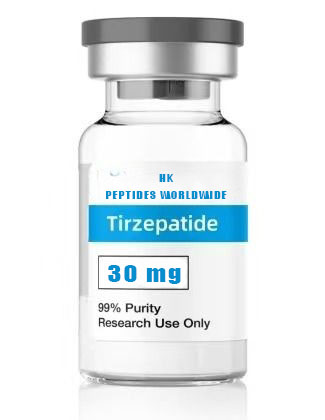
tirzepatide 30 mg
Tirzepatide 30 mg Research Peptide (USA) — Comprehensive Product Overview Tirzepatide 30 mg is a premium research-grade dual GIP/GLP-1 receptor agonist peptide engineered for laboratories conducting mid-scale preclinical research programs requiring substantial material quantities for chronic administration studies, multi-cohort experimental designs, and comprehensive pharmacological investigations spanning weeks to months. The 30 mg dosage represents a strategic intermediate between cost-conscious screening quantities and bulk research formats — providing sufficient material for extended in vivo studies in rodent models (8-16 animals over 4-8 weeks) while maintaining per-dose economics that support grant-funded academic research budgets. Tirzepatide (CAS: 2023788-19-2, MW: 4813.5 Da) is a 39-amino acid synthetic peptide amide whose dual-receptor pharmacology — simultaneous potent agonism at both GIPR and GLP-1R — has established it as the reference standard for dual-incretin research. The molecular architecture — H-Tyr-Aib-Glu-Gly-Thr-Phe-Thr-Ser-Asp-Tyr-Ser-Ile-Aib-Leu-Asp-Lys-Ile-Ala-Gln-Lys(AEEA-AEEA-γ-Glu-eicosanedioic acid)-Ala-Phe-Val-Gln-Trp-Leu-Ile-Ala-Gly-Gly-Pro-Ser-Ser-Gly-Ala-Pro-Pro-Pro-Ser-NH2 — incorporates DPP-4-resistant Aib residues (positions 2, 13), an extended pharmacokinetic C20 fatty diacid-albumin binding moiety (Lys20), and a peptide backbone optimized through iterative structure-activity relationship studies to achieve the imbalanced dual agonism (5-fold GIPR super-agonism, balanced GLP-1R agonism) that defines its unique pharmacological fingerprint. For mid-scale research programs, the 30 mg vial is the workhorse format: it delivers enough material for chronic dosing paradigms (daily or thrice-weekly administration over 6-8 weeks), enables parallel treatment arms (vehicle, low-dose, high-dose, comparator), supports terminal tissue harvest for comprehensive ex vivo analyses, and provides reserve material for dose verification and pharmacokinetic sampling — all from a single, analytically verified production lot. The ≥99% HPLC purity specification, verified for every batch with complete chromatographic and mass spectrometric documentation, ensures that observed biological effects are attributable to Tirzepatide and not to peptide-related impurities that accumulate with extended dosing. Each vial is produced under ISO-certified quality systems with full raw material traceability and batch-specific Certificates of Analysis. Supplied strictly for research use only (RUO). Key Features 30 mg mid-scale research vial — the workhorse format for chronic in vivo studies, multi-arm experimental designs, and extended-duration pharmacological investigations Dual GIP and GLP-1 receptor agonist — synergistic dual-incretin mechanism enabling comprehensive metabolic, cardiovascular, and neurological research ≥99% HPLC-verified purity — every batch tested at 214 nm with complete analytical documentation Lyophilized powder for extended stability — 24+ month shelf life at -20°C under desiccated storage DPP-4-stabilized peptide backbone — Aib residues at positions 2 and 13 confer enzymatic resistance for sustained in vivo bioactivity Extended pharmacokinetic albumin binding — C20 eicosanedioic acid moiety enables once-daily to thrice-weekly dosing in rodent models Complete quality documentation — HPLC, MS, AAA, endotoxin, and residual solvent testing data Ideal for chronic dosing studies, multi-cohort metabolic phenotyping, cardiovascular research, and CNS feeding behavior investigations The Science of Tirzepatide: Tissue-Specific Effects of Dual Incretin Agonism The 30 mg format is particularly valuable for research programs investigating the tissue-specific effects of dual GIP/GLP-1 receptor agonism across extended treatment durations. The distribution of GIPR and GLP-1R across metabolically relevant tissues creates a complex pharmacological landscape that requires sustained exposure to fully characterize: Pancreatic islets — both GIPR and GLP-1R are expressed on β-cells, where Tirzepatide’s dual agonism produces synergistic enhancement of glucose-stimulated insulin secretion. Chronic Tirzepatide exposure promotes β-cell survival through PI3K/AKT and ERK1/2 anti-apoptotic signaling, enhances insulin biosynthesis (proinsulin gene transcription, translation, and processing), and may promote β-cell proliferation through cAMP/PKA/CREB-mediated cyclin D1 expression. The 30 mg quantity enables longitudinal assessment of β-cell mass and function over 4-8 week treatment periods. Adipose tissue — GIPR expression in white adipose tissue mediates Tirzepatide’s effects on lipid storage (enhanced LPL activity and triglyceride uptake), adiponectin secretion (improved systemic insulin sensitivity), and reduced pro-inflammatory cytokine release (TNF-α, IL-6, MCP-1). These GIPR-mediated adipose effects are not recapitulated by GLP-1R-selective agonists, representing a key differentiating pharmacological feature. Liver — while hepatocyte GLP-1R expression is debated, GIPR is functionally expressed on hepatocytes where Tirzepatide’s effects include reduced de novo lipogenesis (via SREBP-1c suppression), enhanced fatty acid oxidation (PPARα activation), and improved hepatic insulin sensitivity (reduced hepatic glucose production). The net effect is a reduction in hepatic steatosis that exceeds what GLP-1R agonism alone achieves. Brain — both GIPR and GLP-1R are expressed in hypothalamic nuclei (ARC, PVN, DMH) and brainstem regions (AP, NTS) that regulate feeding behavior. Tirzepatide’s dual activation of these circuits produces coordinated suppression of orexigenic (NPY/AgRP) and stimulation of anorexigenic (POMC/CART) neuronal populations, resulting in sustained reductions in food intake. Cardiovascular system — emerging research indicates GIPR and GLP-1R expression in cardiac tissue, vascular endothelium, and immune cells, suggesting Tirzepatide may have cardiovascular effects beyond metabolic improvements. The 30 mg format supports investigation of these tissue-specific mechanisms. Research Applications Tirzepatide 30 mg is optimized for: Chronic in vivo dosing studies — 4-8 week treatment paradigms in diet-induced obese (DIO) mice, ob/ob and db/db genetic models, and ZDF rats for comprehensive metabolic phenotyping; Multi-arm experimental designs — vehicle control, low-dose Tirzepatide, high-dose Tirzepatide, and comparator arms (Semaglutide, Retatrutide, or other incretin peptides) from a single lot; Glucose homeostasis assessments — serial IPGTT, OGTT, ITT, and hyperinsulinemic-euglycemic clamp studies across the treatment timeline; Body composition trajectory analysis — longitudinal QMR or DEXA measurements of fat and lean mass changes during chronic Tirzepatide treatment; Food intake and energy expenditure — metabolic cage assessments at multiple time points during treatment to capture temporal dynamics; Terminal tissue harvest — comprehensive ex vivo analyses including islet isolation for GSIS, hepatic lipid quantification and histology (H&E, Oil Red O), adipose tissue depot characterization, and brain c-Fos immunohistochemistry for neuronal activation mapping; Molecular profiling — tissue RNA-seq, proteomics, and metabolomics from chronically treated animals to identify Tirzepatide-responsive pathways. Comparative Analysis: Tirzepatide vs. Semaglutide vs. Retatrutide in Chronic Studies For chronic administration studies, the pharmacological profiles of incretin peptides have practical implications for experimental design: Semaglutide — chronic GLP-1R-selective agonism produces sustained reductions in food intake and body weight, with the magnitude of weight loss typically plateauing after 3-4 weeks in rodent studies as compensatory mechanisms engage. The absence of GIPR-mediated adipose tissue effects limits improvements in lipid profiles and adipose insulin sensitivity. Semaglutide serves as an essential GLP-1R-only control in chronic studies designed to attribute metabolic improvements specifically to GLP-1R activation. Tirzepatide — chronic dual agonism produces weight loss trajectories that continue beyond Semaglutide plateaus, with greater cumulative reductions in fat mass, superior glycemic improvements, and enhanced lipid profiles. The 30 mg vial supports 4-8 week chronic studies that capture these differential temporal dynamics. The synergistic GIP component prevents or delays the compensatory reductions in energy expenditure that accompany GLP-1R-mediated weight loss, resulting in greater net negative energy balance. Retatrutide — chronic GCGR engagement adds glucagon-mediated energy expenditure and hepatic effects, potentially producing even greater weight loss. However, chronic GCGR activation raises concerns about hyperglucagonemia-associated α-cell hyperplasia, amino acid catabolism with potential muscle wasting, and sustained increases in hepatic glucose production that may complicate glycemic endpoints. Tirzepatide’s dual mechanism avoids these GCGR-related variables. Disclaimer This product is intended exclusively for laboratory research purposes. Not FDA-approved for human or veterinary clinical, diagnostic, or therapeutic use. Purchasers must be qualified researchers at recognized institutions. Use only for legitimate scientific research in compliance with all applicable laws and institutional guidelines. Product Specifications Product Name: Tirzepatide CAS Number: 2023788-19-2 Molecular Formula: C225H348N48O68 Molecular Weight: 4813.5 Da Sequence: H-Tyr-Aib-Glu-Gly-Thr-Phe-Thr-Ser-Asp-Tyr-Ser-Ile-Aib-Leu-Asp-Lys-Ile-Ala-Gln-Lys(AEEA-AEEA-γ-Glu-eicosanedioic acid)-Ala-Phe-Val-Gln-Trp-Leu-Ile-Ala-Gly-Gly-Pro-Ser-Ser-Gly-Ala-Pro-Pro-Pro-Ser-NH2 Purity: ≥99% (HPLC, 214 nm) Strength: 30 mg per vial Form: Sterile lyophilized powder Grade: Research Use Only (RUO) Solubility: PBS (pH 7.4), 0.1% acetic acid, DMSO, DMF for research Storage: Lyophilized: -20°C; Reconstituted: aliquot, -20°C or -80°C, avoid freeze-thaw Quality Assurance & Analytical Testing HPLC Purity (214 nm) — ≥99%; ESI-MS — MW within ±1.0 Da; Amino Acid Analysis — correct composition; Peptide Content — accurate mass/vial; Endotoxin (LAL) — quantified; Residual Solvents (GC-HS) — ICH Q3C; Appearance/Solubility/pH — verified; Batch CoA available upon request. Handling & Storage Guidelines Lyophilized: -20°C, 24+ months; Reconstitution: sterile PBS pH 7.4 or appropriate vehicle; Post-reconstitution: aliquot, -20°C (4 weeks) or -80°C (6 months), avoid freeze-thaw; Working solutions: prepare fresh daily; In vivo: sterile, pyrogen-free preparation, aseptic technique, IACUC approval required. USA Shipping & Availability Fast USA domestic shipping (1-2 business day processing); Cold-chain insulated packaging; Professional discreet packaging; Available to qualified US institutions; International shipping for qualified institutions; Bulk/wholesale pricing available — contact sales. Why Choose Our Tirzepatide 30 mg? Workhorse format for mid-scale research — supports chronic dosing, multi-arm studies, and comprehensive tissue analyses from one vial; ≥99% HPLC purity with full analytical traceability; Dual GIP/GLP-1 mechanism enabling synergistic metabolic research; Complete documentation — CAS, sequence with modifications, MW, purity; Batch-specific CoA available; Trusted by US academic, biotech, and pharma researchers; Competitive pricing with institutional volume discounts. Advantages and Limitations Advantages: Ideal for chronic in vivo studies (4-8 weeks, 8-16 animals); Dual agonism captures synergistic GIP-GLP-1 biology; High purity for publication-quality data; Single-lot consistency across extended studies; Comprehensive analytical documentation. Limitations: Not for clinical/therapeutic use; IACUC approval required for in vivo work; Requires cold storage and aseptic handling; For very large cohorts or longer studies, consider 50 mg or 60 mg formats. Frequently Asked Questions (FAQs) Q: FDA-approved? A: No. Research use only. Q: Who can purchase? A: Qualified researchers at accredited institutions. Q: USA shipping? A: Yes, fast domestic. Q: Suitable for chronic studies? A: Yes, 30 mg supports 4-8 week rodent studies with multi-arm designs. Q: Purity? A: ≥99% HPLC, every batch. Q: vs. Semaglutide? A: Dual GIP/GLP-1 vs. GLP-1R-only; Tirzepatide achieves greater weight loss and glycemic improvements. Q: Storage? A: -20°C lyophilized; aliquot reconstituted, -20°C/-80°C. Q: Shelf life? A: 24+ months lyophilized. Q: Bulk pricing? A: Yes, contact sales. Q: CoA available? A: Yes, batch-specific upon request. Ordering Information Visit hkpeptides.net to order. Purchase orders, credit cards, wire transfers accepted. Contact scientific sales for technical questions, bulk quotes, or custom projects. HK Peptides Worldwide — advancing dual-incretin research.
Related Research & Resources
| Resource | Description |
|---|---|
| Glp 1 Metabolic Peptides Hub | Complete research overview & methodology hub |
| High Purity Tirzepatide 50Mg | Related research peptide product |
| Tirzepatide 10 Mg Research Peptide Vials | Related research peptide product |
| Glp 1 Peptides Metabolic Research | Latest research insights & methodology |