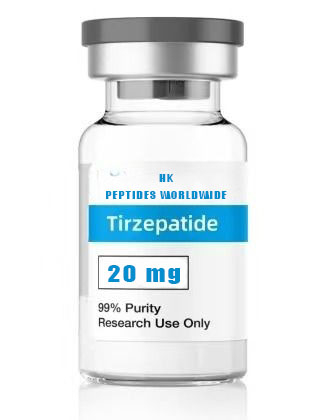
tirzepatide 20 mg
Tirzepatide 20mg Metabolic Research Peptide — Comprehensive Product Overview Tirzepatide 20 mg is a high-purity research-grade dual GIP/GLP-1 receptor agonist peptide specifically formulated for metabolic research applications requiring robust material quantities for in vitro metabolic assays, ex vivo tissue experiments, and short-term in vivo metabolic phenotyping studies. The 20 mg dosage represents a versatile mid-range format that bridges the gap between screening quantities and bulk research vials — providing sufficient material for comprehensive metabolic research protocols while maintaining cost-effectiveness for individual investigator-initiated studies. Tirzepatide (CAS: 2023788-19-2, MW: 4813.5 Da) is a 39-amino acid synthetic peptide amide that has transformed incretin research through its unique dual-receptor pharmacology: potent agonism at both the glucose-dependent insulinotropic polypeptide receptor (GIPR) and the glucagon-like peptide-1 receptor (GLP-1R). The complete sequence — H-Tyr-Aib-Glu-Gly-Thr-Phe-Thr-Ser-Asp-Tyr-Ser-Ile-Aib-Leu-Asp-Lys-Ile-Ala-Gln-Lys(AEEA-AEEA-γ-Glu-eicosanedioic acid)-Ala-Phe-Val-Gln-Trp-Leu-Ile-Ala-Gly-Gly-Pro-Ser-Ser-Gly-Ala-Pro-Pro-Pro-Ser-NH2 — features the signature molecular elements that define Tirzepatide pharmacology: Aib residues at positions 2 and 13 providing DPP-4 resistance through N-terminal stabilization, and the C20 eicosanedioic acid moiety conjugated via a dual AEEA-γ-Glu linker at Lys20 delivering extended pharmacokinetics through high-affinity (≥99.5%) reversible albumin binding. For metabolic researchers, the 20 mg format is particularly valuable because it provides sufficient material for comprehensive metabolic phenotyping — including glucose tolerance tests (GTT), insulin tolerance tests (ITT), metabolic cage assessments (indirect calorimetry, activity monitoring, food intake measurement), and terminal tissue collection for ex vivo analyses (isolated islet insulin secretion, adipose tissue lipolysis assays, hepatic lipid quantification, and skeletal muscle glucose uptake measurements) — in rodent cohorts of 8-12 animals over 2-4 week study durations. Each vial contains ≥99% HPLC-verified Tirzepatide as a sterile lyophilized powder, manufactured under ISO-certified quality management with complete raw material traceability, batch-specific analytical documentation, and Certificates of Analysis available upon request. This product is supplied exclusively for research use only (RUO). Key Features 20 mg metabolic research vial — the versatile mid-range format optimized for comprehensive in vivo metabolic phenotyping and ex vivo tissue experiments Dual GIP and GLP-1 receptor agonist — synergistic dual-incretin mechanism enabling investigation of coordinated metabolic regulation ≥99% HPLC purity — every batch analytically verified with chromatogram and mass spectrometry documentation Lyophilized powder for maximum stability — 24+ month shelf life at -20°C under desiccated conditions DPP-4-resistant peptide engineering — Aib substitutions at positions 2 and 13 for enzymatic stability in biological matrices Extended-duration albumin binding — C20 fatty diacid moiety enables once-weekly dosing intervals in preclinical models Ideal for metabolic phenotyping, glucose homeostasis, lipid metabolism, and energy balance research Applications from in vitro metabolic assays through short-term in vivo metabolic studies The Science of Tirzepatide: Dual GIP/GLP-1 Receptor Pharmacology in Metabolic Research Tirzepatide’s unique contribution to metabolic research lies in its ability to simultaneously engage two incretin receptor systems that regulate complementary aspects of energy metabolism. GIP receptor activation enhances insulin secretion in a glucose-dependent manner, promotes lipid uptake and storage in white adipose tissue (reducing circulating free fatty acids and ectopic lipid deposition), improves β-cell function and survival through anti-apoptotic signaling, and exerts direct central nervous system effects on feeding behavior. GLP-1 receptor activation complements these effects through glucose-dependent insulin secretion, glucagon suppression (reducing hepatic glucose output), delayed gastric emptying (slowing nutrient absorption), and activation of hypothalamic and brainstem satiety circuits. The metabolic consequences of this dual activation are profound and synergistic. In preclinical metabolic research models, Tirzepatide has demonstrated: enhanced glucose disposal during glucose tolerance testing that exceeds the sum of individual GIPR and GLP-1R contributions; greater reductions in food intake and body weight compared to GLP-1R agonism alone; improved hepatic insulin sensitivity as measured by hyperinsulinemic-euglycemic clamp studies; reduced hepatic steatosis through combined effects on de novo lipogenesis suppression and enhanced fatty acid oxidation; increased adipose tissue insulin sensitivity with improved adiponectin secretion and reduced pro-inflammatory adipokine profiles; and preservation of β-cell function under glucolipotoxic stress conditions. The 20 mg format is specifically designed to support the metabolic research workflow: sufficient material for dose-ranging pilot studies to establish optimal dosing paradigms, followed by comprehensive metabolic phenotyping in the main experimental cohort — all from a single vial. This eliminates the variability introduced by lot-to-lot differences when multiple vials are required and ensures consistent pharmacological exposure throughout the experimental timeline. Research Applications Tirzepatide 20 mg is optimized for metabolic research applications including: Glucose homeostasis studies — intraperitoneal and oral glucose tolerance tests (IPGTT, OGTT), insulin tolerance tests (ITT), and pyruvate tolerance tests (PTT) in diet-induced obese (DIO) and genetic obesity rodent models; Comprehensive metabolic phenotyping — indirect calorimetry (oxygen consumption/VO2, carbon dioxide production/VCO2, respiratory exchange ratio/RER), ambulatory activity monitoring, food and water intake quantification using metabolic cage systems; Body weight and body composition analysis — longitudinal body weight tracking, quantitative magnetic resonance (QMR) or DEXA-based body composition (fat mass, lean mass, fluid) assessments during Tirzepatide treatment; Ex vivo tissue analyses — glucose-stimulated insulin secretion in isolated islets, lipolysis and lipogenesis assays in isolated adipocytes, hepatic triglyceride quantification and lipidomics, skeletal muscle glucose uptake (2-deoxyglucose) assays; Molecular and biochemical endpoints — tissue qPCR and Western blot for metabolic gene and protein expression, plasma hormone profiling (insulin, glucagon, GLP-1, GIP, leptin, adiponectin, FGF21), plasma lipid panels and liver enzyme measurements; β-cell biology — islet isolation and ex vivo functional assessment, β-cell mass quantification by immunohistochemistry, proliferation (Ki67) and apoptosis (TUNEL) analyses; Energy balance dissection — pair-feeding studies to distinguish weight loss from reduced food intake vs. increased energy expenditure; comparative assessment of Tirzepatide vs. Semaglutide effects on energy metabolism. Comparative Analysis: Tirzepatide vs. Semaglutide vs. Retatrutide for Metabolic Research In the metabolic research context, the pharmacological differences between incretin peptides translate directly to experimental outcomes: Semaglutide — as a GLP-1R-selective agonist, Semaglutide reduces body weight primarily through decreased food intake (appetite suppression, delayed gastric emptying) with modest effects on energy expenditure. It does not engage GIPR-mediated adipose tissue metabolism or β-cell potentiation. In comparative metabolic studies, Tirzepatide consistently produces greater weight loss, superior glycemic improvements, and more favorable lipid profiles than Semaglutide at matched doses. These differences are directly attributable to the GIP component. Tirzepatide — the dual GIP/GLP-1R mechanism produces coordinated effects on both energy intake (GLP-1R-mediated satiety) and energy metabolism (GIPR-mediated adipose tissue function, lipid handling, and insulin sensitivity). This dual action is particularly evident in metabolic cage studies where Tirzepatide-treated animals show both reduced food intake and subtle increases in energy expenditure (reflected in RER shifts toward lipid oxidation), whereas Semaglutide effects are predominantly intake-driven. The 20 mg vial provides sufficient material for metabolic studies that capture this dual mechanism. Retatrutide — the addition of GCGR agonism introduces glucagon-mediated increases in energy expenditure through hepatic fatty acid oxidation, futile substrate cycling, and possibly brown adipose tissue thermogenesis. While the GCGR component may enhance weight loss beyond dual agonism, it also complicates metabolic phenotyping by introducing hepatic glucose production as a confounding variable in glucose tolerance assessments. For researchers focused on GIP-GLP-1 metabolic synergy without glucagon-mediated variables, Tirzepatide offers a cleaner experimental system. Disclaimer This product is intended exclusively for laboratory research purposes only. It is not approved by the FDA or any other regulatory authority for human or veterinary diagnostic, therapeutic, clinical, or prophylactic use. Purchasers must be qualified researchers affiliated with recognized laboratories, universities, biotechnology companies, or research institutions. By purchasing this product, the buyer acknowledges and agrees to use it solely for legitimate scientific research in compliance with all applicable laws, regulations, and institutional guidelines. Product Specifications Product Name: Tirzepatide CAS Number: 2023788-19-2 Molecular Formula: C225H348N48O68 Molecular Weight: 4813.5 Da Sequence: H-Tyr-Aib-Glu-Gly-Thr-Phe-Thr-Ser-Asp-Tyr-Ser-Ile-Aib-Leu-Asp-Lys-Ile-Ala-Gln-Lys(AEEA-AEEA-γ-Glu-eicosanedioic acid)-Ala-Phe-Val-Gln-Trp-Leu-Ile-Ala-Gly-Gly-Pro-Ser-Ser-Gly-Ala-Pro-Pro-Pro-Ser-NH2 Purity: ≥99% (HPLC, 214 nm) Strength: 20 mg per vial Form: Sterile lyophilized powder Grade: Research Use Only (RUO) Solubility: Soluble in PBS (pH 7.4), 0.1% acetic acid, DMSO, DMF for research applications Storage: Lyophilized: -20°C, desiccated; Reconstituted: aliquot, -20°C or -80°C, avoid freeze-thaw cycles Quality Assurance & Analytical Testing Each batch undergoes rigorous multi-method quality testing: HPLC Purity (214 nm) — ≥99% main peak area; ESI Mass Spectrometry — MW within ±1.0 Da of 4813.5 Da; Amino Acid Analysis — correct composition including Aib detection; Peptide Content — accurate mass per vial; Endotoxin (LAL Kinetic Chromogenic) — quantified for in vivo research compatibility; Residual Solvents (GC-HS) — ICH Q3C compliance; Appearance, Solubility, pH — physical quality verification; CoA available upon request with complete analytical data. Handling & Storage Guidelines Storage: lyophilized vials at -20°C (24+ months stable); Reconstitution: dissolve in sterile PBS (pH 7.4) or appropriate vehicle; for metabolic studies, PBS is recommended; Post-reconstitution: aliquot and store at -20°C (up to 4 weeks) or -80°C (up to 6 months); Working solutions: prepare fresh daily from frozen aliquots; ≥95% activity maintained 7 days at 4°C; In vivo preparation: use sterile, pyrogen-free solvents and aseptic technique; verify pH and osmolality for parenteral administration. USA Shipping & Availability Fast USA domestic shipping with 1-2 business day processing; Temperature-controlled cold-chain shipping with insulated packaging; Discreet, professional laboratory packaging; Available to qualified US research institutions; International shipping for qualified institutions — contact for details; Bulk and wholesale pricing available — contact sales team. Why Choose Our Tirzepatide 20 mg? Versatile mid-range quantity — sufficient for comprehensive metabolic phenotyping studies from a single vial; ≥99% HPLC purity — essential for reproducible metabolic research data; Dual GIP/GLP-1 mechanism — enables investigation of synergistic metabolic regulation beyond single-receptor agonism; Complete molecular and analytical documentation; Batch-specific CoA with full quality data; Trusted by metabolic researchers across the USA; Competitive pricing with volume discounts. Advantages and Limitations Advantages: Ideal quantity for comprehensive in vivo metabolic phenotyping and ex vivo tissue analyses; Dual-receptor agonism enables investigation of synergistic GIP-GLP-1 metabolic effects; ≥99% HPLC purity ensures metabolic effects reflect Tirzepatide pharmacology, not impurities; Sufficient for full rodent metabolic study (8-12 animals, 2-4 weeks); Matching analytical documentation supports publication and grant applications. Limitations: Not for clinical or therapeutic use; Requires IACUC-approved protocols for in vivo work; For chronic long-term studies (>4 weeks), consider 40 mg, 50 mg, or 60 mg formats; Proper cold storage and aseptic handling required. Frequently Asked Questions (FAQs) Q: Is Tirzepatide 20 mg FDA-approved? A: No. Research use only — not approved for clinical applications. Q: Who can purchase? A: Qualified researchers at laboratories, universities, and accredited institutions. Q: USA shipping available? A: Yes, fast domestic shipping from US fulfillment centers. Q: Can I use this for in vivo metabolic studies? A: Yes, within IACUC-approved protocols using appropriate preparation and aseptic technique. Q: What purity specification? A: ≥99% by HPLC at 214 nm, verified for every batch. Q: How does it compare to Semaglutide for metabolic studies? A: Tirzepatide’s dual GIP/GLP-1 mechanism produces greater weight loss, superior glycemic control, and enhanced lipid metabolism vs. GLP-1R-only Semaglutide. Q: Storage recommendations? A: Lyophilized: -20°C. Reconstituted: aliquot, -20°C or -80°C, avoid freeze-thaw. Q: Shelf life? A: 24+ months lyophilized at -20°C. Q: Bulk pricing? A: Yes, contact sales for institutional volume quotes. Q: Is CoA provided? A: Batch-specific CoA with HPLC, MS, and AAA data available upon request. Ordering Information Order at hkpeptides.net. Institutional purchase orders, credit cards, and wire transfers accepted. Contact our scientific sales team for technical questions, bulk inquiries, or custom peptide projects. HK Peptides Worldwide — your trusted source for metabolic research peptides.
Related Research & Resources
| Resource | Description |
|---|---|
| Glp 1 Metabolic Peptides Hub | Complete research overview & methodology hub |
| High Purity Tirzepatide 50Mg | Related research peptide product |
| Tirzepatide 10 Mg Research Peptide Vials | Related research peptide product |
| Glp 1 Peptides Metabolic Research | Latest research insights & methodology |