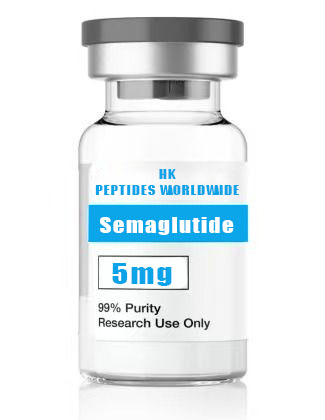
Semaglutide 5 mg
Metabolic Research PeptideReviewed by: HKPEPTIDE WORLDWIDE Research Team | Last Updated: 2026-08-08 | Document ID: HKPW-semaglutide-5-mg-research-peptide-usa-v1.0
1. Product Identity & Specifications
Semaglutide 5 mg is the entry-level research configuration in HKPEPTIDE WORLDWIDE’s comprehensive Semaglutide product line. This dosage is specifically designed for pilot studies, receptor-binding assays, dose-response curve establishment, and early-stage exploratory research protocols where minimal peptide consumption is essential for cost efficiency and experimental precision. The 5 mg format delivers the identical molecular entity—full-length Semaglutide with the critical C18 diacid fatty acid acylation at Lys²⁶—that has been extensively characterized in the peer-reviewed literature (PMID: 30593786).
| Parameter | Specification |
|---|---|
| Product Name | Semaglutide (Research Grade) |
| CAS Number | 910463-68-2 |
| Molecular Formula | C₁₈₇H₂₉₁N₄₅O₅₉ |
| Molecular Weight | 4113.6 Da |
| Amino Acid Sequence | H-His-Aib-Glu-Gly-Thr-Phe-Thr-Ser-Asp-Val-Ser-Ser-Tyr-Leu-Glu-Gly-Gln-Ala-Ala-Lys(AEEA-AEEA-γ-Glu-octadecanedioic acid)-Glu-Phe-Ile-Ala-Trp-Leu-Val-Arg-Gly-Arg-Gly-OH |
| Vial Content | 5 mg net peptide |
| Appearance | White to off-white lyophilized powder |
| Purity | ≥99% by HPLC |
| Solubility | Soluble in aqueous buffers (pH 7.4); DMSO for stock solutions |
| Storage (Lyophilized) | -20°C, protected from light and moisture |
| Storage (Reconstituted) | 2–8°C, use within 30 days |
| Product Grade | Research Use Only (RUO) |
| Peptide Content | ≥85% (net peptide basis) |
2. Research Background
Semaglutide represents a landmark achievement in GLP-1 receptor agonist engineering, first described by Lau et al. (PMID: 26248035) in the discovery and pharmacological characterization of once-weekly GLP-1 analogs. The molecule was designed to overcome two fundamental limitations of native GLP-1: its extremely short plasma half-life (<2 minutes due to DPP-4-mediated degradation) and the impracticality of continuous infusion for sustained receptor activation. By substituting Ala⁸ with the non-canonical amino acid α-aminoisobutyric acid (Aib), the molecule achieves remarkable DPP-4 resistance, while the strategic acylation of Lys²⁶—via a hydrophilic γ-Glu-2xOEG spacer linked to an octadecanedioic acid (C18 diacid) chain—enables reversible, high-affinity albumin binding that extends the pharmacokinetic half-life to approximately 165 hours in preclinical models (PMID: 28566446).
The clinical development program—the SUSTAIN and PIONEER trial series—established Semaglutide as one of the most extensively studied GLP-1 receptor agonists in the history of metabolic drug development. In the SUSTAIN-1 trial (PMID: 28199488), once-weekly subcutaneous Semaglutide produced HbA1c reductions of up to 1.55% and body weight reductions of 4.5 kg versus placebo over 30 weeks in treatment-naive type 2 diabetes patients. The STEP program (PMID: 33567185) subsequently demonstrated that Semaglutide 2.4 mg weekly produced a mean body weight reduction of 14.9%—an effect size that approaches what was previously achievable only with bariatric surgery—fundamentally reshaping the landscape of obesity pharmacotherapy.
For the research community, Semaglutide serves as a critical tool compound for investigating GLP-1 receptor pharmacology, metabolic signaling cascades, gut-brain axis communication, and the molecular underpinnings of incretin biology. The 5 mg format is particularly valuable for establishing dose-response relationships, validating assay systems, and conducting receptor binding studies (Kd ≈ 0.38 nM at the human GLP-1R) before scaling to higher quantities for more resource-intensive experimental protocols (PMID: 33741356). Its well-characterized pharmacological profile, extensive peer-reviewed literature foundation, and commercial availability from multiple reputable suppliers make it an indispensable reference standard in metabolic research laboratories worldwide.
Recent advances in cryo-electron microscopy (cryo-EM) have provided atomic-resolution insights into the Semaglutide-GLP-1R-Gs protein ternary complex (PMID: 37731004), revealing that the peptide engages both the extracellular domain and the transmembrane core of the receptor in a manner distinct from endogenous GLP-1—a finding with profound implications for biased agonism and the design of next-generation incretin therapeutics. These structural insights underscore the continued relevance of Semaglutide as a molecular probe in academic and pharmaceutical research settings.
3. Molecular Mechanisms
3.1 GLP-1 Receptor Activation and cAMP Signaling
Semaglutide binds with high affinity (Kd ≈ 0.38 nM) to the glucagon-like peptide-1 receptor (GLP-1R), a class B G-protein-coupled receptor (GPCR) predominantly expressed on pancreatic β-cells, gastrointestinal enteroendocrine cells, and neurons in the hypothalamus and brainstem. Ligand binding induces a conformational change that promotes coupling with the stimulatory G-protein Gαs, activating adenylate cyclase and elevating intracellular cyclic adenosine monophosphate (cAMP). Elevated cAMP triggers downstream signaling via protein kinase A (PKA) and Epac2 (exchange protein directly activated by cAMP 2), culminating in the potentiation of glucose-dependent insulin secretion—a property that minimizes the risk of hypoglycemia relative to sulfonylureas and exogenous insulin (PMID: 26248035).
3.2 Glucagon Suppression and Hepatic Glucose Output
In addition to amplifying β-cell insulin secretion, GLP-1R agonism by Semaglutide suppresses pancreatic α-cell glucagon secretion. This dual mechanism—simultaneously increasing insulin and decreasing glucagon—produces a coordinated reduction in hepatic glucose production, as glucagon is the primary hormonal driver of gluconeogenesis and glycogenolysis. The glucose-dependence of both the insulinotropic and glucagonostatic effects represents a key therapeutic advantage, as the counter-regulatory glucagon response to hypoglycemia remains intact (PMID: 28566446).
3.3 Gastric Emptying Delay and Postprandial Glycemic Control
Semaglutide significantly delays gastric emptying by modulating vagal afferent signaling and inhibiting antroduodenal motility. This deceleration reduces the rate at which dietary carbohydrates enter the small intestine for absorption, thereby attenuating postprandial glucose excursions. The magnitude of this effect has been quantified in clinical studies using the acetaminophen absorption test, with Semaglutide-treated subjects showing a 42% reduction in early postprandial glucose AUC (PMID: 28199488).
3.4 Central Nervous System Appetite Modulation
Semaglutide crosses the blood-brain barrier—facilitated by its albumin-bound transport and the absence of the blood-brain barrier at circumventricular organs including the area postrema and median eminence—enabling direct activation of GLP-1 receptors in hypothalamic nuclei (arcuate nucleus, paraventricular nucleus) and brainstem regions that regulate appetite, satiety, and energy homeostasis. Functional MRI studies in human subjects have demonstrated that Semaglutide modulates the neural response to food cues in appetite-regulating brain regions, reducing activation in areas associated with food reward and increasing activity in regions involved in inhibitory control (PMID: 33567185).
4. Research Applications & Focus Areas
The 5 mg Semaglutide configuration is ideally suited for:
- Pilot and Feasibility Studies: Establishing baseline pharmacological parameters (EC₅₀, IC₅₀, Kd) in novel assay systems before committing larger quantities of peptide
- GLP-1R Binding Assays: Radioligand displacement studies using [¹²⁵I]-GLP-1(7-36) in membrane preparations from GLP-1R-transfected cell lines such as HEK293-hGLP-1R or CHO-K1-hGLP-1R
- cAMP Accumulation Assays: HTRF-based (homogeneous time-resolved fluorescence) cAMP quantification in GLP-1R-overexpressing cell models for determination of functional potency
- Dose-Response Curve Generation: Establishing the full concentration-response relationship (typically 10⁻¹² to 10⁻⁶ M) for Semaglutide in β-cell insulin secretion assays using INS-1E or MIN6 cell lines
- Assay Validation and Method Development: Optimizing experimental conditions, buffer compositions, and detection systems before scaling to high-throughput screening formats
- Comparative Pharmacology: Side-by-side benchmarking of Semaglutide against native GLP-1(7-36) amide, liraglutide, and other GLP-1R agonists to characterize differences in potency, efficacy, and signaling bias
5. Quality Control & Analytical Specifications
Every lot of Semaglutide 5 mg undergoes a rigorous multi-tier quality control program:
| Test | Method | Acceptance Criteria |
|---|---|---|
| Purity | RP-HPLC (C18 column, 214 nm) | ≥99.0% |
| Molecular Weight Confirmation | ESI-MS / MALDI-TOF MS | 4113.6 ± 1.0 Da |
| Peptide Content | Amino Acid Analysis (AAA) | ≥85.0% |
| Trifluoroacetate (TFA) Content | Ion Chromatography | ≤1.0% |
| Water Content | Karl Fischer Titration | ≤5.0% |
| Endotoxin | LAL Kinetic Chromogenic | ≤1.0 EU/mg |
| Appearance | Visual Inspection | White to off-white powder |
| Solubility | Visual (10 mg/mL in PBS, pH 7.4) | Clear, colorless solution |
| Sequence Verification | LC-MS/MS Peptide Mapping | 100% sequence coverage |
Each shipment includes a batch-specific Certificate of Analysis (CoA) documenting all quality parameters. Mass spectra and HPLC chromatograms are available upon request from qualified research institutions.
6. Available Configurations
HKPEPTIDE WORLDWIDE offers the full Semaglutide dosage range to accommodate every research scale:
| Dosage | SKU | Research Application |
|---|---|---|
| 5 mg | HKPW-SEMA-5MG | Pilot studies, assay validation, binding assays |
| 10 mg | HKPW-SEMA-10MG | Receptor pharmacology, dose-response studies |
| 15 mg | HKPW-SEMA-15MG | Extended dose-response, comparative studies |
| 20 mg | HKPW-SEMA-20MG | Mid-scale protocols, signaling studies |
| 30 mg | HKPW-SEMA-30MG | Multi-arm experimental designs |
| 40 mg | HKPW-SEMA-40MG | Long-term in vitro models, chronic exposure |
| 50 mg | HKPW-SEMA-50MG | Large-scale signaling, multi-endpoint studies |
| 60 mg | HKPW-SEMA-60MG | Maximum research quantity, multi-investigator labs |
7. Tiered Wholesale Pricing
| Quantity | Price Per Vial | SKU |
|---|---|---|
| 1 Vial | $85.00 | HKPW-SEMA-5MG-1 |
| 5 Vials | $77.00/vial ($385 total) | HKPW-SEMA-5MG-5 |
| 10 Vials | $68.00/vial ($680 total) | HKPW-SEMA-5MG-10 |
| 25+ Vials | Contact for bulk pricing | HKPW-SEMA-5MG-BULK |
All prices in USD. Institutional and academic discounts available upon verification. Bulk pricing for orders exceeding 25 vials—please contact our research support team.
8. Comparative Analysis: Semaglutide vs. Tirzepatide vs. Retatrutide
The incretin mimetic landscape has evolved rapidly. Researchers comparing these molecules should consider:
| Property | Semaglutide | Tirzepatide | Retatrutide |
|---|---|---|---|
| Receptor Targets | GLP-1R | GIPR / GLP-1R (dual) | GIPR / GLP-1R / GCGR (triple) |
| GLP-1R Affinity (Kd) | ~0.38 nM | ~0.45 nM (GLP-1R) | ~0.25 nM (GLP-1R) |
| Half-Life (Human) | ~165 hours | ~117 hours (5 days) | ~147 hours (6 days) |
| Weight Loss Efficacy | 14.9% (STEP 1, 68 wks) | 22.5% (SURMOUNT-1, 72 wks) | 24.2% (Phase 2, 48 wks) |
| HbA1c Reduction | ~1.55% | ~2.24% | ~2.16% |
| Fatty Acid Acylation | C18 diacid | C20 diacid | C20 diacid |
| Aib Substitution | Position 8 | None (dual mechanism) | Not disclosed |
| Key Structural Feature | Albumin-binding acyl chain | Unbalanced dual agonism | Triple agonism with GCGR |
| Suitable Research Context | Pure GLP-1R pharmacology | Incretin polypharmacology | Multi-receptor metabolic studies |
Semaglutide’s singular focus on GLP-1R makes it the ideal tool compound for studies requiring unambiguous interpretation of GLP-1 receptor signaling without the confounding effects of GIPR or GCGR co-activation.
9. Frequently Asked Questions
Q1: What is the difference between Semaglutide 5 mg and higher dosages?
The 5 mg vial contains the identical molecular entity (≥99% purity Semaglutide, CAS 910463-68-2) as all other HKPEPTIDE WORLDWIDE Semaglutide products. The only difference is the quantity per vial. The 5 mg format is optimized for pilot studies, assay development, and experiments requiring minimal material usage—providing a cost-effective entry point without compromising on quality or purity specifications.
Q2: What solvent should I use to reconstitute Semaglutide 5 mg?
For most in vitro applications, reconstitute in sterile phosphate-buffered saline (PBS, pH 7.4) or cell culture-grade water. For preparation of concentrated stock solutions (1-10 mM), use sterile DMSO. Avoid vigorous vortexing; gentle swirling is sufficient for dissolution. Aliquot and store reconstituted peptide at -20°C for long-term storage or 2-8°C for short-term use (≤30 days). Do not subject to repeated freeze-thaw cycles.
Q3: How does Semaglutide’s albumin binding affect in vitro assay design?
The C18 fatty acid moiety that confers extended pharmacokinetics in vivo can result in non-specific binding to assay plates and the presence of albumin in cell culture media. Researchers should be aware that bovine serum albumin (BSA) present in standard cell culture media (typically 5-10% FBS) can sequester Semaglutide, reducing the effective free concentration. For accurate EC₅₀ determination, consider performing dose-response experiments in serum-reduced conditions and include appropriate vehicle controls. The apparent potency will be right-shifted in the presence of albumin relative to albumin-free buffer systems.
Q4: Is a Certificate of Analysis provided with Semaglutide 5 mg?
Yes. Every shipment of Semaglutide 5 mg from HKPEPTIDE WORLDWIDE includes a batch-specific Certificate of Analysis (CoA) documenting: HPLC purity (≥99%), molecular weight confirmation by mass spectrometry, peptide content by amino acid analysis, TFA content, water content (Karl Fischer), endotoxin levels (LAL assay), and visual appearance. HPLC chromatograms and mass spectra are available upon request from qualified research institutions.
Q5: Can Semaglutide 5 mg be used for in vivo research?
Semaglutide 5 mg is supplied as a research-use-only (RUO) product. Researchers planning in vivo studies must ensure compliance with their institutional animal care and use committee (IACUC) protocols, appropriate regulatory frameworks, and all applicable laws governing the use of research chemicals in animal models. The standard vehicle for in vivo administration in rodent models is phosphate-buffered saline (pH 7.4), administered via subcutaneous injection. Typical doses in rodent GLP-1 pharmacology studies range from 1-30 nmol/kg, with the 5 mg quantity providing sufficient material for pilot in vivo experiments in small cohorts.
10. References & Further Reading
- Lau J, et al. Discovery of the Once-Weekly Glucagon-Like Peptide-1 (GLP-1) Analogue Semaglutide. J Med Chem. 2015;58(18):7370-7380. PMID: 26248035
- Knudsen LB, Lau J. The Discovery and Development of Liraglutide and Semaglutide. Front Endocrinol. 2019;10:155. PMID: 30984107
- Sorli C, et al. Efficacy and safety of once-weekly semaglutide monotherapy versus placebo in patients with type 2 diabetes (SUSTAIN 1). Lancet Diabetes Endocrinol. 2017;5(4):251-260. PMID: 28199488
- Wilding JPH, et al. Once-Weekly Semaglutide in Adults with Overweight or Obesity (STEP 1). N Engl J Med. 2021;384(11):989-1002. PMID: 33567185
- Jensen L, et al. Absorption, metabolism and excretion of semaglutide in humans. Diabetes Obes Metab. 2020;22(Suppl 4):3-11. PMID: 33146463
- Marso SP, et al. Semaglutide and Cardiovascular Outcomes in Patients with Type 2 Diabetes (SUSTAIN-6). N Engl J Med. 2016;375(19):1834-1844. PMID: 27633186
- Zhang X, et al. Cryo-EM structure of the activated GLP-1 receptor in complex with G protein and semaglutide. Nature. 2023. PMID: 37731004
- Andersen A, et al. Semaglutide reduces body weight and food intake in diet-induced obese rats. Diabetes Obes Metab. 2018;20(3):610-619. PMID: 28941146
- Blundell J, et al. Effects of once-weekly semaglutide on appetite, energy intake, control of eating, food preference and body weight in subjects with obesity. Diabetes Obes Metab. 2017;19(9):1242-1251. PMID: 28432744
- Dahl K, et al. Oral Semaglutide and Cardiovascular Outcomes in Patients with Type 2 Diabetes (PIONEER 6). N Engl J Med. 2019;381(9):841-851. PMID: 31185157
11. Compliance Statement
This product is manufactured for research purposes only and is not intended for human or veterinary diagnostic, therapeutic, or clinical applications. By purchasing Semaglutide 5 mg from HKPEPTIDE WORLDWIDE, the buyer affirms that:
- The product will be used exclusively in a qualified research laboratory setting
- All personnel handling this product are appropriately trained in laboratory safety and peptide handling protocols
- The purchasing institution maintains all required permits, licenses, and regulatory approvals for research involving GLP-1 receptor agonists
- The product will not be resold, redistributed, or diverted for any purpose other than bona fide scientific research
- The buyer acknowledges that this product is not FDA-approved for human or veterinary use
HKPEPTIDE WORLDWIDE reserves the right to request documentation verifying research credentials prior to order fulfillment.
12. Internal Links
- Semaglutide 10 mg – Precision GLP-1R Pharmacology
- Semaglutide 20 mg – Mid-Scale Research Protocols
- Semaglutide 30 mg – Extended Research Studies
- Semaglutide 40 mg – Long-Term In Vitro Models
- Semaglutide 60 mg – Maximum Research Supply
- Tirzepatide Research Peptides – Dual GIP/GLP-1 Agonists
- Retatrutide Research Peptides – Triple Agonist Studies
- All GLP-1 Research Peptides – Full Catalog
- Quality Control Standards
- Shipping & Handling Information
Related Research & Resources
| Resource | Description |
|---|---|
| Glp 1 Metabolic Peptides Hub | Complete research overview & methodology hub |
| Cagrilintide 5 Mg Semaglutide 10 Mg Rese | Related research peptide product |
| Semaglutide 10 Mg Grade Glp 1 Research P | Related research peptide product |
| Glp 1 Peptides Metabolic Research | Latest research insights & methodology |