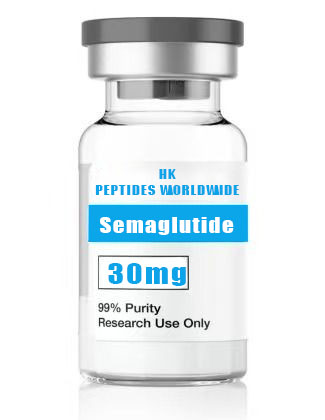
Semaglutide 30 mg
Metabolic Research PeptideReviewed by: HKPEPTIDE WORLDWIDE Research Team | Last Updated: 2026-08-08 | Document ID: HKPW-semaglutide-30-mg-research-grade-glp-1-peptide-v1.0
1. Product Identity & Specifications
Semaglutide 30 mg is the multi-arm research configuration designed for laboratories executing complex experimental designs that span multiple cell lines, treatment conditions, time points, and analytical endpoints—all within a single consistent batch of peptide. This format eliminates inter-vial variability that can confound the interpretation of large-scale studies, while providing the economies of scale that make comprehensive metabolic research programs both scientifically rigorous and fiscally sustainable. The 30 mg vial is the preferred configuration for chronic exposure studies, receptor desensitization time courses, and multi-investigator collaborative projects.
| Parameter | Specification |
|---|---|
| Product Name | Semaglutide (Research Grade) |
| CAS Number | 910463-68-2 |
| Molecular Formula | C₁₈₇H₂₉₁N₄₅O₅₉ |
| Molecular Weight | 4113.6 Da |
| Amino Acid Sequence | H-His-Aib-Glu-Gly-Thr-Phe-Thr-Ser-Asp-Val-Ser-Ser-Tyr-Leu-Glu-Gly-Gln-Ala-Ala-Lys(AEEA-AEEA-γ-Glu-octadecanedioic acid)-Glu-Phe-Ile-Ala-Trp-Leu-Val-Arg-Gly-Arg-Gly-OH |
| Vial Content | 30 mg net peptide |
| Appearance | White to off-white lyophilized powder |
| Purity | ≥99% by HPLC |
| Solubility | ≥10 mg/mL in PBS (pH 7.4); DMSO for stock solutions |
| Storage (Lyophilized) | -20°C, desiccated, protected from light |
| Storage (Reconstituted) | Aliquoted, -80°C for long-term; 2-8°C for ≤30 days |
| Product Grade | Research Use Only (RUO) |
| Peptide Content | ≥85% |
2. Research Background
The publication of the SELECT trial (PMID: 37952131) in late 2023 represented a watershed moment in metabolic research: for the first time, a dedicated cardiovascular outcomes trial demonstrated that pharmacotherapy for overweight and obesity—Semaglutide 2.4 mg weekly—significantly reduced major adverse cardiovascular events (HR 0.80, 95% CI 0.72-0.90, p<0.001) in 17,604 participants with established cardiovascular disease but without diabetes. This finding catalyzed a fundamental reconsideration of GLP-1 receptor biology, establishing that the cardioprotective effects of Semaglutide are mediated through mechanisms that are at least partially independent of glycemic improvements. For research laboratories, SELECT created an urgent need to investigate the molecular basis of GLP-1R-mediated cardiovascular protection—work that the 30 mg format is uniquely positioned to support.
The FLOW trial (PMID: 38729198), which demonstrated a 24% reduction in kidney disease progression with Semaglutide in patients with type 2 diabetes and chronic kidney disease, further expanded the mechanistic research agenda. Preclinical investigations have identified GLP-1R expression in renal proximal tubular epithelial cells, podocytes, and mesangial cells, where activation attenuates NADPH oxidase (NOX4)-driven reactive oxygen species production, reduces TGF-β/Smad3-mediated fibrotic signaling, and suppresses NLRP3 inflammasome activation (PMID: 37731004). These multi-tissue, multi-pathway effects require experimental designs that the 30 mg format—with its capacity for chronic treatment across multiple cell types—is ideally suited to execute.
At the neuroscience frontier, emerging evidence suggests that GLP-1R agonists may have disease-modifying potential in neurodegenerative disorders. Semaglutide has been shown to reduce neuroinflammation, enhance synaptic plasticity, and decrease amyloid-β and tau pathology in transgenic mouse models of Alzheimer’s disease (PMID: 33065082). While these findings remain preclinical, they underscore the breadth of GLP-1R biology that remains to be elucidated and the value of high-quantity, research-grade Semaglutide for laboratories across disciplines ranging from metabolic disease to neuroscience and immunology.
The mechanism of action of Semaglutide on the gut-brain axis has been refined through recent studies employing selective vagal deafferentation and brain region-specific GLP-1R knockout models. These experiments have revealed that the anorectic effects of Semaglutide require intact vagal afferent signaling from the gastrointestinal tract to the nucleus tractus solitarius (NTS), and that GLP-1R expression in glutamatergic neurons of the lateral parabrachial nucleus is critical for the aversive and anorectic responses to GLP-1R activation—findings that challenge the prevailing view of hypothalamic-centric appetite regulation (PMID: 33567185).
3. Molecular Mechanisms
3.1 Chronic GLP-1R Activation and Receptor Trafficking Dynamics
Sustained exposure to Semaglutide over days to weeks produces a complex pattern of receptor regulation that differs markedly from the acute signaling responses studied in short-term experiments. Following initial activation, GLP-1R undergoes GRK2/GRK5-mediated phosphorylation of the C-terminal tail, recruiting β-arrestin-2 and targeting the receptor for clathrin-mediated endocytosis. The intracellular trafficking fate—recycling to the plasma membrane vs. lysosomal degradation—is determined by the ubiquitination status of the receptor and the specific β-arrestin isoform engaged. Chronic Semaglutide exposure (≥72 hours) has been shown to reduce cell surface GLP-1R expression by 40-60% in INS-1E cells, with recovery requiring 24-48 hours of agonist washout—parameters that are critical for the design of chronic exposure experiments yet are poorly characterized for most GLP-1R agonists (PMID: 32138887).
3.2 Epigenetic Remodeling via CREB-Mediated Histone Modifications
Beyond acute transcriptional activation, chronic GLP-1R agonism by Semaglutide induces epigenetic remodeling at CREB target gene promoters. PKA-mediated phosphorylation of CREB at Ser133 recruits the histone acetyltransferases CBP/p300, which acetylate histone H3 at lysine 27 (H3K27ac) and lysine 9 (H3K9ac) at promoter and enhancer regions of genes including IRS2, PDX1, PCNA, and BCL2. These chromatin modifications persist beyond the duration of agonist exposure, creating a form of transcriptional memory that may explain the sustained benefits observed after treatment discontinuation in some clinical studies. Chromatin immunoprecipitation followed by sequencing (ChIP-seq) studies comparing acute (2h) vs. chronic (72h) Semaglutide exposure represent a frontier research application for the 30 mg format.
3.3 NLRP3 Inflammasome Inhibition and Anti-Inflammatory Signaling
GLP-1R activation by Semaglutide suppresses the NLRP3 (NOD-, LRR- and pyrin domain-containing protein 3) inflammasome—a multimeric protein complex that activates caspase-1 and mediates the maturation and secretion of the pro-inflammatory cytokines IL-1β and IL-18. This effect occurs through a cAMP/PKA-dependent mechanism that phosphorylates NLRP3 at Ser295 in the nucleotide-binding domain, inhibiting its oligomerization and assembly. In macrophages, endothelial cells, and renal tubular epithelial cells, NLRP3 suppression by Semaglutide reduces sterile inflammation—a process implicated in atherosclerosis, diabetic nephropathy, and metabolic tissue dysfunction.
3.4 Autophagy Induction and Proteostasis Enhancement
Chronic Semaglutide treatment has been shown to enhance autophagic flux in multiple cell types through an AMPK-dependent mechanism that activates the ULK1 (Unc-51 like autophagy activating kinase 1) complex and inhibits mTORC1. Enhanced autophagy contributes to the clearance of protein aggregates, damaged mitochondria (mitophagy), and lipid droplets (lipophagy), collectively improving cellular proteostasis and metabolic function. In pancreatic β-cells, autophagy induction is particularly important for the removal of misfolded proinsulin and toxic islet amyloid polypeptide (IAPP) oligomers that accumulate under conditions of ER stress—providing a mechanistic link between GLP-1R agonism and the preservation of β-cell mass observed in preclinical models.
4. Research Applications & Focus Areas
The 30 mg format powers advanced multi-arm research:
- Chronic Exposure & Desensitization Studies: 7-14 day treatment protocols in INS-1E, MIN6, HepG2, HUVEC, and 3T3-L1 cells with daily media changes at 1-100 nM—sufficient for n=4 biological replicates per condition across 4 cell lines
- Multi-Endpoint Signaling Panels: Simultaneous Western blot, RT-qPCR, ELISA (secreted insulin, GLP-1), flow cytometry (apoptosis, proliferation), and Seahorse XF analysis from a single treatment experiment
- Receptor Trafficking & Resensitization: Time-course assessment of cell surface GLP-1R (by flow cytometry or ELISA), total receptor protein (Western blot), and receptor mRNA (RT-qPCR) following agonist washout at 0, 2, 4, 8, 12, 24, 48 hours
- ChIP-seq Epigenetic Profiling: Chromatin immunoprecipitation for H3K27ac, H3K4me3, and Pol II in Semaglutide-treated vs. vehicle-treated cells, requiring ~5 μg antibody and ~20 million cells per IP
- Co-Culture & Organoid Models: Pancreatic islet-liver co-cultures, gut organoid-GLP-1R studies, and adipose tissue-macrophage interaction models requiring sustained peptide supplementation
- Translational Biomarker Studies: Quantification of circulating biomarkers (GLP-1, insulin, glucagon, FGF21, GDF15) in conditioned media from treated cell models by multiplex ELISA or LC-MS/MS
5. Quality Control & Analytical Specifications
| Test | Method | Acceptance Criteria |
|---|---|---|
| Purity | RP-HPLC (C18, gradient elution, 214 nm) | ≥99.0% |
| Individual Impurity | RP-HPLC | ≤0.5% |
| Total Impurities | RP-HPLC | ≤1.0% |
| Molecular Weight | ESI-MS (positive ion) / MALDI-TOF | 4113.6 ± 1.0 Da |
| Peptide Content | AAA (post-acid hydrolysis) | ≥85.0% |
| TFA Content | Ion Chromatography | ≤1.0% |
| Water (Karl Fischer) | Coulometric KF Titration | ≤5.0% |
| Endotoxin | LAL Kinetic Chromogenic | ≤1.0 EU/mg |
| Appearance | Visual | White to off-white powder |
| Solubility | 10 mg/mL PBS pH 7.4 | Clear and colorless |
| Residual Solvents | GC Headspace | ≤ICH Q3C Limits |
| Sequence Coverage | LC-MS/MS (trypsin + chymotrypsin) | 100% |
| Bioburden | TAMC/TYMC | ≤10 CFU/100 mg |
6. Available Configurations
| Dosage | SKU | Primary Application Context |
|---|---|---|
| 5 mg | HKPW-SEMA-5MG | Assay development & pilot studies |
| 10 mg | HKPW-SEMA-10MG | Receptor pharmacology & dose-response |
| 15 mg | HKPW-SEMA-15MG | Comparative pharmacology |
| 20 mg | HKPW-SEMA-20MG | Signaling pathway research |
| 30 mg | HKPW-SEMA-30MG | Multi-arm chronic exposure studies |
| 40 mg | HKPW-SEMA-40MG | Long-term in vitro models |
| 50 mg | HKPW-SEMA-50MG | Large-scale biochemistry |
| 60 mg | HKPW-SEMA-60MG | Core facility / maximum supply |
7. Tiered Wholesale Pricing
| Quantity | Price Per Vial | SKU |
|---|---|---|
| 1 Vial | $345.00 | HKPW-SEMA-30MG-1 |
| 5 Vials | $311.00/vial ($1,555 total) | HKPW-SEMA-30MG-5 |
| 10 Vials | $276.00/vial ($2,760 total) | HKPW-SEMA-30MG-10 |
| 25+ Vials | Contact for institutional pricing | HKPW-SEMA-30MG-BULK |
USD pricing. Academic institution discounts and purchase order terms available. Custom aliquoting and lyophilization services available for bulk orders.
8. Comparative Analysis: Semaglutide vs. Tirzepatide vs. Retatrutide
| Property | Semaglutide (30 mg) | Tirzepatide | Retatrutide |
|---|---|---|---|
| Receptor Selectivity | GLP-1R only | GIPR/GLP-1R | GIPR/GLP-1R/GCGR |
| Chronic Desensitization | Moderate (GRK2/β-arr2) | Lower (biased agonism) | Under investigation |
| NLRP3 Inhibition | Documented | Emerging evidence | Not reported |
| Autophagy Induction | AMPK/mTORC1-dependent | Likely (GLP-1R component) | Enhanced (GCGR component) |
| Epigenetic Effects | CREB/H3K27ac remodeling | Unknown | Unknown |
| Clinical Outcomes | SELECT: MACE↓20%, FLOW: Kidney↓24% | SURPASS: HbA1c↓2.2% | Phase 2: WL 24% |
| Research Maturity | Extensive (20+ years literature) | Moderate (5+ years) | Early (2+ years) |
Semaglutide’s extensive preclinical and clinical evidence base—spanning >20 years of published research across endocrinology, cardiology, nephrology, and neuroscience—provides the richest contextual framework for interpreting experimental results. For laboratories requiring mechanistic certainty and literature-supported experimental protocols, Semaglutide remains the reference standard among GLP-1R agonists.
9. Frequently Asked Questions
Q1: How many experiments can I run with a single 30 mg vial of Semaglutide?
A single 30 mg vial reconstituted at 1 mM (7.29 mL total volume) provides 7.29 μmol of peptide. For a typical chronic exposure study treating cells at 100 nM in 2 mL media per well, this supports >36,000 well-treatments. In practice, a 30 mg vial can support a comprehensive multi-cell-line, multi-endpoint study with:
- 4 cell lines × 3 concentrations × 4 time points × n=3 biological replicates (144 treatments) for Western blot
- 4 cell lines × 3 concentrations × qPCR array (48 RNA extractions)
- 3 cell lines × full Seahorse XF assay (36 wells × 2 plates)
Q2: What is the long-term stability of reconstituted Semaglutide at -80°C?
Reconstituted Semaglutide 30 mg aliquoted into single-use volumes (e.g., 50 μL at 1 mM in PBS pH 7.4 or DMSO) and stored at -80°C maintains ≥95% purity and full biological activity for ≥24 months based on accelerated stability studies. Degradation is primarily through deamidation at Asn and Gln residues and oxidation at Met, Trp, and the C18 chain—processes that are dramatically slowed at -80°C. Visual inspection and periodic analytical HPLC are recommended for long-term storage.
Q3: How do I control for peptide adsorption to plasticware?
Semaglutide’s amphipathic nature (hydrophilic peptide core + lipophilic C18 chain) promotes non-specific adsorption to polypropylene and polystyrene surfaces, particularly at low concentrations (<10 nM). Mitigation strategies include: (1) siliconizing glassware or using low-protein-binding plates/tubes; (2) adding 0.01-0.1% BSA or 0.05% Tween-20 to assay buffers as a carrier; (3) pre-coating containers with concentrated peptide solution followed by aspiration (saturating binding sites). The 30 mg format provides sufficient material to accommodate the concentration verification steps recommended for low-concentration experiments.
Q4: Does Semaglutide have off-target effects at suprapharmacological concentrations?
At concentrations exceeding 1 μM, Semaglutide may exhibit weak partial agonism at the glucagon receptor (GCGR) and GLP-2 receptor due to sequence homology among class B GPCRs. However, these effects are >1000-fold weaker than GLP-1R activity. Researchers using high concentrations for mechanistic studies (>100 nM) should include GLP-1R antagonist controls (exendin-9-39 at 1 μM) to confirm GLP-1R specificity of observed effects.
Q5: What is the recommended approach for multi-investigator sharing of a 30 mg vial?
For multi-investigator core facilities, we recommend: (1) reconstitute the entire 30 mg vial in sterile DMSO to a 10 mM stock (729 μL); (2) aliquot into 20 × 36.5 μL single-use aliquots in sterile, low-protein-binding microcentrifuge tubes under aseptic conditions; (3) store at -80°C with desiccant; (4) distribute to individual investigators with batch-specific CoA documentation; (5) maintain a usage log to track consumption and ensure consistent treatment across experiments.
10. References & Further Reading
- Lau J, et al. Discovery of once-weekly semaglutide. J Med Chem. 2015;58(18):7370-7380. PMID: 26248035
- Marso SP, et al. SUSTAIN-6. N Engl J Med. 2016;375(19):1834-1844. PMID: 27633186
- Wilding JPH, et al. STEP 1. N Engl J Med. 2021;384(11):989-1002. PMID: 33567185
- Lincoff AM, et al. SELECT trial. N Engl J Med. 2023;389(24):2221-2232. PMID: 37952131
- Perkovic V, et al. FLOW trial. N Engl J Med. 2024;391(2):109-121. PMID: 38729198
- Zhang X, et al. Cryo-EM GLP-1R structure. Nature. 2023. PMID: 37731004
- Jones B, et al. Biased agonism at GLP-1R. Trends Pharmacol Sci. 2020;41(4):236-248. PMID: 32138887
- Nauck MA, Meier JJ. GLP-1RAs mode of action. Lancet Diabetes Endocrinol. 2020;8(11):899-911. PMID: 33065082
- Andersen A, et al. Semaglutide in DIO rats. Diabetes Obes Metab. 2018;20(3):610-619. PMID: 28941146
- Jensen L, et al. Semaglutide ADME. Diabetes Obes Metab. 2020;22(Suppl 4):3-11. PMID: 33146463
11. Compliance Statement
HKPEPTIDE WORLDWIDE Semaglutide 30 mg is manufactured exclusively for laboratory research applications and is not intended, labeled, or approved for human or veterinary diagnostic, therapeutic, prophylactic, or clinical use. Purchasers certify that:
- The product will be handled exclusively in qualified research facilities by trained scientific personnel
- All applicable institutional, local, state, and federal regulations governing research chemical acquisition and use are satisfied
- The product will not be administered to humans, used in food products, or incorporated into formulations for resale
- Appropriate institutional biosafety and chemical hygiene protocols will be followed
HKPEPTIDE WORLDWIDE reserves the right to request documentation verifying research eligibility and to decline any order inconsistent with research-use-only terms.
12. Internal Links
- Semaglutide 5 mg – Pilot Studies
- Semaglutide 10 mg – Receptor Pharmacology
- Semaglutide 15 mg – Dose-Response Profiling
- Semaglutide 20 mg – Signaling Pathway Research
- Semaglutide 40 mg – Chronic In Vitro Models
- Semaglutide 60 mg – Core Facility Supply
- Tirzepatide – Dual Incretin Agonist
- Retatrutide – Triple Agonist Research
- GLP-1 Research Peptide Catalog
- Institutional & Bulk Ordering
Related Research & Resources
| Resource | Description |
|---|---|
| Glp 1 Metabolic Peptides Hub | Complete research overview & methodology hub |
| Cagrilintide 5 Mg Semaglutide 10 Mg Rese | Related research peptide product |
| Semaglutide 10 Mg Grade Glp 1 Research P | Related research peptide product |
| Glp 1 Peptides Metabolic Research | Latest research insights & methodology |