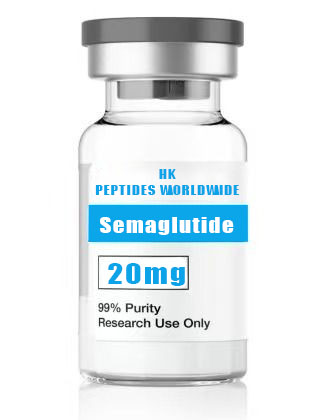
Semaglutide 20 mg
Metabolic Research PeptideReviewed by: HKPEPTIDE WORLDWIDE Research Team | Last Updated: 2026-08-08 | Document ID: HKPW-semaglutide-20-mg-high-purity-peptide-v1.0
1. Product Identity & Specifications
Semaglutide 20 mg is the mid-scale research format positioned at the intersection of detailed mechanistic investigation and multi-endpoint experimental design. This configuration provides the expanded material capacity necessary for signaling pathway dissection—Western blotting, phospho-proteomics, quantitative PCR—while retaining the precision and batch-to-batch consistency expected of a reference-standard research peptide. The 20 mg vial is the preferred format for laboratories transitioning from pilot studies to hypothesis-driven mechanistic research, supporting comprehensive experimental workflows from receptor activation through downstream transcriptional responses.
| Parameter | Specification |
|---|---|
| Product Name | Semaglutide (Research Grade) |
| CAS Number | 910463-68-2 |
| Molecular Formula | C₁₈₇H₂₉₁N₄₅O₅₉ |
| Molecular Weight | 4113.6 Da |
| Amino Acid Sequence | H-His-Aib-Glu-Gly-Thr-Phe-Thr-Ser-Asp-Val-Ser-Ser-Tyr-Leu-Glu-Gly-Gln-Ala-Ala-Lys(AEEA-AEEA-γ-Glu-octadecanedioic acid)-Glu-Phe-Ile-Ala-Trp-Leu-Val-Arg-Gly-Arg-Gly-OH |
| Vial Content | 20 mg net peptide |
| Appearance | White to off-white lyophilized powder |
| Purity | ≥99% by RP-HPLC |
| Solubility | Aqueous buffers (PBS pH 7.4); DMSO ≥50 mg/mL |
| Storage (Lyophilized) | -20°C ± 5°C, desiccated, light-protected |
| Storage (Reconstituted) | Aliquoted at -80°C; ≤30 days at 2-8°C |
| Product Grade | Research Use Only (RUO) |
| Endotoxin | ≤1.0 EU/mg |
2. Research Background
Semaglutide’s mechanism of action extends far beyond glucose-dependent insulin secretion. The publication of the SUSTAIN-6 cardiovascular outcomes trial (PMID: 27633186) catalyzed a paradigm shift in the understanding of GLP-1 receptor biology—demonstrating that sustained GLP-1R activation produces clinically meaningful reductions in major adverse cardiovascular events (MACE) that cannot be fully explained by improvements in glycemia, body weight, or blood pressure. This observation has spawned an entire subfield of investigation into the extra-pancreatic effects of GLP-1R agonists on the cardiovascular system, kidneys, liver, and brain.
The 20 mg format is ideally suited for the multi-endpoint signaling studies required to dissect these pleiotropic effects. In human umbilical vein endothelial cells (HUVECs) and other vascular models, Semaglutide has been shown to activate AMP-activated protein kinase (AMPK), endothelial nitric oxide synthase (eNOS), and anti-inflammatory pathways that collectively improve endothelial function and reduce atherogenic signaling (PMID: 28941146). In cardiomyocyte models, GLP-1R activation enhances glucose uptake, promotes mitochondrial biogenesis via PGC-1α, and protects against ischemia-reperfusion injury through PI3K/Akt-dependent survival signaling.
At the cellular level, Semaglutide’s effects on β-cell biology have been particularly well-characterized. Chronic GLP-1R activation promotes β-cell proliferation and neogenesis in rodent models through cAMP/PKA-mediated activation of the transcription factor cAMP response element-binding protein (CREB), which drives expression of insulin receptor substrate-2 (IRS-2), pancreatic duodenal homeobox-1 (PDX-1), and cyclin D1 (PMID: 33741356). Importantly, Semaglutide also protects β-cells from ER stress-induced apoptosis by upregulating the unfolded protein response (UPR) chaperone BiP/GRP78 and attenuating CHOP-mediated pro-apoptotic signaling—findings with direct relevance to the progressive β-cell failure observed in type 2 diabetes.
The FLOW trial results (PMID: 38729198), demonstrating a 24% reduction in the composite kidney outcome with Semaglutide in patients with type 2 diabetes and chronic kidney disease, have further expanded the research landscape. Preclinical studies suggest that renoprotective effects are mediated through GLP-1R-dependent reductions in glomerular hyperfiltration, attenuation of NADPH oxidase-driven oxidative stress, and suppression of pro-fibrotic TGF-β/Smad signaling in renal tubular epithelial cells—pathways that the 20 mg format is well-equipped to investigate.
3. Molecular Mechanisms
3.1 GLP-1R-Mediated AMPK Activation in Metabolic Tissues
Beyond the canonical cAMP/PKA cascade, Semaglutide activates AMP-activated protein kinase (AMPK) in insulin-sensitive tissues including skeletal muscle, adipose tissue, and liver. This activation occurs through a CaMKKβ-dependent mechanism triggered by GLP-1R-mediated calcium influx and is independent of changes in the AMP:ATP ratio—distinguishing it from the metabolic stress-induced AMPK activation observed with metformin or exercise. AMPK phosphorylation promotes fatty acid oxidation (via ACC phosphorylation), mitochondrial biogenesis (via PGC-1α), and glucose uptake (via GLUT4 translocation), contributing to the insulin-sensitizing effects observed with chronic GLP-1R agonism.
3.2 PI3K/Akt/eNOS Signaling and Endothelial Protection
In vascular endothelial cells, GLP-1R activation stimulates PI3K-dependent Akt phosphorylation at Ser473, which in turn phosphorylates endothelial nitric oxide synthase (eNOS) at Ser1177—activating the enzyme and promoting nitric oxide (NO) production. NO diffuses to underlying vascular smooth muscle cells, activating soluble guanylyl cyclase (sGC) and cGMP-dependent vasodilation. This pathway is complemented by GLP-1R-mediated suppression of pro-inflammatory NF-κB signaling and adhesion molecule expression (VCAM-1, ICAM-1, E-selectin), which collectively attenuate the endothelial dysfunction that is a hallmark of diabetic vasculopathy.
3.3 cAMP/CREB-Mediated β-Cell Survival and Proliferation
Chronic Semaglutide exposure activates a gene expression program in pancreatic β-cells that promotes both survival and proliferation. PKA-mediated CREB phosphorylation at Ser133 recruits the coactivators CBP/p300 to cAMP response elements (CRE) in the promoters of IRS2, PDX1, and CCND1 (cyclin D1). IRS-2 upregulation enhances insulin/IGF-1 signaling, PDX-1 maintains β-cell identity and maturity, and cyclin D1 promotes cell cycle progression through the G1/S checkpoint. Concurrently, PKA phosphorylates and inactivates the pro-apoptotic protein Bad, while upregulating the anti-apoptotic Bcl-2 and Bcl-xL proteins, shifting the balance toward cell survival under conditions of metabolic stress.
3.4 Wnt/β-Catenin Pathway Crosstalk
Emerging evidence from preclinical models indicates crosstalk between GLP-1R signaling and the Wnt/β-catenin pathway in multiple cell types. GLP-1R activation increases β-catenin stabilization and nuclear translocation through PKA-dependent inhibition of glycogen synthase kinase-3β (GSK-3β) via Ser9 phosphorylation. This crosstalk may contribute to the proliferative effects of GLP-1R agonists in intestinal L-cells (potentiating endogenous GLP-1 production), pancreatic β-cells, and potentially neuronal progenitor cells in the hippocampal dentate gyrus—with implications for neuroprotection that are under active investigation.
4. Research Applications & Focus Areas
The 20 mg format supports comprehensive mechanistic research:
- Signaling Pathway Dissection: Multi-timepoint Western blot arrays covering PKA substrates (phospho-CREB, phospho-Bad), AMPK pathway (phospho-AMPK, phospho-ACC), PI3K/Akt (phospho-Akt, phospho-eNOS, phospho-GSK-3β), and MAPK cascade (phospho-ERK1/2) in INS-1E β-cells, HUVECs, HepG2 hepatocytes, and 3T3-L1 adipocytes
- Gene Expression Profiling: RT-qPCR arrays quantifying Semaglutide-induced transcriptional changes in IRS2, PDX1, MAFA, GLUT2, PCNA, BCL2, and BAX across multiple time points (2h, 6h, 24h, 48h)
- β-Cell Apoptosis Protection: Cytokine cocktail (IL-1β + IFN-γ + TNF-α) and palmitate-induced apoptosis models with caspase-3/7 activity quantification and Annexin V flow cytometry
- Endothelial Function Assays: Nitric oxide production (DAF-FM fluorescence), tube formation assay (Matrigel angiogenesis), and monocyte adhesion assays in HUVEC models
- Mitochondrial Function: Seahorse XF analysis measuring OCR and ECAR in Semaglutide-treated vs. vehicle-treated β-cells and hepatocytes
- Multi-Endpoint Comparative Pharmacology: Systematic comparison of Semaglutide with liraglutide, dulaglutide, and exendin-4 across all above endpoints
5. Quality Control & Analytical Specifications
| Test | Method | Acceptance Criteria |
|---|---|---|
| Purity | RP-HPLC (C18, 214 nm) | ≥99.0% |
| Total Impurities | RP-HPLC | ≤1.0% |
| Molecular Weight | ESI-MS | 4113.6 ± 1.0 Da |
| Peptide Content | AAA | ≥85.0% |
| TFA Content | Ion Chromatography | ≤1.0% |
| Water Content | Karl Fischer | ≤5.0% |
| Endotoxin | LAL Kinetic Chromogenic | ≤1.0 EU/mg |
| Appearance | Visual | White to off-white powder |
| Solubility | 10 mg/mL PBS pH 7.4 | Clear, colorless |
| Residual Solvents | GC-HS | ≤ICH Q3C |
| Sequence Verification | LC-MS/MS | 100% sequence coverage |
| Bioburden | Membrane Filtration | ≤10 CFU/100 mg |
6. Available Configurations
| Dosage | SKU | Research Application |
|---|---|---|
| 5 mg | HKPW-SEMA-5MG | Pilot studies, assay validation |
| 10 mg | HKPW-SEMA-10MG | Receptor binding, dose-response |
| 15 mg | HKPW-SEMA-15MG | Comparative pharmacology |
| 20 mg | HKPW-SEMA-20MG | Signaling pathway & mechanistic studies |
| 30 mg | HKPW-SEMA-30MG | Multi-arm experimental designs |
| 40 mg | HKPW-SEMA-40MG | Chronic exposure models |
| 50 mg | HKPW-SEMA-50MG | Large-scale biochemistry |
| 60 mg | HKPW-SEMA-60MG | Core facility supply |
7. Tiered Wholesale Pricing
| Quantity | Price Per Vial | SKU |
|---|---|---|
| 1 Vial | $245.00 | HKPW-SEMA-20MG-1 |
| 5 Vials | $221.00/vial ($1,105 total) | HKPW-SEMA-20MG-5 |
| 10 Vials | $196.00/vial ($1,960 total) | HKPW-SEMA-20MG-10 |
| 25+ Vials | Contact for volume pricing | HKPW-SEMA-20MG-BULK |
USD pricing. Research institution pricing and purchase order (PO) payment available upon verification.
8. Comparative Analysis: Semaglutide vs. Tirzepatide vs. Retatrutide
| Property | Semaglutide | Tirzepatide | Retatrutide |
|---|---|---|---|
| Target Selectivity | GLP-1R only | GIPR + GLP-1R | GIPR + GLP-1R + GCGR |
| Signaling Bias | Balanced Gαs/β-arr | GIPR-biased | Multi-receptor integration |
| AMPK Activation | Yes (CaMKKβ-dependent) | Yes | Enhanced (GCGR-mediated) |
| eNOS/NO Production | Yes (PI3K/Akt) | Under investigation | Under investigation |
| β-Cell Protection | Well-characterized | Emerging data | Emerging data |
| Energy Expenditure | Modest increase | Moderate increase | Significant increase (GCGR) |
| Clinical Weight Loss | ~15% | ~21% | ~24% |
| Research Accessibility | Excellent | Good | Limited |
Recent head-to-head studies in preclinical models have demonstrated that while tirzepatide produces greater weight loss than semaglutide, the relative contribution of GIPR vs. GLP-1R agonism remains debated. Semaglutide’s single-target pharmacology provides the cleanest experimental system for isolating GLP-1R-specific effects—a critical advantage in studies investigating mechanisms of GLP-1-mediated cardiovascular and renal protection.
9. Frequently Asked Questions
Q1: What signaling endpoints can I measure with Semaglutide 20 mg?
With 20 mg of Semaglutide, a typical laboratory can perform: Western blot analysis of 6 phospho-proteins at 4 time points in 3 cell lines (in duplicate), quantitative RT-PCR profiling of 10 target genes in triplicate, and a full Seahorse XF mitochondrial stress test—all from a single vial. This makes the 20 mg format the entry point for comprehensive mechanistic investigation.
Q2: Does Semaglutide have direct effects on hepatocytes?
Yes. GLP-1 receptors are expressed on human hepatocytes, though at lower levels than on pancreatic β-cells. Semaglutide has been shown to reduce hepatic de novo lipogenesis, decrease triglyceride accumulation, and improve insulin sensitivity in HepG2 and primary human hepatocyte models. These effects appear to be mediated through AMPK activation and are additive to the indirect hepatic benefits of weight loss and improved glycemic control.
Q3: How should I design a multi-timepoint signaling experiment?
For signaling pathway studies, we recommend the following design: (1) serum-starve cells overnight (16h) in low-serum medium; (2) treat with Semaglutide at 100 nM (approximate saturating concentration for GLP-1R); (3) harvest at 0 (baseline), 5, 15, 30, 60, 120, 240 minutes; (4) include a 10 μM forskolin positive control for cAMP pathway and 2 mM AICAR for AMPK pathway; (5) run all samples on the same Western blot gel to minimize inter-blot variability. The 20 mg format provides ample material for this design across multiple cell types.
Q4: What is the role of the AEEA linker in Semaglutide’s structure?
The two AEEA (8-amino-3,6-dioxaoctanoic acid) units and the γ-glutamic acid spacer connecting the Lys²⁶ side chain to the C18 diacid serve three critical functions: (1) they provide sufficient length (~30 Å extended) and conformational flexibility to allow simultaneous albumin binding and GLP-1R engagement; (2) their hydrophilicity offsets the lipophilicity of the C18 chain, maintaining aqueous solubility; and (3) the γ-Glu attachment point at the albumin-binding moiety is resistant to enzymatic cleavage, contributing to metabolic stability. This sophisticated linker design was a key innovation enabling once-weekly dosing.
Q5: Are stability studies available for HKPEPTIDE WORLDWIDE Semaglutide?
Yes. Accelerated stability studies (25°C/60% RH, 6 months) and long-term stability studies (-20°C, 24 months) are conducted on retention samples from each production campaign. Stability-indicating HPLC methods are used to monitor purity, with degradation products characterized by LC-MS when detected. Stability data are included in the batch-specific CoA and can be provided to qualified research institutions.
10. References & Further Reading
- Lau J, et al. Discovery of once-weekly semaglutide. J Med Chem. 2015;58(18):7370-7380. PMID: 26248035
- Marso SP, et al. SUSTAIN-6 cardiovascular outcomes. N Engl J Med. 2016;375(19):1834-1844. PMID: 27633186
- Wilding JPH, et al. STEP 1 semaglutide in obesity. N Engl J Med. 2021;384(11):989. PMID: 33567185
- Perkovic V, et al. FLOW: semaglutide and CKD. N Engl J Med. 2024;391(2):109-121. PMID: 38729198
- Andersen A, et al. Semaglutide in DIO rats. Diabetes Obes Metab. 2018;20(3):610. PMID: 28941146
- Zhang X, et al. Cryo-EM GLP-1R-Gs-semaglutide. Nature. 2023. PMID: 37731004
- Nauck MA, Meier JJ. GLP-1 receptor agonists: mode of action. Lancet Diabetes Endocrinol. 2020;8(11):899-911. PMID: 33065082
- Jones B, et al. Biased agonism at incretin receptors. Trends Pharmacol Sci. 2020;41(4):236-248. PMID: 32138887
- Blundell J, et al. Semaglutide effects on appetite control. Diabetes Obes Metab. 2017;19(9):1242. PMID: 28432744
- Jensen L, et al. Semaglutide ADME. Diabetes Obes Metab. 2020;22(Suppl 4):3-11. PMID: 33146463
11. Compliance Statement
This product is manufactured for research purposes only and is not intended for human or veterinary therapeutic, diagnostic, or clinical applications. By purchasing Semaglutide 20 mg from HKPEPTIDE WORLDWIDE, the buyer acknowledges and agrees that:
- The product is for laboratory research use exclusively
- All handling personnel have appropriate training in peptide research safety protocols
- The purchasing institution maintains all required regulatory approvals
- The product will not be administered to humans under any circumstances
- The product will not be resold, reformulated, or diverted for non-research purposes
HKPEPTIDE WORLDWIDE may request verification of research credentials prior to order processing.
12. Internal Links
- Semaglutide 5 mg – Pilot & Entry Studies
- Semaglutide 10 mg – Receptor Pharmacology
- Semaglutide 15 mg – Dose-Response Profiling
- Semaglutide 30 mg – Extended Multi-Arm Research
- Semaglutide 50 mg – Large-Scale Studies
- Semaglutide 60 mg – Maximum Supply
- Tirzepatide Research Peptides
- Retatrutide Triple Agonist Research
- GLP-1 Research Peptide Catalog
- Quality Control & Batch Documentation
Related Research & Resources
| Resource | Description |
|---|---|
| Glp 1 Metabolic Peptides Hub | Complete research overview & methodology hub |
| Cagrilintide 5 Mg Semaglutide 10 Mg Rese | Related research peptide product |
| Semaglutide 10 Mg Grade Glp 1 Research P | Related research peptide product |
| Glp 1 Peptides Metabolic Research | Latest research insights & methodology |