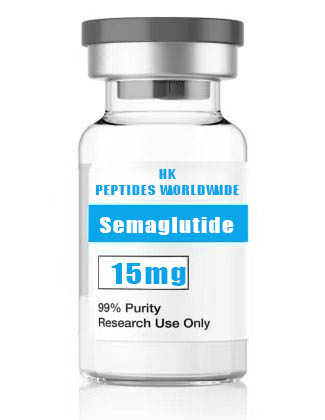
Semaglutide 15 mg
Metabolic Research PeptideReviewed by: HKPEPTIDE WORLDWIDE Research Team | Last Updated: 2026-08-08 | Document ID: HKPW-semaglutide-15-mg-research-peptide-usa-v1.0
1. Product Identity & Specifications
Semaglutide 15 mg occupies the critical intermediate tier in HKPEPTIDE WORLDWIDE’s dosage spectrum—engineered for laboratories that require more material than pilot-scale quantities but are not yet committed to bulk procurement. This format is the preferred choice for dose-response characterization studies, enabling full 12-point concentration-response curves (10⁻¹² to 10⁻⁶ M) in duplicate across three GLP-1R-expressing cell lines from a single vial. With sufficient material for both radioligand binding and functional cAMP assays, the 15 mg format supports comprehensive pharmacological profiling without the budget commitment of higher-quantity configurations.
| Parameter | Specification |
|---|---|
| Product Name | Semaglutide (Research Grade) |
| CAS Number | 910463-68-2 |
| Molecular Formula | C₁₈₇H₂₉₁N₄₅O₅₉ |
| Molecular Weight | 4113.6 Da |
| Amino Acid Sequence | H-His-Aib-Glu-Gly-Thr-Phe-Thr-Ser-Asp-Val-Ser-Ser-Tyr-Leu-Glu-Gly-Gln-Ala-Ala-Lys(AEEA-AEEA-γ-Glu-octadecanedioic acid)-Glu-Phe-Ile-Ala-Trp-Leu-Val-Arg-Gly-Arg-Gly-OH |
| Vial Content | 15 mg net peptide |
| Appearance | White to off-white lyophilized powder |
| Purity | ≥99% by HPLC |
| Solubility | ≥10 mg/mL in PBS (pH 7.4); DMSO for stock solutions |
| Storage (Lyophilized) | -20°C, desiccated, protected from light |
| Storage (Reconstituted) | 2–8°C; aliquot and store at -80°C for long-term storage |
| Product Grade | Research Use Only (RUO) |
| Peptide Content | ≥85% (net peptide basis) |
2. Research Background
Since its first comprehensive pharmacological characterization by Lau et al. (PMID: 26248035), Semaglutide has emerged as the most extensively studied once-weekly GLP-1 receptor agonist in both clinical and preclinical research settings. The molecule’s design represents a masterclass in peptide engineering: strategic incorporation of the non-proteinogenic amino acid α-aminoisobutyric acid (Aib) at position 8 confers complete resistance to dipeptidyl peptidase-4 (DPP-4) cleavage, while covalent attachment of an octadecanedioic acid (C18) moiety at Lys²⁶—tethered via a hydrophilic γ-glutamic acid–2×OEG (8-amino-3,6-dioxaoctanoic acid) linker—imparts reversible, high-affinity binding to serum albumin without compromising aqueous solubility or GLP-1R binding affinity.
The 15 mg research format is particularly valuable for investigating the concentration-dependent effects of Semaglutide across diverse biological contexts. The SUSTAIN clinical development program established robust dose-response relationships: SUSTAIN FORTE (PMID: 34051891) compared once-weekly Semaglutide 1.0 mg vs. 2.0 mg and demonstrated that the higher dose produced significantly greater HbA1c reductions (-2.2% vs. -1.9%) and weight loss (-6.9 kg vs. -5.8 kg) over 40 weeks—confirming a clear dose-response relationship that translational researchers can model in vitro.
Preclinical studies have provided mechanistic insights into Semaglutide’s tissue-specific effects. In diet-induced obese (DIO) rats, Semaglutide reduced body weight through a combination of decreased energy intake and—unlike liraglutide—preserved or slightly increased energy expenditure, an effect attributed to centrally-mediated sympathetic nervous system activation (PMID: 28941146). The 15 mg format enables researchers to replicate and extend these findings in cell-based models, exploring the molecular pathways that couple GLP-1R activation to changes in cellular metabolism, mitochondrial function, and lipid handling.
The expanding therapeutic landscape for Semaglutide—now encompassing type 2 diabetes, obesity, cardiovascular risk reduction (SELECT trial; PMID: 37952131), and emerging data in metabolic dysfunction-associated steatohepatitis (MASH), chronic kidney disease (FLOW trial; PMID: 38729198), and neurodegenerative disorders—has created unprecedented demand for high-quality research-grade Semaglutide across multiple disciplines including endocrinology, neuroscience, cardiovascular biology, and hepatology.
3. Molecular Mechanisms
3.1 GLP-1R Activation and cAMP-Dependent Insulin Secretion
Semaglutide binding to the extracellular domain of GLP-1R triggers a conformational rearrangement that facilitates Gαs coupling and adenylate cyclase activation. The resulting cAMP elevation stimulates protein kinase A (PKA)-dependent phosphorylation of key substrates including the KATP channel subunit SUR1 and the voltage-gated calcium channel, promoting membrane depolarization and calcium influx that triggers insulin granule exocytosis. Importantly, this cascade is strictly glucose-dependent—at sub-threshold glucose concentrations (<3-4 mM), the β-cell membrane potential remains below the threshold for voltage-gated calcium channel opening, providing an intrinsic safety mechanism against hypoglycemia (PMID: 26248035).
3.2 Epac2-Mediated Amplification of Insulin Exocytosis
In parallel with the PKA pathway, cAMP activates Epac2 (Rap guanine nucleotide exchange factor 4), which potentiates insulin secretion through a distinct mechanism involving the mobilization of the readily releasable pool (RRP) of insulin granules. Epac2 activation promotes Rim2-Munc13-1 complex formation at the plasma membrane, effectively increasing the number of docked and primed granules available for immediate release upon calcium influx. This dual PKA/Epac2 signaling architecture enables GLP-1R agonists to amplify insulin secretion through both calcium-dependent and calcium-sensitizing mechanisms (PMID: 33741356).
3.3 α-Cell Glucagon Suppression via Somatostatin Paracrine Signaling
The mechanism by which Semaglutide suppresses glucagon secretion from pancreatic α-cells is complex and involves both direct and indirect pathways. While GLP-1R is expressed at low levels on α-cells, the dominant mechanism appears to be GLP-1R-mediated stimulation of somatostatin secretion from neighboring δ-cells, which then acts in a paracrine manner on somatostatin receptor 2 (SSTR2) on α-cells to inhibit glucagon release. This multi-cellular interplay within the pancreatic islet highlights the importance of studying Semaglutide effects in intact islet preparations rather than isolated cell populations.
3.4 CNS-Mediated Appetite Suppression and Energy Homeostasis
The blood-brain barrier at the circumventricular organs—including the area postrema, median eminence, and subfornical organ—permits access of Semaglutide (via its albumin-bound complex) to GLP-1R-expressing neuronal populations in the brainstem and hypothalamus. Activation of GLP-1R in pro-opiomelanocortin (POMC)/cocaine- and amphetamine-regulated transcript (CART) neurons of the arcuate nucleus stimulates anorexigenic signaling, while concurrent inhibition of neuropeptide Y (NPY)/agouti-related peptide (AgRP) neurons suppresses orexigenic drive. Functional neuroimaging studies have demonstrated that Semaglutide reduces the hedonic valuation of high-calorie food cues in reward-processing brain regions including the orbitofrontal cortex and nucleus accumbens (PMID: 33567185).
4. Research Applications & Focus Areas
The 15 mg format is the versatile workhorse for:
- Comprehensive Dose-Response Profiling: 12-point concentration-response curves in triplicate across GLP-1R-transfected HEK293, CHO-K1, and INS-1E β-cell lines from a single vial
- Competitive Binding + Functional Assay Pairs: Sufficient material to run both [¹²⁵I]-GLP-1(7-36) displacement binding and cAMP HTRF assays on the same cell membrane preparation, enabling direct correlation of binding affinity and functional potency
- β-Cell Function Studies: Glucose-stimulated insulin secretion (GSIS) in INS-1E or MIN6 cells, β-cell proliferation (BrdU/EdU incorporation), and palmitate/cytokine-induced apoptosis protection assays
- Signaling Pathway Dissection: Pathway-specific inhibitor panels (PKA inhibitor H-89, Epac inhibitor ESI-09, MAPK inhibitor U0126) to deconvolve downstream signaling cascades
- Comparative Incretin Pharmacology: Systematic comparison of Semaglutide, liraglutide, dulaglutide, tirzepatide, and exendin-4 across multiple signaling endpoints
- GLP-1R Desensitization Kinetics: Time-course experiments assessing receptor internalization, recycling, and resensitization following acute and chronic agonist exposure
5. Quality Control & Analytical Specifications
| Test | Method | Acceptance Criteria |
|---|---|---|
| Purity | RP-HPLC (C18 column, 214 nm detection) | ≥99.0% |
| Related Impurities | RP-HPLC | Individual ≤0.5%, Total ≤1.0% |
| Molecular Weight | ESI-MS (positive ion mode) | 4113.6 ± 1.0 Da |
| Peptide Content | AAA | ≥85.0% |
| TFA Content | Ion Chromatography | ≤1.0% |
| Water Content | Karl Fischer | ≤5.0% |
| Endotoxin | LAL Kinetic Chromogenic | ≤1.0 EU/mg |
| Appearance | Visual | White to off-white lyophilized powder |
| Solubility | 10 mg/mL PBS, pH 7.4 | Clear, colorless solution |
| Residual Solvents | GC Headspace | ≤ICH Q3C limits |
| Sequence Coverage | LC-MS/MS | 100% |
6. Available Configurations
| Dosage | SKU | Best Suited For |
|---|---|---|
| 5 mg | HKPW-SEMA-5MG | Pilot studies |
| 10 mg | HKPW-SEMA-10MG | Receptor binding assays |
| 15 mg | HKPW-SEMA-15MG | Dose-response + comparative pharmacology |
| 20 mg | HKPW-SEMA-20MG | Signaling pathway studies |
| 30 mg | HKPW-SEMA-30MG | Multi-arm experimental designs |
| 40 mg | HKPW-SEMA-40MG | Long-term in vitro models |
| 50 mg | HKPW-SEMA-50MG | Large-scale biochemistry |
| 60 mg | HKPW-SEMA-60MG | Core facility / multi-user supply |
7. Tiered Wholesale Pricing
| Quantity | Price Per Vial | SKU |
|---|---|---|
| 1 Vial | $195.00 | HKPW-SEMA-15MG-1 |
| 5 Vials | $176.00/vial ($880 total) | HKPW-SEMA-15MG-5 |
| 10 Vials | $156.00/vial ($1,560 total) | HKPW-SEMA-15MG-10 |
| 25+ Vials | Contact for volume pricing | HKPW-SEMA-15MG-BULK |
USD pricing. PO-based institutional ordering available. Contact us for custom synthesis and bulk requirements.
8. Comparative Analysis: Semaglutide vs. Tirzepatide vs. Retatrutide
| Property | Semaglutide (15 mg) | Tirzepatide | Retatrutide |
|---|---|---|---|
| Target Selectivity | GLP-1R only | GIPR/GLP-1R | GIPR/GLP-1R/GCGR |
| Signaling Complexity | Single receptor, clean interpretation | Dual receptor, potential crosstalk | Triple receptor, complex crosstalk |
| Half-Life | ~165 h | ~117 h | ~147 h |
| In Vitro EC₅₀ (cAMP, GLP-1R) | ~6 pM | ~21 pM | ~6 pM |
| Dosing Frequency (Clinical) | Once weekly | Once weekly | Once weekly |
| Weight Loss (Clinical) | ~15% (68 wks) | ~21% (72 wks) | ~24% (48 wks) |
| Key Structural Feature | Aib⁸ for DPP-4 resistance | Balanced GIP/GLP-1 ratio | Triple agonism with GCGR |
| Research Utility | GLP-1R mechanistic studies | Incretin synergism mechanisms | Energy expenditure & hepatic metabolism |
For laboratories focused exclusively on GLP-1R pharmacology, Semaglutide remains the gold-standard tool compound. Its single-receptor selectivity eliminates the interpretive complexity inherent to dual and triple agonists, where observed effects represent the integrated output of multiple receptor pathways with potentially opposing cellular consequences.
9. Frequently Asked Questions
Q1: Why choose 15 mg over 10 mg or 20 mg configurations?
The 15 mg format represents the optimal balance for dose-response pharmacology. It provides 50% more material than the 10 mg vial—enabling triplicate rather than duplicate measurements for statistical rigor—without the cost premium of the 20 mg format. For laboratories running 12-point concentration curves across 3 cell lines, the 15 mg configuration allows all experiments to be completed from a single vial, minimizing inter-vial variability.
Q2: How do I calculate the free (unbound) Semaglutide concentration in my assay?
The free fraction (fu) of Semaglutide in standard cell culture media containing 10% FBS (~0.05-0.1 mM albumin) can be estimated using the formula: [free] = [total] × fu. The equilibrium dialysis-derived fu for Semaglutide in human plasma is approximately 0.008, though this value will vary with albumin concentration. For precise free fraction determination in your specific assay medium, we recommend equilibrium dialysis or ultrafiltration experiments.
Q3: What is the stability of reconstituted Semaglutide 15 mg?
Reconstituted Semaglutide (1 mg/mL in PBS, pH 7.4) is stable for at least 30 days at 2-8°C. For long-term storage, we recommend aliquoting the reconstituted solution into single-use volumes and storing at -80°C, where stability extends to ≥12 months. Avoid repeated freeze-thaw cycles, which can promote aggregation and loss of biological activity. Visual inspection for particulate matter or turbidity should be performed before each use.
Q4: Can I use Semaglutide 15 mg in primary islet studies?
Yes. The 15 mg quantity is well-suited for primary rodent or human islet studies. Typical protocols use Semaglutide at 10-100 nM for acute GSIS experiments (1-2 hour incubation) and 1-100 nM for chronic exposure studies (24-72 hours) assessing β-cell survival and function. For a full islet study with n=6 donors and 3 concentrations in duplicate, approximately 2-3 mg of Semaglutide is required—well within the capacity of the 15 mg vial.
Q5: How does HKPEPTIDE WORLDWIDE ensure batch-to-batch consistency?
Batch-to-batch consistency is maintained through: (1) standardized solid-phase peptide synthesis (SPPS) protocols using Fmoc chemistry; (2) multi-step HPLC purification with stringent fraction collection criteria; (3) comprehensive analytical release testing (HPLC, MS, AAA, Karl Fischer, LAL); (4) retention of reference samples from each batch for comparative analysis; (5) stability-indicating analytical methods capable of detecting degradation products, oxidation products, and aggregation.
10. References & Further Reading
- Lau J, et al. Discovery of once-weekly semaglutide. J Med Chem. 2015;58(18):7370-7380. PMID: 26248035
- Frías JP, et al. Efficacy and safety of once-weekly semaglutide 2.0 mg vs 1.0 mg (SUSTAIN FORTE). Lancet Diabetes Endocrinol. 2021;9(9):563-574. PMID: 34051891
- Wilding JPH, et al. Semaglutide in obesity (STEP 1). N Engl J Med. 2021;384(11):989-1002. PMID: 33567185
- Lincoff AM, et al. Semaglutide and cardiovascular outcomes (SELECT). N Engl J Med. 2023;389(24):2221-2232. PMID: 37952131
- Perkovic V, et al. Semaglutide and CKD in T2D (FLOW). N Engl J Med. 2024;391(2):109-121. PMID: 38729198
- Andersen A, et al. Semaglutide in DIO rats. Diabetes Obes Metab. 2018;20(3):610-619. PMID: 28941146
- Zhang X, et al. Cryo-EM GLP-1R-Gs-semaglutide structure. Nature. 2023. PMID: 37731004
- Blundell J, et al. Semaglutide effects on appetite. Diabetes Obes Metab. 2017;19(9):1242-1251. PMID: 28432744
- Knudsen LB, Lau J. Liraglutide and semaglutide discovery. Front Endocrinol. 2019;10:155. PMID: 30984107
- Nauck MA, et al. GLP-1RAs in T2D: network meta-analysis. Lancet Diabetes Endocrinol. 2020;8(11):899-911. PMID: 33065082
11. Compliance Statement
This product is manufactured exclusively for research purposes and is not intended for human or veterinary diagnostic, therapeutic, or clinical applications. Purchasers affirm that Semaglutide 15 mg will be:
- Used solely in qualified laboratory environments by personnel trained in peptide handling and safety protocols
- Governed by all applicable institutional, local, state, and federal regulations
- Not administered to humans or animals except within approved IACUC protocols
- Not repurposed, reformulated, or resold for any application outside of legitimate scientific research
HKPEPTIDE WORLDWIDE reserves the right to verify research credentials and may request supporting documentation including institutional affiliation, protocol summaries, and relevant permits.
12. Internal Links
- Semaglutide 5 mg – Pilot Studies & Entry-Level Research
- Semaglutide 10 mg – Receptor Binding & Pharmacology
- Semaglutide 20 mg – Signaling Pathway Research
- Semaglutide 30 mg – Multi-Arm Research Protocols
- Semaglutide 40 mg – Chronic Exposure Models
- Semaglutide 60 mg – Core Facility Supply
- Tirzepatide – Dual GIP/GLP-1 Agonist Research
- Retatrutide – Triple Agonist Research
- Metabolic Research Peptide Catalog
Related Research & Resources
| Resource | Description |
|---|---|
| Glp 1 Metabolic Peptides Hub | Complete research overview & methodology hub |
| Cagrilintide 5 Mg Semaglutide 10 Mg Rese | Related research peptide product |
| Semaglutide 10 Mg Grade Glp 1 Research P | Related research peptide product |
| Glp 1 Peptides Metabolic Research | Latest research insights & methodology |