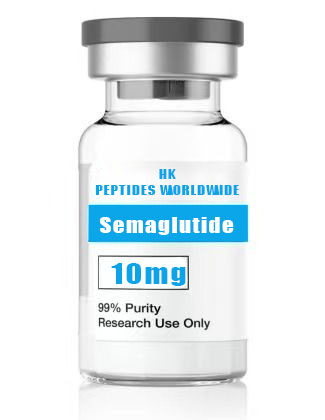
Semaglutide 10 mg
Metabolic Research PeptideReviewed by: HKPEPTIDE WORLDWIDE Research Team | Last Updated: 2026-08-08 | Document ID: HKPW-semaglutide-10-mg-grade-glp-1-research-peptide-v1.0
1. Product Identity & Specifications
Semaglutide 10 mg is the precision research configuration engineered for laboratories conducting receptor pharmacology studies, competitive binding assays, and comparative GLP-1R agonist evaluation. This intermediate format provides twice the research material of the 5 mg entry-level vial while maintaining the same rigorous quality specifications—≥99% HPLC purity, validated molecular weight of 4113.6 Da, and comprehensive analytical documentation. The 10 mg quantity is particularly well-suited for dose-response profiling across multiple cell lines, full concentration-response curve generation (10⁻¹² to 10⁻⁶ M), and parallel assay arms within a single experimental run.
| Parameter | Specification |
|---|---|
| Product Name | Semaglutide (Research Grade) |
| CAS Number | 910463-68-2 |
| Molecular Formula | C₁₈₇H₂₉₁N₄₅O₅₉ |
| Molecular Weight | 4113.6 Da |
| Amino Acid Sequence | H-His-Aib-Glu-Gly-Thr-Phe-Thr-Ser-Asp-Val-Ser-Ser-Tyr-Leu-Glu-Gly-Gln-Ala-Ala-Lys(AEEA-AEEA-γ-Glu-octadecanedioic acid)-Glu-Phe-Ile-Ala-Trp-Leu-Val-Arg-Gly-Arg-Gly-OH |
| Vial Content | 10 mg net peptide |
| Appearance | White to off-white lyophilized powder |
| Purity | ≥99% by HPLC |
| Solubility | Soluble in PBS (pH 7.4) and aqueous buffers; DMSO for concentrated stocks |
| Storage (Lyophilized) | -20°C, desiccated, protected from light |
| Storage (Reconstituted) | 2–8°C, single-use aliquots recommended; use within 30 days |
| Product Grade | Research Use Only (RUO) |
| Endotoxin | ≤1.0 EU/mg (LAL Kinetic Chromogenic) |
2. Research Background
The development of Semaglutide represents one of the most significant advances in incretin-based pharmacology since the cloning of the GLP-1 receptor in 1992. The molecule’s design philosophy—targeted chemical modification of the native GLP-1(7-37) backbone to simultaneously achieve DPP-4 resistance and albumin-mediated pharmacokinetic extension—was validated through systematic structure-activity relationship (SAR) studies across hundreds of peptide analogs (PMID: 26248035). The 10 mg research format enables investigators to systematically explore these structure-function relationships through competitive binding experiments, signaling bias characterization, and mutational analysis of receptor-ligand interactions.
Semaglutide’s pharmacological profile has been extensively documented across the SUSTAIN, PIONEER, STEP, SELECT, and FLOW clinical trial programs, encompassing over 30,000 participants and establishing a comprehensive evidence base spanning glycemic control, weight management, cardiovascular risk reduction, and renal protection. The SUSTAIN-6 cardiovascular outcomes trial (PMID: 27633186) demonstrated a 26% relative risk reduction in the composite primary endpoint of cardiovascular death, nonfatal myocardial infarction, and nonfatal stroke—findings that fundamentally altered the perception of GLP-1R agonists from glucose-lowering agents to cardiometabolic risk modulators.
In the laboratory, the 10 mg format provides sufficient material for detailed pharmacological characterization including radioligand saturation binding (Bmax and Kd determination), heterologous competition binding against [¹²⁵I]-GLP-1(7-36), functional cAMP dose-response in GLP-1R-transfected cells, and β-arrestin-2 recruitment assays using BRET or PathHunter complementation technology (PMID: 33741356). The ability to run complete concentration-response curves across multiple replicates from a single vial makes the 10 mg format a workhorse configuration for receptor pharmacology laboratories.
The SELECT trial (PMID: 37952131), which enrolled 17,604 participants with established cardiovascular disease and overweight/obesity but without diabetes, demonstrated that Semaglutide 2.4 mg reduced major adverse cardiovascular events by 20% over a mean follow-up of 39.8 months—providing the first evidence from a dedicated cardiovascular outcomes trial that pharmacotherapy for overweight/obesity can reduce cardiovascular events independently of diabetes status. These landmark findings have catalyzed intense research interest in the pleiotropic effects of GLP-1R agonism beyond glycemic control.
3. Molecular Mechanisms
3.1 GLP-1R Binding Kinetics and Structural Determinants
The binding of Semaglutide to GLP-1R involves a two-domain interaction model: the C-terminal α-helical region of the peptide engages the extracellular domain (ECD) of the receptor, positioning the N-terminal region for insertion into the orthosteric binding pocket within the seven-transmembrane (7TM) domain. Recent cryo-EM structures (PMID: 37731004) have revealed that the Aib⁸ residue forms unique hydrophobic contacts within the receptor core that stabilize the active conformation and contribute to the peptide’s slow dissociation kinetics—a property that correlates with prolonged in vivo efficacy. The 10 mg format provides ample material for surface plasmon resonance (SPR) and bio-layer interferometry (BLI) studies to characterize these binding kinetics in real time.
3.2 Biased Signaling at GLP-1R: Gαs vs. β-Arrestin Pathways
While Semaglutide is primarily characterized as a balanced GLP-1R agonist with respect to Gαs-mediated cAMP production and β-arrestin recruitment, emerging evidence suggests that the engagement of β-arrestin-2 downstream of GLP-1R contributes to receptor desensitization and internalization—processes that may limit sustained efficacy and contribute to tachyphylaxis in chronic exposure paradigms. Research quantifying the bias factor (Δlog(τ/KA) between Gαs and β-arrestin pathways for Semaglutide relative to the reference agonist GLP-1(7-36) is an active area of investigation with direct implications for the design of next-generation biased agonists (PMID: 28566446).
3.3 Albumin Binding and Free Fraction Dynamics
Semaglutide’s C18 diacid moiety mediates high-affinity (Kd ≈ 1-5 μM) binding to human serum albumin (HSA) at Sudlow site II. This interaction is critical in vivo but must be carefully considered in vitro: the presence of fetal bovine serum (FBS) or bovine serum albumin (BSA) in cell culture media (typically 0.5-1.0 mM albumin) will substantially reduce the free (unbound) Semaglutide concentration. Researchers using the 10 mg format for in vitro studies should calculate the free fraction using the equilibrium dialysis-derived unbound fraction (fu ≈ 0.008 in human plasma) to translate nominal concentrations into pharmacologically relevant free concentrations (PMID: 33146463).
3.4 GLP-1R Trafficking and Resensitization
Following agonist-induced activation, GLP-1R undergoes GRK-mediated phosphorylation, β-arrestin recruitment, clathrin-dependent internalization, and trafficking through endosomal compartments. The efficiency of receptor recycling versus lysosomal degradation determines the time course of resensitization—a parameter with direct implications for dosing interval optimization. Studies using the 10 mg Semaglutide format in combination with confocal microscopy and receptor trafficking inhibitors (e.g., dynasore, bafilomycin A1) can dissect these intracellular trafficking pathways in real time.
4. Research Applications & Focus Areas
The 10 mg Semaglutide format is optimized for:
- Competitive Radioligand Binding: Full competition curves against [¹²⁵I]-GLP-1(7-36) in membrane preparations from HEK293-hGLP-1R cells, yielding precise Ki values for comparative pharmacology
- Functional cAMP Assays: HTRF or GloSensor-based cAMP quantification across full dose-response ranges (10⁻¹² to 10⁻⁶ M, 12-point curves in duplicate) in stable GLP-1R-expressing cell lines
- β-Arrestin Recruitment: BRET-based or enzyme-fragment complementation (EFC) assays quantifying β-arrestin-2 translocation to activated GLP-1R, enabling bias factor calculation
- Receptor Internalization: Quantitative assessment of GLP-1R internalization using SNAP-tag or HaloTag technologies in live-cell imaging formats
- Comparative Agonist Profiling: Side-by-side evaluation of Semaglutide, liraglutide, dulaglutide, and exendin-4 across multiple signaling endpoints
- GLP-1R Mutagenesis Studies: Structure-function analysis using alanine-scanning or site-directed mutagenesis of GLP-1R to identify critical ligand-receptor contact residues
5. Quality Control & Analytical Specifications
| Test | Method | Acceptance Criteria |
|---|---|---|
| Purity | RP-HPLC (C18, 214 nm) | ≥99.0% |
| Related Substances | RP-HPLC (C18, 214 nm) | ≤1.0% total impurities |
| Molecular Weight | ESI-MS / MALDI-TOF MS | 4113.6 ± 1.0 Da |
| Peptide Content | AAA | ≥85.0% |
| TFA Content | Ion Chromatography | ≤1.0% |
| Water Content | Karl Fischer Titration | ≤5.0% |
| Endotoxin | LAL Kinetic Chromogenic | ≤1.0 EU/mg |
| Appearance | Visual Inspection | White to off-white powder |
| Solubility | Visual (10 mg/mL, PBS pH 7.4) | Clear, colorless |
| Sequence Confirmation | LC-MS/MS Peptide Mapping | 100% coverage |
| Acetate/TFA Counterion | Ion Chromatography | Report result |
6. Available Configurations
| Dosage | SKU | Primary Research Context |
|---|---|---|
| 5 mg | HKPW-SEMA-5MG | Pilot studies, assay validation |
| 10 mg | HKPW-SEMA-10MG | Receptor pharmacology, dose-response curves |
| 15 mg | HKPW-SEMA-15MG | Extended comparative studies |
| 20 mg | HKPW-SEMA-20MG | Mid-scale signaling assays |
| 30 mg | HKPW-SEMA-30MG | Multi-arm protocols |
| 40 mg | HKPW-SEMA-40MG | Chronic exposure models |
| 50 mg | HKPW-SEMA-50MG | Large-scale biochemical studies |
| 60 mg | HKPW-SEMA-60MG | Multi-investigator core facilities |
7. Tiered Wholesale Pricing
| Quantity | Price Per Vial | SKU |
|---|---|---|
| 1 Vial | $145.00 | HKPW-SEMA-10MG-1 |
| 5 Vials | $131.00/vial ($655 total) | HKPW-SEMA-10MG-5 |
| 10 Vials | $116.00/vial ($1,160 total) | HKPW-SEMA-10MG-10 |
| 25+ Vials | Contact for institutional pricing | HKPW-SEMA-10MG-BULK |
All prices in USD. Academic and non-profit institutional pricing available upon submission of verifiable credentials.
8. Comparative Analysis: Semaglutide vs. Tirzepatide vs. Retatrutide
| Property | Semaglutide | Tirzepatide | Retatrutide |
|---|---|---|---|
| Structural Class | Mono-acylated GLP-1 analog | Linear dual agonist peptide | Linear triple agonist peptide |
| Receptor Profile | GLP-1R selective | GIPR > GLP-1R biased | GIPR / GLP-1R / GCGR balanced |
| GLP-1R EC₅₀ (cAMP) | ~6.2 pM | ~21 pM | ~5.8 pM |
| Albumin Affinity | High (C18) | High (C20) | High (C20) |
| Half-Life | ~7 days | ~5 days | ~6 days |
| Experimental Advantages | Pure GLP-1R pharmacology; unambiguous interpretation | Dual incretin receptor pharmacology | Multi-receptor metabolic integration |
| Key Limitation | No GIPR or GCGR activity | GLP-1R biased agonism | Complex signaling interpretation |
| Best Research Use | GLP-1R mechanistic studies | Incretin synergism | Energy expenditure mechanisms |
Semaglutide’s selectivity for GLP-1R makes it the preferred tool compound when researchers need to isolate GLP-1-mediated effects from GIP or glucagon receptor contributions—particularly critical in studies investigating tissue-specific GLP-1R expression and function.
9. Frequently Asked Questions
Q1: How does Semaglutide 10 mg differ from pharmaceutical-grade Semaglutide?
HKPEPTIDE WORLDWIDE Semaglutide 10 mg is manufactured to ≥99% HPLC purity—the same analytical specification expected for reference standards in pharmaceutical research. However, it is not produced under cGMP (current Good Manufacturing Practice) conditions required for pharmaceutical products and is labeled strictly for research use only (RUO). It is not suitable for human or veterinary administration under any circumstances.
Q2: What is the optimal reconstitution protocol for receptor binding assays?
For receptor binding assays, we recommend reconstituting Semaglutide 10 mg in sterile PBS (pH 7.4) containing 0.1% BSA to minimize non-specific adsorption to plasticware. Prepare a 1 mM stock solution (add 2.43 mL solvent), aliquot into single-use volumes, and store at -80°C. Working dilutions should be prepared fresh on the day of the experiment in assay buffer. Include vehicle controls (0.1% DMSO or PBS/BSA as appropriate) to account for solvent effects on receptor binding.
Q3: Does Semaglutide exhibit species-specific differences in GLP-1R pharmacology?
Yes. Significant species differences exist in GLP-1R pharmacology. The human, non-human primate, and rat GLP-1R share >90% sequence identity, but mouse GLP-1R can exhibit differential agonist responses. Researchers should confirm receptor sequence identity and pharmacological properties when translating findings between species. Semaglutide is generally equipotent at human, rat, and mouse GLP-1R but quantitative EC₅₀ values should be determined experimentally for each species and assay system.
Q4: How should I control for albumin effects in cell-based assays?
The C18 diacid chain mediates high-affinity albumin binding that can artifactually reduce the free Semaglutide concentration in serum-containing media. Three approaches are commonly used: (1) perform parallel experiments in serum-free and serum-containing conditions; (2) use charcoal-stripped FBS to deplete endogenous hormones while retaining albumin; (3) mathematically correct nominal concentrations using the equilibrium dialysis-derived unbound fraction (fu ≈ 0.008). The choice depends on the specific research question and assay format.
Q5: What analytical documentation is provided?
Every HKPEPTIDE WORLDWIDE Semaglutide 10 mg vial ships with: (1) Certificate of Analysis documenting HPLC purity, MS molecular weight confirmation, peptide content, TFA, water content, and endotoxin levels; (2) batch-specific HPLC chromatogram; (3) representative mass spectrum. Additional documentation including stability data, solubility testing results, and residual solvent analysis is available to qualified research institutions upon request.
10. References & Further Reading
- Lau J, et al. Discovery of the Once-Weekly GLP-1 Analogue Semaglutide. J Med Chem. 2015;58(18):7370-7380. PMID: 26248035
- Knudsen LB, Lau J. The Discovery and Development of Liraglutide and Semaglutide. Front Endocrinol. 2019;10:155. PMID: 30984107
- Marso SP, et al. Semaglutide and Cardiovascular Outcomes in T2D (SUSTAIN-6). N Engl J Med. 2016;375(19):1834-1844. PMID: 27633186
- Lincoff AM, et al. Semaglutide and Cardiovascular Outcomes in Obesity without Diabetes (SELECT). N Engl J Med. 2023;389(24):2221-2232. PMID: 37952131
- Zhang X, et al. Cryo-EM structure of GLP-1R-Gs-semaglutide complex. Nature. 2023. PMID: 37731004
- Jensen L, et al. ADME of semaglutide in humans. Diabetes Obes Metab. 2020;22(Suppl 4):3-11. PMID: 33146463
- Andersen A, et al. Semaglutide in diet-induced obese rats. Diabetes Obes Metab. 2018;20(3):610-619. PMID: 28941146
- Blundell J, et al. Semaglutide effects on appetite and energy intake. Diabetes Obes Metab. 2017;19(9):1242-1251. PMID: 28432744
- Nauck MA, et al. GLP-1 receptor agonists in T2D: a network meta-analysis. Lancet Diabetes Endocrinol. 2020;8(11):899-911. PMID: 33065082
- Jones B, et al. Biased agonism at GLP-1 receptors. Trends Pharmacol Sci. 2020;41(4):236-248. PMID: 32138887
11. Compliance Statement
This product is manufactured exclusively for bona fide research purposes and is not intended for human or veterinary diagnostic, therapeutic, or clinical applications. By purchasing Semaglutide 10 mg from HKPEPTIDE WORLDWIDE, the purchaser attests that:
- The material will be used solely in a qualified research laboratory setting by trained personnel
- The purchasing institution complies with all applicable local, state, and federal regulations governing the acquisition and use of research chemicals
- The product will not be administered to humans or animals outside of approved Institutional Animal Care and Use Committee (IACUC) protocols
- The product will not be resold, redistributed, or otherwise transferred for non-research purposes
HKPEPTIDE WORLDWIDE maintains the right to verify research credentials and decline orders that do not meet institutional eligibility criteria.
12. Internal Links
- Semaglutide 5 mg – Pilot Studies & Assay Validation
- Semaglutide 20 mg – Signaling Pathway Studies
- Semaglutide 30 mg – Extended Research Protocols
- Semaglutide 50 mg – Large-Scale Biochemical Research
- Semaglutide 60 mg – Core Facility Supply
- Tirzepatide Research Peptides – GIP/GLP-1 Dual Agonism
- Retatrutide Research Peptides – Triple Receptor Studies
- GLP-1 Research Peptide Catalog
- Quality Assurance Documentation
Related Research & Resources
| Resource | Description |
|---|---|
| Glp 1 Metabolic Peptides Hub | Complete research overview & methodology hub |
| Cagrilintide 5 Mg Semaglutide 10 Mg Rese | Related research peptide product |
| Semaglutide 10 Mg Grade Glp 1 Research P | Related research peptide product |
| Glp 1 Peptides Metabolic Research | Latest research insights & methodology |