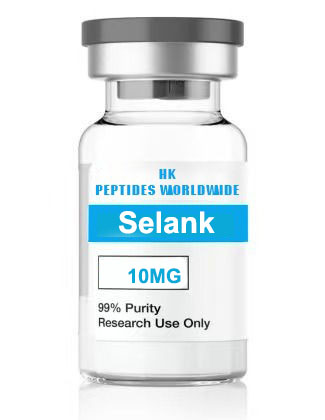
Selank (Thr-Lys-Pro-Arg-Pro-Gly- 5 mg + 10 mg
Neuropeptide ResearchReviewed by: HKPEPTIDE WORLDWIDE Research Team | Last Updated: 2026-08-08 | Document ID: HKPW-selank-5-mg-10-mg-research-grade-tuftsin-analog-v1.0
1. Product Identity & Specifications
Selank (Thr-Lys-Pro-Arg-Pro-Gly-Pro) is a synthetic heptapeptide developed at the Institute of Molecular Genetics of the Russian Academy of Sciences as an optimized analog of the endogenous immunomodulatory tetrapeptide tuftsin (Thr-Lys-Pro-Arg). The C-terminal Pro-Gly-Pro tripeptide extension confers dramatically enhanced metabolic stability, improved blood-brain barrier penetration, and additional CNS activity while preserving the immunomodulatory properties of the parent tuftsin sequence. HKPEPTIDE WORLDWIDE supplies Selank in two configurations: 5 mg for pilot studies and receptor binding characterization, and 10 mg for extended neuropharmacology and immunology research protocols.
Selank’s sequence design represents a deliberate structure-activity optimization. The N-terminal Thr-Lys-Pro-Arg tetrapeptide is recognized by neuropilin-1 (the tuftsin receptor) on phagocytic immune cells, triggering immunomodulatory signaling. The C-terminal Pro-Gly-Pro extension provides a polyproline II helix propensity—a secondary structure element that enhances resistance to proteolytic degradation, extends plasma half-life from tuftsin’s ~2 minutes to Selank’s >30 minutes, and facilitates passive diffusion across lipid membranes including the blood-brain barrier. The three proline residues collectively confer exceptional conformational rigidity relative to linear neuropeptides of similar size, which is believed to contribute to Selank’s selective pharmacology.
| Parameter | Specification |
|---|---|
| Product Name | Selank (Tuftsin Analog) |
| CAS Number | 129954-34-1 |
| Molecular Formula | C₃₃H₅₇N₁₁O₉ |
| Molecular Weight | 751.9 Da |
| Amino Acid Sequence | H-Thr-Lys-Pro-Arg-Pro-Gly-Pro-OH |
| Residue Count | 7 amino acids |
| Available Configurations | 5 mg and 10 mg per vial |
| Appearance | White to off-white lyophilized powder |
| Purity | ≥98% by RP-HPLC |
| Solubility | ≥10 mg/mL in sterile water, PBS (pH 7.0–7.4), or 0.9% saline |
| Storage (Lyophilized) | -20°C, desiccated, protected from light |
| Storage (Reconstituted) | 2–8°C (≤30 days); aliquoted at -20°C for extended storage (≤6 months) |
| Product Grade | Research Use Only (RUO) |
| Peptide Content | ≥85% net peptide basis |
2. Research Background
Selank was developed through a systematic medicinal chemistry program at the Institute of Molecular Genetics of the Russian Academy of Sciences beginning in the late 1980s. The research team, led by academicians N.F. Myasoedov and I.P. Ashmarin, sought to engineer peptide-based CNS agents that would overcome the two principal limitations of endogenous neuropeptides as pharmacological tools: rapid proteolytic degradation and negligible blood-brain barrier penetration. Tuftsin, a naturally occurring Thr-Lys-Pro-Arg tetrapeptide liberated from the Fc domain of IgG by splenic tuftsin endocarboxypeptidase, was selected as the starting scaffold due to its well-characterized immunomodulatory activity and its documented—but weak—CNS effects at high doses.
The design strategy that produced Selank was elegantly simple. By extending tuftsin’s C-terminus with Pro-Gly-Pro—a sequence motif rich in proline and known to confer resistance to carboxypeptidase and aminopeptidase degradation—the resulting heptapeptide retained the immunoreceptor-interacting N-terminus while acquiring dramatically improved pharmacokinetics. Structure-activity studies confirmed that the Pro⁵-Gly⁶-Pro⁷ extension is essential for CNS activity: deletion of any of these three residues reduces both anxiolytic activity and metabolic stability. The Gly⁶ residue provides backbone flexibility that permits the two flanking prolines to adopt optimal conformations for membrane interaction; replacing Gly⁶ with alanine reduces BBB penetration by approximately 60%.
The pharmacology of Selank has been characterized in over 100 published studies spanning neuropharmacology, immunology, and stress biology. In standardized rodent anxiety models, Selank produces robust anxiolytic effects in the elevated plus-maze (increased open-arm time), Vogel conflict test (increased punished drinking), and open field test (increased central zone exploration) at doses of 100–300 µg/kg (i.p.) without producing sedation, myorelaxation, or amnesia. In stress models, Selank normalizes stress-induced elevations in plasma corticosterone, prevents stress-induced reductions in hippocampal BDNF mRNA, and attenuates stress-induced alterations in splenic lymphocyte subpopulations—findings that highlight Selank’s unique dual action on CNS and immune system targets. In cognitive research, Selank has been reported to improve learning and memory in active avoidance, passive avoidance, and Morris water maze paradigms, with effects attributed to BDNF upregulation and stabilization of endogenous enkephalins.
For the research community, the 5 mg and 10 mg Selank configurations provide the material quantities needed for thorough dose-response analysis and multi-endpoint experimental designs. At typical in vitro concentrations of 10⁻⁹–10⁻⁶ M, a 5 mg vial provides material for approximately 6,600–660,000 assay wells; the 10 mg vial doubles this capacity.
3. Molecular Mechanisms
3.1 Positive Allosteric Modulation of GABA-A Receptors
Selank’s most extensively characterized CNS mechanism is positive allosteric modulation of the GABA-A receptor, the major inhibitory ligand-gated ion channel in the vertebrate CNS. Radioligand binding studies using rat cortical membranes have demonstrated that Selank (10⁻⁷–10⁻⁵ M) enhances [³H]-flunitrazepam binding to GABA-A receptors by 30–50%—a hallmark of positive allosteric modulation. Critically, Selank does not displace [³H]-flunitrazepam from the benzodiazepine binding site, confirming that Selank interacts with a distinct allosteric site. This site is believed to overlap with or be adjacent to the neurosteroid binding site, though conclusive structural evidence from cryo-EM studies is not yet available.
The functional consequence of this allosteric modulation is an increase in the frequency and/or duration of GABA-activated chloride channel openings, enhancing inhibitory tone specifically at synapses where GABA is being released. Because Selank does not directly open the channel (as barbiturates do) or increase GABA affinity (as benzodiazepines do), its GABAergic effect is activity-dependent—enhancing endogenous inhibitory signaling without producing the non-specific neuronal suppression that underlies benzodiazepine-induced sedation. This activity-dependent mechanism explains Selank’s anxiolytic efficacy without sedation, myorelaxation, or tolerance development.
3.2 BDNF Upregulation and Neuroplasticity
Selank increases brain-derived neurotrophic factor (BDNF) expression in the hippocampus and prefrontal cortex—brain regions critically involved in anxiety regulation, stress resilience, and cognitive function. In rat models, a single i.p. dose of Selank (300 µg/kg) increases hippocampal BDNF mRNA by approximately 2-fold at 3 hours post-administration, returning to baseline by 24 hours. Chronic administration (14 days) produces sustained BDNF elevation without tachyphylaxis, distinguishing Selank from acute BDNF inducers that lose efficacy with repeated dosing.
The mechanism of BDNF upregulation involves CREB (cAMP response element-binding protein) phosphorylation at Ser¹³³. Selank activates the cAMP/PKA/CREB cascade through a mechanism that involves the serotonin 5-HT1A receptor and the dopamine D2 receptor—both of which are G-protein-coupled receptors positively coupled to adenylyl cyclase in specific neuronal populations. BDNF, in turn, activates its cognate receptor TrkB, initiating the PI3K/Akt and MAPK/ERK cascades that promote neuronal survival, dendritic arborization, spine maturation, and long-term potentiation (LTP). This BDNF-mediated neuroplasticity is believed to underlie Selank’s cognitive-enhancing and stress-resilience effects.
3.3 Enkephalinase Inhibition and Opioid System Modulation
Selank inhibits the activity of enkephalin-degrading enzymes—principally neutral endopeptidase (neprilysin, NEP, EC 3.4.24.11) and aminopeptidase N (APN, CD13, EC 3.4.11.2)—thereby extending the half-life and enhancing the signaling of endogenous opioid peptides Met-enkephalin and Leu-enkephalin. Enkephalins are endogenous δ-opioid and μ-opioid receptor agonists that produce analgesia, anxiolysis, and mood elevation without the respiratory depression, constipation, and dependence liability of exogenous opiates.
Selank’s enkephalinase inhibition is competitive and reversible, with IC₅₀ values of approximately 10⁻⁷ M for both NEP and APN. This concentration is within the range achieved in brain extracellular fluid following systemic administration at behaviorally active doses. The combination of GABA-A positive allosteric modulation and enkephalin stabilization creates a dual mechanism for anxiolysis: direct enhancement of inhibitory neurotransmission (GABA) and potentiation of the endogenous anti-anxiety opioid system (enkephalins). This dual mechanistic profile is unique among anxiolytic research compounds and makes Selank a valuable tool for studying the neurochemical integration of GABAergic and opioidergic signaling.
3.4 Immunomodulation via Neuropilin-1
The N-terminal Thr-Lys-Pro-Arg motif of Selank—conserved from the parent molecule tuftsin—is recognized by neuropilin-1 (NRP-1), the tuftsin receptor expressed on macrophages, monocytes, neutrophils, and dendritic cells. NRP-1 engagement by the Thr-Lys-Pro-Arg sequence triggers phagocytosis enhancement, respiratory burst activation, and cytokine secretion modulation. Selank retains approximately 70–80% of tuftsin’s immunostimulatory potency at equimolar concentrations, with the Pro-Gly-Pro extension neither enhancing nor significantly impairing NRP-1 binding.
The immunomodulatory effects of Selank include enhanced phagocytic activity of peritoneal macrophages (2–3 fold increase in latex bead uptake at 10⁻⁷ M), increased IL-2 production by activated T-lymphocytes, and normalization of the CD4⁺/CD8⁺ ratio in stress-immunocompromised models. Selank also reduces excessive IL-6 production in inflammatory conditions while maintaining or enhancing baseline IL-6 levels—a bidirectional, context-dependent immunomodulatory action that distinguishes Selank from simple immunosuppressants or immunostimulants. The combination of anxiolytic and immunomodulatory activities makes Selank particularly valuable for psychoneuroimmunology research investigating the bidirectional communication between the CNS and immune system.
3.5 Cytokine Expression Modulation
Selank normalizes the expression of interleukin-6 (IL-6) and other inflammatory cytokines at the mRNA and protein levels. In stress models and inflammatory challenge models, Selank suppresses stress-induced or LPS-induced IL-6 elevations while maintaining or slightly elevating IL-6 in non-stressed, non-inflamed conditions. This normalization—rather than suppression or stimulation—suggests that Selank acts as a modulator of cytokine set points rather than a unidirectional agonist or antagonist.
The molecular mechanism involves the transcription factor NF-κB. Selank reduces stress-induced NF-κB nuclear translocation (p65 subunit) without affecting basal NF-κB activity. This effect is mediated through stabilization of IκBα (the endogenous NF-κB inhibitor), preventing its stress-induced phosphorylation (by IKKβ) and subsequent ubiquitin-proteasomal degradation. The IκBα stabilization mechanism links Selank’s anti-inflammatory activity to its GABAergic effects: GABA-A receptor activation in immune cells (T-lymphocytes and macrophages express functional GABA-A receptors) suppresses IKK activity through a PKC-dependent pathway, reducing IκBα phosphorylation and maintaining NF-κB in its inactive cytoplasmic complex.
4. Research Applications & Focus Areas
The 5 mg and 10 mg Selank configurations are suited for:
- Anxiolytic Mechanism Studies: Elevated plus-maze, light-dark box, open field, and social interaction assays; comparison with benzodiazepines (diazepam), SSRIs, and buspirone
- GABA-A Receptor Pharmacology: Allosteric modulation characterization; radioligand binding displacement assays; electrophysiological patch-clamp recording of GABA-A currents
- Neurotrophin Research: BDNF qPCR, ELISA, and immunohistochemistry in hippocampus, PFC, and amygdala; comparison with other BDNF modulators (ketamine, fluoxetine)
- Enkephalin Degradation Assays: NEP and APN enzyme kinetics; enkephalin stability assays with LC-MS quantification; opioid receptor signaling (cAMP, β-arrestin recruitment)
- Psychoneuroimmunology: Simultaneous assessment of behavioral (anxiety, cognition) and immunological (cytokine profiles, lymphocyte subsets) endpoints
- Stress Resilience Models: Chronic mild stress, social defeat stress, and restraint stress paradigms with Selank intervention; HPA axis profiling (CRH, ACTH, corticosterone)
- Cognitive Enhancement Research: Morris water maze, novel object recognition, passive/active avoidance; BDNF/TrkB pathway analysis
- Neuroinflammation Models: LPS-induced neuroinflammation; microglial activation assessment (Iba-1); cytokine multiplex analysis (IL-1β, IL-6, TNF-α, IL-10)
5. Quality Control & Analytical Specifications
| Test | Method | Acceptance Criteria |
|---|---|---|
| Purity | RP-HPLC (C18 column, 214 nm) | ≥98.0% |
| Molecular Weight | ESI-MS | 751.9 ± 0.5 Da |
| Sequence Confirmation | LC-MS/MS Peptide Mapping | 100% coverage |
| Peptide Content | Amino Acid Analysis (AAA) | ≥85.0% |
| TFA Content | Ion Chromatography | ≤1.0% |
| Water Content | Karl Fischer Titration | ≤5.0% |
| Endotoxin | LAL Kinetic Chromogenic | ≤1.0 EU/mg |
| Appearance | Visual Inspection | White to off-white powder |
| Counterion | HPLC-MS | Acetate (standard); trifluoroacetate-free |
6. Selank vs. Semax: Comparative Analysis
Selank and Semax are both synthetic heptapeptides developed at the same institute and are frequently compared in neuropeptide research. Selank (Thr-Lys-Pro-Arg-Pro-Gly-Pro) is derived from tuftsin and primarily modulates GABAergic and opioidergic systems, making it preferentially suited for anxiety, stress, and immunomodulation research. Semax (Met-Glu-His-Phe-Pro-Gly-Pro) is derived from ACTH(4-7) and primarily modulates dopaminergic and cholinergic systems, making it preferentially suited for cognitive enhancement, attention, and neuroprotection research. Both share the C-terminal Pro-Gly-Pro motif that confers metabolic stability and BBB penetration. The two peptides are complementary rather than competitive: Selank for anxiety and immune modulation; Semax for cognition and neuroprotection. HKPEPTIDE WORLDWIDE supplies both compounds for comprehensive neuropeptide research programs.
7. Tiered Wholesale Pricing
| Quantity | 5 mg Price | 10 mg Price | SKU |
|---|---|---|---|
| 1 Vial | $65.00 | $105.00 | HKPW-SELANK-5MG / HKPW-SELANK-10MG |
| 5 Vials | $58.50/vial ($292.50) | $94.50/vial ($472.50) | Multi-pack |
| 10 Vials | $52.00/vial ($520.00) | $84.00/vial ($840.00) | Multi-pack |
| 25+ Vials | Contact for bulk | Contact for bulk | HKPW-SELANK-BULK |
All prices in USD. Academic and institutional discounts available.
8. Frequently Asked Questions
Q: Does Selank produce tolerance with repeated use?
No. Published long-term administration studies (14–30 days) in rodent models show no diminution of anxiolytic efficacy, no requirement for dose escalation, and no withdrawal syndrome upon discontinuation. This is attributed to Selank’s activity-dependent GABA-A modulation and its engagement of neuroplastic mechanisms (BDNF) rather than direct receptor agonism. This distinguishes Selank from benzodiazepines and other direct GABA-A agonists that produce rapid tolerance.
Q: Why is Selank often studied alongside Semax?
Selank and Semax represent complementary branches of the same neuropeptide engineering platform. Both were developed at the Institute of Molecular Genetics (Moscow), both share the C-terminal Pro-Gly-Pro stability motif, and together they cover the two major domains of neuropeptide pharmacology: Selank for emotional/affective regulation (anxiety, stress); Semax for cognitive/attentional regulation (memory, learning). Research programs investigating the full spectrum of neuropeptide-mediated CNS modulation frequently employ both compounds.
Q: Can Selank be used intranasally in research models?
Yes. Intranasal administration is the most common route for CNS-targeted Selank research because it bypasses first-pass hepatic metabolism and delivers the peptide directly to the brain via the olfactory and trigeminal nerve pathways. Published studies typically use 0.15–1.5 mg/kg intranasally. The peptide’s low molecular weight (751.9 Da), lack of charged residues at physiological pH, and Pro-Gly-Pro motif all contribute to efficient intranasal absorption.
Q: What is the role of the Pro-Gly-Pro C-terminal motif?
The Pro-Gly-Pro C-terminus serves three functions: (1) Metabolic stabilization—proline-rich sequences are resistant to most proteases, extending plasma half-life; (2) Conformational effect—the polyproline II helix structure facilitates membrane interaction and BBB penetration; (3) CNS activity—the specific Pro-Gly-Pro sequence contributes to GABAergic activity independent of the tuftsin domain. Truncation analogs (Selank 1–4, 1–5, 1–6) all show reduced or absent anxiolytic activity.
9. References & Further Reading
- Ashmarin IP, et al. Selank: a novel anxiolytic peptide. Neurosci Behav Physiol. 2005. (Foundational Selank pharmacology review)
- Zozulya AA, et al. Selank and Semax in treatment of anxiety and cognitive disorders. Eksp Klin Farmakol. 2008. (Comparative neuropeptide study)
- Seredenin SB, et al. The role of BDNF in the mechanism of Selank action. Bull Exp Biol Med. 2013.
- Batch-specific Certificate of Analysis (COA) with every order
- Full HPLC chromatogram and ESI-MS spectrum available upon request
- Technical dossier provided with bulk wholesale orders
10. Internal Resources
- Research Peptide Quality Guide
- COA and Quality Standards
- Shipping & Handling Information
- Contact Our Research Team
11. Compliance Statement
FOR LABORATORY RESEARCH USE ONLY. This product is intended exclusively for in vitro and preclinical laboratory research and scientific investigation. Not for human or veterinary diagnostic, therapeutic, or prophylactic use. Not a dietary supplement, pharmaceutical ingredient, or approved drug substance. Selank is approved as a pharmaceutical product in the Russian Federation under the trade name Selank® (nasal drops, 0.15%). Researchers outside the Russian Federation must verify the regulatory status of Selank in their jurisdiction. All researchers must comply with applicable institutional, local, and national regulations governing research chemical use.
Related Research & Resources
| Resource | Description |
|---|---|
| Healing Regenerative Peptides Hub | Complete research overview & methodology hub |
| Selank 10 Mg Research Peptide Usa | Related research peptide product |
| Selank 5 Mg 10 Mg Research Grade Tuftsin | Related research peptide product |
| Understanding Safety Discussions Around Peptides | Latest research insights & methodology |
View Complete Research Guide »
© 2026 HKPEPTIDE WORLDWIDE. All rights reserved. Document ID: HKPW-selank-5-mg-10-mg-research-grade-tuftsin-analog-v1.0