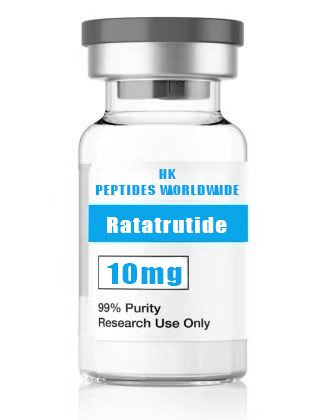
retatrutide 10 mg
Technical Specifications
| Parameter | Value |
|---|---|
| Product Name | Retatrutide (LY3437943) |
| CAS Number | 2381089-83-2 |
| Molecular Formula | C₂₂₃H₃₄₃N₅₅O₆₈ |
| Molecular Weight | ~4845.5 Da |
| Dosage | 10 mg per vial |
| Purity | ≥98% (HPLC-verified) |
| Appearance | White to off-white lyophilized powder |
| Solubility | Soluble in aqueous buffer solutions |
| Storage | -20°C, protected from light and moisture |
| Pharmacological Class | Triple GIP/GLP-1/GCGR receptor agonist |
| Supplier | HK Peptides Worldwide |
| Intended Use | Laboratory and scientific research only |
Product Overview
Retatrutide 10 mg is a research-grade synthetic peptide supplied exclusively for laboratory and scientific investigation. This product represents the second tier within HK Peptides Worldwide’s comprehensive Retatrutide research portfolio and serves as a strategic step-up from the 5 mg entry-level format. The 10 mg vial provides double the research material of the base format, enabling expanded experimental designs, replicate studies, and more ambitious preliminary research programs while maintaining accessibility for laboratories transitioning from pilot-phase investigations to confirmatory experimental protocols.
Retatrutide (developmental code LY3437943) is an engineered unimolecular peptide that functions as a balanced triple agonist at the glucose-dependent insulinotropic polypeptide (GIP) receptor, the glucagon-like peptide-1 (GLP-1) receptor, and the glucagon (GCGR) receptor. This multi-receptor pharmacology positions Retatrutide as a uniquely valuable research tool for investigating complex metabolic signaling networks. With a molecular weight of approximately 4845.5 Daltons, the peptide comprises a 39-amino acid backbone with a strategically conjugated C20 fatty diacid moiety that facilitates reversible albumin binding and extended receptor engagement in experimental systems.
The 10 mg dosage format addresses a critical research need: the gap between preliminary single-vial experiments and committed multi-vial research programs. It provides sufficient material to conduct comprehensive dose-response studies, replicate key findings, and perform parallel assay configurations while still representing a manageable investment for research groups establishing triple agonist capabilities in their laboratories. Each batch is manufactured under controlled conditions using solid-phase peptide synthesis (SPPS) and verified by HPLC and mass spectrometry to ensure ≥98% purity.
This product is distributed by HK Peptides Worldwide strictly for in-vitro research applications. It is not intended for human consumption, veterinary use, clinical treatment, or diagnostic procedures. All research activities involving this peptide must comply with applicable institutional, local, and national regulatory requirements.
Molecular Mechanism and Research Background
The Triple Agonist Paradigm
The development of Retatrutide represents a conceptual evolution in metabolic peptide pharmacology that has progressed through distinct generations: from selective single-receptor GLP-1 agonists (first generation) to unimolecular dual GIP/GLP-1 receptor co-agonists (second generation), and now to triple GIP/GLP-1/GCGR receptor agonists (third generation). Understanding this progression is essential for contextualizing Retatrutide’s research significance.
GIP Receptor Component: The glucose-dependent insulinotropic polypeptide receptor is expressed in pancreatic beta-cells, adipose tissue, bone, and the central nervous system. Native GIP is a 42-amino acid incretin hormone that potentiates glucose-stimulated insulin secretion. In the context of Retatrutide’s balanced pharmacology, GIPR agonism contributes to insulinotropic activity while potentially mitigating the gastrointestinal adverse effects associated with isolated GLP-1 receptor activation. Research has also elucidated GIP’s role in lipid metabolism, with GIPR activation in adipocytes promoting triglyceride storage and fatty acid uptake in the postprandial state.
GLP-1 Receptor Component: The glucagon-like peptide-1 receptor is extensively characterized in metabolic research. Its activation triggers a cascade of physiologically relevant effects including glucose-dependent insulin secretion, inhibition of glucagon release from pancreatic alpha-cells, deceleration of gastric emptying, and centrally mediated reductions in food intake. The GLP-1 component of Retatrutide’s activity profile provides the foundation for its effects on glycemic parameters in research models.
Glucagon Receptor Component: The inclusion of glucagon receptor agonism is Retatrutide’s distinguishing feature and represents the most innovative aspect of its pharmacology. GCGR activation stimulates hepatic glycogenolysis and gluconeogenesis, increases lipolysis in adipose tissue, promotes fatty acid oxidation in the liver, and elevates energy expenditure. The scientific rationale for incorporating GCGR activity alongside incretin receptor agonism rests on the hypothesis that GIP and GLP-1 mediated insulin secretion and glucose disposal effectively counterbalance the hyperglycemic potential of glucagon signaling, resulting in a net metabolic benefit characterized by enhanced weight loss and improved lipid profiles.
Structural Determinants of Balanced Triple Agonism
Retatrutide’s amino acid sequence has been computationally designed and experimentally optimized to achieve a specific receptor activity ratio. The peptide backbone is derived from the GIP sequence scaffold, with key residues modified to introduce GLP-1 and glucagon receptor activity while preserving GIP receptor affinity. Critical structural features include:
- N-terminal histidine and adjacent residues: These positions are essential determinants of receptor activation potency and selectivity across the three target receptors. Specific amino acid identities at positions 1-3 influence the balance between GIP, GLP-1, and GCGR agonism.
- Alpha-helical stabilization: Residues that promote alpha-helical secondary structure enhance receptor binding affinity and metabolic stability. The incorporation of aminoisobutyric acid (Aib) or similar helix-stabilizing residues at strategic positions contributes to Retatrutide’s pharmacological profile.
- C20 fatty diacid conjugation: A eicosanedioic acid moiety is attached via a gamma-glutamic acid linker to a lysine residue in the peptide sequence. This acylation strategy enables reversible, high-affinity binding to serum albumin, which prolongs the peptide’s presence in experimental systems by reducing renal clearance and protecting against enzymatic degradation.
Research Characteristics
High-Purity Research Material
Retatrutide 10 mg undergoes comprehensive analytical characterization designed to meet the requirements of rigorous scientific investigation. Purity determination by RP-HPLC employs optimized gradient conditions with UV detection at multiple wavelengths, and the acceptance criterion of ≥98% ensures that experimental results reflect the biological activity of Retatrutide rather than the confounding effects of peptide-related impurities. Mass spectrometry confirmation of molecular identity is performed on every batch using high-resolution accurate-mass (HRAM) instrumentation.
Batch-to-Batch Consistency
The 10 mg format benefits from standardized manufacturing processes that have been refined across production campaigns. Solid-phase peptide synthesis under controlled conditions, followed by preparative HPLC purification and lyophilization, yields a product with demonstrated batch-to-batch consistency in purity, peptide content, and residual impurity profiles. Researchers conducting longitudinal studies or multi-experiment programs can confidently compare data across different production lots.
Controlled Manufacturing and Quality Systems
Retatrutide 10 mg is produced in certified peptide manufacturing facilities operating under documented quality management systems. While not manufactured under full current Good Manufacturing Practice (cGMP) standards for pharmaceutical products, the production process incorporates key quality control elements including raw material qualification, in-process testing, final product release testing, and stability monitoring. Each vial is assigned a unique lot number traceable to manufacturing records and analytical data.
Packaging and Stability Considerations
The 10 mg lyophilized powder is packaged in USP Type I borosilicate glass vials sealed with bromobutyl rubber stoppers and aluminum crimp seals. This packaging configuration provides effective barriers against moisture ingress, oxygen exposure, and light degradation. Vials are shipped under temperature-controlled conditions to maintain peptide stability during transit, and researchers are advised to store unopened vials at -20°C upon receipt.
Research Applications
Expanded Receptor Characterization Studies
With 10 mg of material, researchers can conduct more comprehensive receptor pharmacology studies than is practical with the 5 mg format. This includes complete concentration-response curve generation across all three target receptors, investigation of binding kinetics through association and dissociation rate measurements, and examination of allosteric modulation phenomena. The additional material supports both radioligand binding and functional assay formats in parallel.
Signaling Bias and Pathway Selectivity Investigation
An area of active research interest is the potential for biased agonism—the ability of a ligand to preferentially activate specific intracellular signaling pathways downstream of a given receptor. Retatrutide 10 mg provides sufficient material for systematic investigation of G protein-dependent versus β-arrestin-dependent signaling across GIP, GLP-1, and GCGR receptors. Such studies employ complementary assay technologies including cAMP accumulation (Gαs), intracellular calcium mobilization (Gαq), and β-arrestin recruitment (enzyme complementation or BRET-based assays).
Comparative Pharmacology with Related Peptides
The 10 mg quantity enables side-by-side comparative studies examining Retatrutide alongside single agonists (semaglutide, liraglutide), dual agonists (tirzepatide), and native peptide hormones (GIP, GLP-1, glucagon). These comparative investigations are essential for understanding the pharmacological consequences of combining three receptor activities in a single molecule and for identifying potential synergistic or antagonistic interactions among the receptor components.
Cell-Based Metabolic Research
Researchers employing cell lines relevant to metabolic research—including pancreatic beta-cell lines (INS-1, MIN6), hepatocyte-derived cell lines (HepG2, primary hepatocytes), and adipocyte models (3T3-L1)—can utilize Retatrutide 10 mg to investigate cell-type-specific responses to triple receptor agonism. Endpoints may include insulin secretion quantification, glucose uptake measurements, lipolysis assays, and gene expression profiling.
Preliminary Stability and Formulation Studies
The 10 mg format provides adequate material for preliminary investigations of peptide stability under various experimental conditions, including pH stability profiling, temperature-dependent degradation kinetics, and compatibility testing with common laboratory solvents and buffers. These studies inform optimal handling procedures and experimental design.
Comparative Dosage Analysis
Retatrutide 10 mg in the Dosage Spectrum
The 10 mg format occupies a strategic middle-ground position between the entry-level 5 mg vial and the progressively larger formats available up to 60 mg. Understanding where 10 mg fits in the research workflow is essential for efficient resource allocation:
| Research Phase | Recommended Format | Rationale |
|---|---|---|
| Initial Screening | 5 mg | Minimum material for target validation |
| Expanded Pilots | 10 mg | Doubled capacity for replication and dose-response |
| Confirmatory Studies | 15-20 mg | Sufficient for multi-assay experimental panels |
| Established Protocols | 30-40 mg | Economical for routine, repeated experiments |
| High-Throughput | 50-60 mg | Maximum efficiency for large-scale screening |
Key Advantages of the 10 mg Format:
- Validation and Replication: Twice the material of the 5 mg format enables independent replication of key findings, a cornerstone of rigorous scientific practice.
- Dose-Response Completeness: Sufficient peptide for 8-10 point concentration-response curves across multiple receptor assays.
- Parallel Assay Configurations: Enables simultaneous investigation of multiple signaling endpoints from the same peptide preparation.
- Bridging Function: Serves as the logical bridge between pilot feasibility assessment and larger-scale committed research programs.
- Cost-Effective Scaling: The incremental cost of doubling from 5 mg to 10 mg is typically proportionally favorable compared to purchasing two 5 mg vials.
When 10 mg Is the Optimal Choice
The 10 mg format is particularly well-suited for:
- Research groups transitioning from pilot studies who have validated their assay systems and experimental approaches with the 5 mg format and now require additional material for expanded investigations.
- Graduate student thesis projects where the quantity supports a defined set of experimental aims without excess material that may expire before use.
- Comparative pharmacology studies requiring parallel testing of Retatrutide against multiple comparator peptides.
- Laboratories establishing triple agonist capabilities alongside existing GLP-1 or dual agonist research programs.
- Method development and validation where sufficient material is needed for robustness testing and system suitability assessments.
When to Consider Other Formats
- Choose 5 mg when conducting initial feasibility assessments, screening receptor constructs, or validating new assay platforms for the first time.
- Choose 15-20 mg when experimental designs require multiple independent biological replicates plus technical replicates across several assay endpoints.
- Choose 30-60 mg for established, high-throughput protocols, multi-user research facilities, or core laboratory services supporting multiple investigator groups.
Advantages and Limitations
Advantages
- Expanded Research Capacity: The 10 mg format provides double the material of the base 5 mg vial, supporting more comprehensive experimental designs without committing to larger, more costly quantities.
- Triple Agonist Tool Compound: Retatrutide is the most advanced commercially available research peptide combining GIP, GLP-1, and GCGR receptor activities, representing the cutting edge of multi-receptor pharmacology research.
- ≥98% HPLC Purity: Verified purity ensures experimental outcomes reflect Retatrutide pharmacology rather than impurity-related artifacts.
- Strategic Bridging Dosage: Serves as the logical intermediate step between initial exploration and committed research programs.
- Batch Traceability: Each vial is lot-coded and traceable to comprehensive analytical documentation.
- Validated Storage Stability: Lyophilized format with recommended -20°C storage provides extended shelf life for flexible research scheduling.
- Research Flexibility: Compatible with diverse in-vitro assay formats including binding, functional, and cell-based experimental systems.
Limitations
- Research Use Only: This product is restricted to laboratory and scientific research applications and must not be used for human or veterinary therapeutic purposes.
- In-Vitro Focus: Supplied and validated for in-vitro research; in-vivo experimental use requires independent validation and appropriate institutional approvals.
- Reconstitution Required: Lyophilized powder requires reconstitution, introducing a handling step that must be carefully controlled.
- Temperature Sensitivity: Requires consistent frozen storage; degradation may occur under suboptimal storage conditions.
- Not a Reference Standard: While manufactured to high purity standards, this product is not certified as a pharmacopeial reference standard.
- Regulatory Compliance Responsibility: Users bear responsibility for ensuring institutional and regulatory compliance in their use of this research material.
Quality Assurance and Analytical Methods
Comprehensive Release Testing
Each batch of Retatrutide 10 mg is subject to a defined panel of release tests designed to verify identity, purity, and quality attributes:
| Test | Method | Acceptance Criterion |
|---|---|---|
| Appearance | Visual inspection | White to off-white powder |
| Purity | RP-HPLC (214 nm) | ≥98.0% |
| Identity | ESI-MS | MW 4845.5 ± 1.0 Da |
| Peptide Content | AAA / Nitrogen analysis | Report result |
| Residual TFA | Ion chromatography | ≤1.0% |
| Residual Solvents | GC | Per ICH Q3C |
| Endotoxin | LAL assay | ≤1.0 EU/mg |
| Bioburden | Membrane filtration | ≤100 CFU/g |
Analytical Instrumentation
- HPLC System: Agilent 1260 Infinity II or equivalent with quaternary pump, autosampler, column compartment, and diode array detector
- HPLC Column: C18 reversed-phase, 4.6 × 150 mm, 3.5 µm particle size
- Mass Spectrometer: High-resolution Q-TOF or Orbitrap mass spectrometer with ESI source
- Mobile Phase: Water/acetonitrile gradient with 0.1% TFA modifier
Stability Monitoring Program
A ongoing stability monitoring program evaluates Retatrutide 10 mg under long-term (-20°C), accelerated (25°C/60% RH), and stress (40°C/75% RH) storage conditions. Stability-indicating HPLC methods capable of resolving degradation products from the parent peptide are employed. Data from this program inform shelf-life specifications and storage recommendations.
Storage and Handling Protocols
Long-Term Storage
Unopened vials of Retatrutide 10 mg should be stored at -20°C in a frost-free freezer. Vials should be protected from light by storage in original packaging or amber containers, and exposure to moisture should be minimized by allowing vials to equilibrate to room temperature before opening. Under recommended storage conditions, the lyophilized peptide is expected to maintain specifications through the labeled expiry date.
Reconstitution Best Practices
- Equilibration: Allow the sealed vial to reach room temperature (approximately 15-30 minutes) before opening.
- Solvent Selection: Choose a solvent appropriate for the intended application. Phosphate-buffered saline (PBS, pH 7.4) is a common choice for cell-based assays. For analytical applications, sterile water or appropriate HPLC-grade solvents may be preferred.
- Aseptic Technique: Perform reconstitution in a biosafety cabinet or laminar flow hood using sterile technique when the peptide solution will be used in cell culture.
- Gentle Dissolution: Add solvent slowly down the vial wall and swirl gently. Avoid vigorous agitation, vortexing, or sonication unless specifically validated for the peptide.
- Concentration Calculation: Account for the net peptide content (as reported on the certificate of analysis) when calculating the final concentration of reconstituted solutions.
- Aliquoting: For solutions that will be used over multiple experimental sessions, prepare single-use aliquots immediately after reconstitution to avoid repeated freeze-thaw cycles.
Solution Stability
Reconstituted Retatrutide solutions should be used promptly. When immediate use is not possible:
- Short-term (≤1 week): Store at 2-8°C, protected from light
- Medium-term (≤1 month): Aliquot and store at -20°C
- Long-term (>1 month): Aliquot and store at -80°C
Researchers should independently validate solution stability under their specific experimental conditions, as stability may vary with concentration, solvent composition, and container material.
Regulatory and Compliance Information
Retatrutide 10 mg is supplied exclusively as a research chemical for laboratory and scientific investigation. The following regulatory parameters define the scope of its intended use:
- Research Use Only (RUO) Designation: This product is labeled and intended exclusively for research applications. It is not produced under pharmaceutical GMP and is not suitable for human or veterinary therapeutic use.
- No FDA Approval: Retatrutide 10 mg has not been evaluated or approved by the U.S. Food and Drug Administration or any international regulatory authority for use as a drug product.
- No Therapeutic Indication: HK Peptides Worldwide makes no claims regarding the safety, efficacy, or suitability of this product for the treatment, diagnosis, prevention, or cure of any disease or medical condition.
- Institutional Responsibility: Purchasers assume full responsibility for ensuring that their acquisition, storage, handling, and experimental use of Retatrutide 10 mg comply with all applicable institutional policies, safety regulations, and legal requirements.
- Intellectual Property Awareness: Retatrutide (LY3437943) is the subject of intellectual property held by Eli Lilly and Company. Researchers are responsible for understanding the intellectual property landscape relevant to their specific research activities.
- Export Compliance: International orders may be subject to export control regulations. Purchasers are responsible for compliance with applicable import/export laws and regulations.
Frequently Asked Questions (FAQ)
1. What is the CAS number and molecular weight of Retatrutide?
Retatrutide has the CAS Registry Number 2381089-83-2 and a molecular weight of approximately 4845.5 Daltons.
2. How should I determine whether to purchase 5 mg or 10 mg?
Choose 5 mg for initial feasibility studies, method development, and single-assay screening. Choose 10 mg when you need material for replicate experiments, complete dose-response curves, parallel assay formats, or when transitioning from pilot-phase to confirmatory-phase research. The 10 mg format provides twice the research material for typically less than twice the cost of the 5 mg format.
3. What receptors does Retatrutide target?
Retatrutide is a balanced triple agonist at the GIP receptor (GIPR), GLP-1 receptor (GLP-1R), and glucagon receptor (GCGR). This triple-receptor activity profile is unique among commercially available research peptides.
4. Is Retatrutide 10 mg suitable for receptor binding assays?
Yes. The purity (≥98%) and quantity (10 mg) are well-suited for radioligand binding assays, fluorescent ligand binding assays, and other receptor interaction studies. The amount supports both saturation binding and competition binding experimental designs.
5. What is the recommended storage condition?
Store unopened vials at -20°C, protected from light and moisture. Reconstituted solutions should be aliquoted and stored at -20°C or -80°C, with avoidance of repeated freeze-thaw cycles.
6. Can I use Retatrutide 10 mg in cell culture experiments?
Yes, when reconstituted using appropriate aseptic technique and sterile solvents. Researchers should confirm that the endotoxin level (≤1.0 EU/mg) is compatible with their specific cell culture system and should consider sterile filtration of reconstituted solutions for sensitive cell lines.
7. How does Retatrutide compare to tirzepatide in research applications?
Retatrutide adds glucagon receptor activity to the GIP/GLP-1 dual agonism of tirzepatide. This makes Retatrutide the preferred research tool for investigating the contribution of GCGR engagement to metabolic outcomes and for studying the pharmacological consequences of triple versus dual receptor activation.
8. What solvent should I use for reconstitution?
Phosphate-buffered saline (PBS, pH 7.4) is suitable for most biological research applications. Sterile water, cell culture medium, or other aqueous buffers may also be appropriate depending on the specific experimental requirements. Researchers should validate solvent compatibility with their assay systems.
9. Is this product sterile?
Retatrutide 10 mg is manufactured under controlled conditions intended to minimize microbial contamination, and bioburden testing is performed. However, it is not terminally sterilized or certified as sterile. Researchers should employ aseptic technique and consider sterile filtration for applications requiring sterility assurance.
10. Can I purchase Retatrutide for personal use?
No. Retatrutide 10 mg is supplied exclusively to qualified research institutions and laboratories for scientific investigation. It is not available for personal acquisition or use.
References and Literature Context
The scientific foundation for Retatrutide research draws upon decades of investigation into incretin biology, GPCR pharmacology, and peptide engineering. Researchers are encouraged to explore the following thematic areas in the published literature:
- The discovery and characterization of GIP as an incretin hormone and its receptor distribution across metabolic tissues
- Structure-activity relationship studies of GLP-1 receptor agonists and the molecular basis of biased agonism at class B GPCRs
- The metabolic effects of glucagon receptor activation and the rationale for balanced GCGR agonism in combination with incretin activity
- Peptide acylation strategies for extending the pharmacokinetic profile of peptide therapeutics
- Preclinical models evaluating the effects of multi-receptor agonists on body weight, glucose homeostasis, and lipid metabolism
- Computational approaches to peptide design and optimization for multi-receptor pharmacology
Researchers should consult PubMed, Google Scholar, and institutional library databases for the most current literature relevant to their specific research questions.
Disclaimer: This document is provided for informational purposes only. Retatrutide 10 mg is a research chemical intended exclusively for laboratory and scientific investigation by qualified professionals. It is not intended for human or veterinary therapeutic use, and no claims are made regarding its safety or efficacy for any clinical application. All statements regarding pharmacological mechanisms are based on publicly available scientific literature and do not constitute endorsements by any pharmaceutical manufacturer.
Related Research & Resources
| Resource | Description |
|---|---|
| Glp 1 Metabolic Peptides Hub | Complete research overview & methodology hub |
| Retatrutide 10 Mg Scientific Research Ma | Related research peptide product |
| Retatrutide 15 Mg Laboratory Peptide Sup | Related research peptide product |
| Glp 1 Peptides Metabolic Research | Latest research insights & methodology |