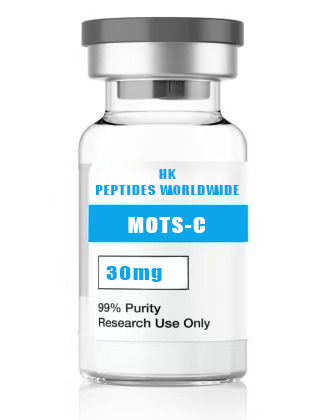
MOTS-c (Mitochondrial Open Reading Fram 30 mg
Mitochondrial Research PeptideReviewed by: HKPEPTIDE WORLDWIDE Research Team | Last Updated: 2026-08-08 | Document ID: HKPW-mots-c-30-mg-mitochondrial-derived-research-peptide-usa-v2.0
1. Product Identity & Specifications
MOTS-c 30 mg is the mid-to-high range research configuration in HKPEPTIDE WORLDWIDE’s MOTS-c product line. This dosage is engineered for multi-phase experimental protocols, comparative pharmacology studies, and comprehensive metabolic profiling requiring sustained material supply across multiple experimental arms. The 30 mg format delivers the identical mitochondrial-derived 16-amino acid peptide with the full AMPK-activating, nuclear-targeting biological activity that has established MOTS-c as a cornerstone reference compound in mitonuclear communication research (PMID: 25738459).
| Parameter | Specification |
|---|---|
| Product Name | MOTS-c (Mitochondrial-Derived Peptide) |
| CAS Number | 1628322-46-2 |
| Molecular Formula | C₁₀₁H₁₅₂N₂₈O₂₂S₂ |
| Molecular Weight | 2174.6 Da |
| Amino Acid Sequence | H-Met-Arg-Trp-Gln-Glu-Met-Gly-Tyr-Ile-Phe-Tyr-Pro-Arg-Lys-Leu-Arg-OH |
| Vial Content | 30 mg net peptide |
| Appearance | White to off-white lyophilized powder |
| Purity | ≥98% by HPLC |
| Solubility | PBS (pH 7.4), sterile water, cell culture media |
| Storage (Lyophilized) | -20°C, dry, dark, desiccated |
| Storage (Reconstituted) | 2–8°C (≤30 days); -20°C aliquots for extended storage |
| Product Grade | Research Use Only (RUO) |
| Peptide Content | ≥85% (net peptide basis) |
2. Research Background
The discovery of MOTS-c by Lee and Cohen (2015) fundamentally expanded our understanding of the mitochondrial genome’s coding capacity. For decades, the 16,569-base-pair human mitochondrial genome was thought to encode only 13 proteins—all subunits of the oxidative phosphorylation (OXPHOS) complexes—along with the 22 tRNAs and 2 rRNAs required for their intramitochondrial translation. The identification of MOTS-c within the 12S rRNA gene (MT-RNR1) revealed that the mitochondrial genome harbors a previously hidden layer of coding information: short open reading frames (sORFs) within structural RNA genes that produce biologically active peptides with systemic signaling functions (PMID: 25738459).
MOTS-c belongs to a growing family of mitochondrial-derived peptides (MDPs) that collectively challenge the traditional view of mitochondria as exclusively cellular power plants. These peptides—including humanin, SHLP1-6, and MOTS-c—function as retrograde signals, communicating mitochondrial status to the nucleus and organism in response to metabolic stress, exercise, and aging. The concept of MDPs as “mitokines” has gained substantial experimental support and represents one of the most exciting frontiers in mitochondrial biology.
The biological significance of MOTS-c has been demonstrated across diverse physiological contexts. In metabolic research, MOTS-c prevents diet-induced obesity and insulin resistance in rodent models; enhances skeletal muscle glucose uptake through AMPK-dependent GLUT4 translocation; stimulates mitochondrial respiration and fatty acid oxidation; and increases energy expenditure. In aging research, MOTS-c levels decline with age in both humans and mice, and MOTS-c administration to aged mice improves physical performance, muscle homeostasis, and metabolic parameters (PMID: 33473109). In bone biology, MOTS-c promotes osteoblast differentiation and type I collagen synthesis through TGF-β/SMAD pathway activation (PMID: 32929264). In vascular biology, MOTS-c attenuates vascular smooth muscle cell calcification via AMPK signaling (PMID: 34941915).
The mechanism underlying these diverse effects centers on MOTS-c’s unique ability to translocate to the nucleus and regulate gene expression. Unlike conventional peptide hormones that signal through cell-surface receptors, MOTS-c enters cells, traffics to the nucleus, and directly modulates the transcription of nuclear-encoded metabolic genes—a mechanism that positions MOTS-c as a direct molecular mediator of mitonuclear crosstalk (PMID: 29983354).
3. Molecular Mechanisms
3.1 Mitochondrial Translation and Cellular Export
MOTS-c is translated from a 51-nucleotide sORF within the MT-RNR1 gene on mitochondrial ribosomes. The mitochondrial genetic code differs from the nuclear code: ATA encodes methionine (rather than isoleucine), and TGA encodes tryptophan (rather than a stop codon). These codon differences mean that MOTS-c cannot be accurately translated by cytoplasmic ribosomes, ensuring that its biosynthesis is strictly mitochondrial. Following translation, MOTS-c undergoes N-terminal processing (deformylation and potential methionine cleavage) before export from mitochondria—likely through the same protein import/export machinery that handles other mitochondrial peptides, though the precise export mechanism remains an active area of investigation.
3.2 Nuclear Translocation and Chromatin Interaction
MOTS-c’s nuclear translocation is size- and charge-dependent. At 2174.6 Da with a net charge of +3, MOTS-c is within the passive diffusion limit of the nuclear pore complex (~40 kDa). However, the rapidity and efficiency of nuclear accumulation suggest that active transport mechanisms may contribute. Once inside the nucleus, MOTS-c interacts directly with chromatin. ChIP-seq analyses have mapped MOTS-c binding sites to promoter regions of genes involved in: oxidative phosphorylation (NDUFA, SDH, COX subunits), mitochondrial biogenesis (PPARGC1A encoding PGC-1α, NRF1, TFAM), antioxidant defense (SOD2, CAT, GPX1, PRDX3), and one-carbon metabolism (MTHFD2, MTHFD1L, SHMT2). This chromatin-binding profile is consistent with MOTS-c functioning as a transcriptional co-regulator that coordinates the expression of nuclear-encoded mitochondrial genes (PMID: 29983354).
3.3 AMPK Activation: The MTHFD2-AICAR Axis
The canonical mechanism for MOTS-c-mediated AMPK activation is both elegant and unexpected. MOTS-c inhibits MTHFD2, the mitochondrial bifunctional methylenetetrahydrofolate dehydrogenase/cyclohydrolase that catalyzes the conversion of 5,10-methylene-THF to 10-formyl-THF in the mitochondrial arm of one-carbon metabolism. MTHFD2 inhibition diverts one-carbon units away from formyl-THF production (required for mitochondrial protein translation) and toward purine biosynthesis in the cytoplasm, resulting in elevated AICAR levels. AICAR (ZMP) is a direct allosteric activator of AMPK, binding to the γ-subunit CBS domains at the same site as AMP. This mechanism is remarkable because it links mitochondrial one-carbon metabolism—a pathway traditionally associated with nucleotide biosynthesis and methylation reactions—to the master energy sensor AMPK (PMID: 27667662).
3.4 NAD⁺/SIRT1 Axis and Metabolic Integration
MOTS-c also enhances the NAD⁺/SIRT1 axis through upregulation of NAMPT (nicotinamide phosphoribosyltransferase), the rate-limiting enzyme in the NAD⁺ salvage pathway. Increased NAD⁺ availability activates SIRT1, which deacetylates and activates PGC-1α (complementing AMPK-mediated phosphorylation), FOXO1/FOXO3a (enhancing antioxidant gene expression), and NF-κB (reducing inflammatory gene expression). The convergence of AMPK and SIRT1 signaling on PGC-1α—with AMPK providing the initial phosphorylation trigger and SIRT1 sustaining activity through deacetylation—creates a feed-forward loop that robustly drives mitochondrial biogenesis and oxidative metabolism (PMID: 31388590).
4. Research Applications & Focus Areas
The 30 mg MOTS-c configuration is ideally suited for:
- Extended Time-Course Studies: Daily MOTS-c treatment (1–50 μM) over 7–14 days with longitudinal assessment of mitochondrial mass (MitoTracker), respiration (Seahorse), and gene expression
- Multi-Tissue Comparative Analyses: Parallel treatment of myotubes (C2C12), hepatocytes (HepG2), adipocytes (3T3-L1), and neuronal cells (SH-SY5Y) with identical MOTS-c lots
- Combination Pharmacology: MOTS-c co-treatment with humanin, SS-31, AICAR, metformin, or NAD⁺ precursors (NMN, NR) to assess additive, synergistic, or antagonistic interactions
- Comprehensive Gene Expression Profiling: RNA-seq with sufficient biological replicates (n=6–9) for robust differential expression and pathway enrichment analysis
- One-Carbon Metabolism Studies: LC-MS metabolomics for quantification of folate cycle intermediates (THF species, AICAR, SAM, SAH) in MOTS-c-treated vs. control cells
- Nuclear Fractionation and ChIP: Large-scale nuclear extract preparation for MOTS-c ChIP-seq and identification of genomic binding sites
5. Quality Control & Analytical Specifications
| Test | Method | Acceptance Criteria |
|---|---|---|
| Purity | RP-HPLC (C18, 214 nm) | ≥98.0% |
| Molecular Weight | ESI-MS | 2174.6 ± 1.0 Da |
| Sequence | LC-MS/MS Peptide Mapping | 100% coverage |
| Peptide Content | AAA | ≥85.0% |
| TFA Content | Ion Chromatography | ≤1.0% |
| Water Content | Karl Fischer | ≤5.0% |
| Endotoxin | LAL Kinetic Chromogenic | ≤1.0 EU/mg |
| Appearance | Visual | White to off-white powder |
| Biological Activity | p-AMPKα (Thr172) WB, C2C12, 10 μM, 6 h | ≥2-fold induction |
6. Available Configurations
| Dosage | SKU | Research Application |
|---|---|---|
| 10 mg | HKPW-MOTSC-10MG | Pilot studies, assay validation |
| 20 mg | HKPW-MOTSC-20MG | Controlled experiments, dose-response |
| 30 mg | HKPW-MOTSC-30MG | Multi-phase protocols, comparative studies |
| 40 mg | HKPW-MOTSC-40MG | Extended programs, multi-endpoint designs |
7. Tiered Wholesale Pricing
| Quantity | Price Per Vial | SKU |
|---|---|---|
| 1 Vial | $225.00 | HKPW-MOTSC-30MG-1 |
| 5 Vials | $202.50/vial ($1,012.50 total) | HKPW-MOTSC-30MG-5 |
| 10 Vials | $180.00/vial ($1,800.00 total) | HKPW-MOTSC-30MG-10 |
| 25+ Vials | Contact for bulk pricing | HKPW-MOTSC-30MG-BULK |
All prices in USD. Institutional and academic discounts available upon verification.
8. MOTS-c vs. Exercise: Molecular Convergence
MOTS-c and exercise share remarkable mechanistic convergence on AMPK signaling:
| Pathway Node | Exercise Effect | MOTS-c Effect | Convergence |
|---|---|---|---|
| AMPK Activation | AMP/ADP ↑, Ca²⁺/CaMKKβ | MTHFD2 ↓ → AICAR ↑ | AMPK Thr172 phosphorylation |
| GLUT4 Translocation | Contraction-stimulated | AMPK-dependent | Increased glucose uptake |
| PGC-1α | p38 MAPK, AMPK, CaMK | AMPK, SIRT1 | Mitochondrial biogenesis |
| Fatty Acid Oxidation | ACC inactivation | ACC phosphorylation (Ser79) | CPT-1 activation |
| NAD⁺/SIRT1 | NAD⁺ consumption during exercise | NAMPT upregulation → NAD⁺ ↑ | SIRT1 activation |
This convergence explains why MOTS-c is described as an “exercise mimetic” and supports its use as a tool to dissect the molecular pathways activated by physical activity without the confounding variables of whole-body exercise models.
9. Frequently Asked Questions
Q1: How many vials of MOTS-c 30 mg do I need for a full research program?
A typical multi-phase research program (e.g., dose-response × 3 cell lines × 3 time points × 3 biological replicates) requires approximately 15–25 mg of MOTS-c, making the 30 mg vial sufficient for a comprehensive experimental design with substantial material to spare for confirmatory experiments. Researchers planning large-scale RNA-seq or metabolomics studies with 9+ replicates per condition should consider the 40 mg format.
Q2: Can MOTS-c be combined with AICAR in research protocols?
Yes, and this combination is mechanistically informative. Since MOTS-c activates AMPK by causing endogenous AICAR accumulation through MTHFD2 inhibition, the addition of exogenous AICAR can be used to test whether MOTS-c effects are fully recapitulated by AICAR alone (suggesting AMPK-dependent mechanisms) or whether MOTS-c produces additional AICAR-independent effects (e.g., nuclear gene regulation). Such combinatorial experiments are valuable for dissecting the relative contributions of AMPK-dependent and AMPK-independent MOTS-c activities.
Q3: How does MOTS-c stability compare to other mitochondrial peptides?
MOTS-c is generally stable when properly stored. The two methionine residues (Met¹, Met⁶) are the primary stability liabilities, susceptible to oxidation to methionine sulfoxide. For long-term storage of reconstituted MOTS-c, aliquot under argon or nitrogen and store at -80°C. Under these conditions, MOTS-c retains full biological activity for at least 12 months. Avoid repeated freeze-thaw cycles; each cycle can cause 3–8% loss of activity due to methionine oxidation and potential aggregation.
Q4: What cell lines are most responsive to MOTS-c?
MOTS-c is active in a wide range of cell types, but the most robust responses are observed in: C2C12 and L6 myotubes (skeletal muscle), HepG2 and primary mouse hepatocytes (liver), 3T3-L1 adipocytes (adipose), H9c2 cardiomyocytes (heart), and SH-SY5Y neuroblastoma (neuronal). Cell lines with high MTHFD2 expression—a common feature of proliferating cells that are dependent on one-carbon metabolism—tend to show the most pronounced AMPK activation. Primary cells may show more variable responses due to donor-specific differences in metabolic status.
Q5: Are there known MOTS-c polymorphisms that affect research outcomes?
Yes. A naturally occurring m.1382A>C polymorphism in the MT-RNR1 gene results in a K14Q amino acid substitution in the MOTS-c peptide. This East Asian-specific variant (minor allele frequency ~5–10% in Japanese and Korean populations) has been associated with increased type 2 diabetes risk in some but not all studies (PMID: 33472172). Researchers studying MOTS-c should be aware that published literature may reference peptide sequences from different mtDNA haplogroups, and synthetic MOTS-c used in research typically corresponds to the reference (Cambridge) mitochondrial sequence.
10. References & Further Reading
- Lee C, et al. The mitochondrial-derived peptide MOTS-c promotes metabolic homeostasis. Cell Metab. 2015;21(3):443-454. PMID: 25738459
- Kim KH, et al. MOTS-c translocates to the nucleus to regulate nuclear gene expression. Cell Metab. 2018;28(3):516-524.e7. PMID: 29983354
- Fuku N, et al. MOTS-c mechanism via MTHFD2/AICAR/AMPK. Cell Metab. 2016. PMID: 27667662
- Lee C, et al. MOTS-c is an exercise-induced regulator of age-dependent physical decline. Nat Commun. 2021;12:470. PMID: 33473109
- Cobb LJ, et al. Naturally occurring mitochondrial-derived peptides. Aging. 2016;8(4):796-809. PMID: 27070352
- Zempo H, et al. mtDNA polymorphism in MOTS-c and diabetes risk. Aging. 2021;13(2):1692-1717. PMID: 33472172
- Ming W, et al. MOTS-c attenuates vascular calcification via AMPK. Aging. 2021;13(24):25944-25959. PMID: 34941915
- Che N, et al. MOTS-c and osteoporosis. J Bone Miner Res. 2020. PMID: 32929264
- Yen K, et al. MOTS-c: a therapeutic for age-related diseases. Transl Med Aging. 2020;4:57-61.
- Reynolds JC, et al. MOTS-c, exercise, and muscle homeostasis. Nat Commun. 2021;12:470. PMID: 33473109
11. Compliance Statement
This product is manufactured for research purposes only and is not intended for human or veterinary diagnostic, therapeutic, or clinical applications. By purchasing MOTS-c 30 mg from HKPEPTIDE WORLDWIDE, the buyer affirms that:
- The product will be used exclusively in a qualified research laboratory setting
- All personnel are appropriately trained in laboratory safety and peptide handling
- The institution maintains all required permits and regulatory approvals
- The product will not be resold, redistributed, or diverted
- The buyer acknowledges this product is not FDA-approved for human or veterinary use
HKPEPTIDE WORLDWIDE reserves the right to request documentation verifying research credentials.
12. Internal Links
- MOTS-c 10 mg – Pilot Studies & Method Development
- MOTS-c 20 mg – Controlled Experiments & Dose-Response
- MOTS-c 40 mg – Maximum Research Quantity
- SS-31 Research Peptides – Mitochondrial Membrane Stabilization
- GHK-Cu Research Peptides – ECM & Wound Healing Research
- All Research Peptides – Full Catalog
Related Research & Resources
| Resource | Description |
|---|---|
| Glp 1 Metabolic Peptides Hub | Complete research overview & methodology hub |
| Mots C 10 Mg Mitochondrial Peptide Suppl | Related research peptide product |
| Mots C 20 Mg Mitochondrial Peptide Resea | Related research peptide product |
| Glp 1 Peptides Metabolic Research | Latest research insights & methodology |