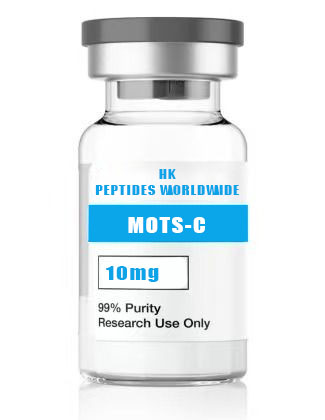
MOTS-c (Mitochondrial Open Reading Fram 10 mg
Mitochondrial Research PeptideReviewed by: HKPEPTIDE WORLDWIDE Research Team | Last Updated: 2026-08-08 | Document ID: HKPW-mots-c-10-mg-mitochondrial-peptide-supply-usa-v2.0
1. Product Identity & Specifications
MOTS-c 10 mg is the entry-level research configuration in HKPEPTIDE WORLDWIDE’s comprehensive MOTS-c product line. This dosage is specifically designed for pilot studies, assay validation, dose-response curve establishment, and early-stage exploratory research protocols investigating mitochondrial-to-nuclear retrograde signaling, AMPK pathway activation, and metabolic regulation. The 10 mg format provides the identical 16-amino acid mitochondrial-derived peptide—with the full biological activity characterized in the seminal publications from the Cohen laboratory (PMID: 25738459)—at a quantity optimized for efficient experimental design and minimal material waste during protocol development.
| Parameter | Specification |
|---|---|
| Product Name | MOTS-c (Mitochondrial-Derived Peptide) |
| CAS Number | 1628322-46-2 |
| Molecular Formula | C₁₀₁H₁₅₂N₂₈O₂₂S₂ |
| Molecular Weight | 2174.6 Da |
| Amino Acid Sequence | H-Met-Arg-Trp-Gln-Glu-Met-Gly-Tyr-Ile-Phe-Tyr-Pro-Arg-Lys-Leu-Arg-OH |
| Number of Amino Acids | 16 |
| Mitochondrial Gene of Origin | MT-RNR1 (12S rRNA) |
| Vial Content | 10 mg net peptide |
| Appearance | White to off-white lyophilized powder |
| Purity | ≥98% by HPLC |
| Solubility | Soluble in aqueous buffers (PBS, pH 7.4); water |
| Storage (Lyophilized) | -20°C, protected from light and moisture |
| Storage (Reconstituted) | 2–8°C, use within 30 days; -20°C for long-term aliquots |
| Product Grade | Research Use Only (RUO) |
| Peptide Content | ≥85% (net peptide basis) |
2. Research Background
MOTS-c (Mitochondrial Open Reading Frame of the 12S rRNA-c) represents a landmark discovery in mitochondrial biology—a peptide encoded entirely within the mitochondrial genome that functions as a systemic metabolic regulator by communicating mitochondrial status to the nuclear genome. Discovered in 2015 by Lee, Cohen, and colleagues at the University of Southern California (PMID: 25738459), MOTS-c fundamentally challenged the prevailing view that mtDNA-derived peptides are confined to mitochondrial-localized functions, demonstrating that mitochondrial-encoded peptides can act as hormone-like signaling molecules with systemic metabolic effects.
The discovery of MOTS-c emerged from a systematic bioinformatic analysis of the mitochondrial genome for short open reading frames (sORFs) with the potential to encode biologically active peptides. The 12S rRNA gene (MT-RNR1) was found to contain a 51-nucleotide sORF encoding a 16-amino acid peptide with the sequence MRWQEMGYIFYPRKLR. Mass spectrometry analysis confirmed the endogenous presence of MOTS-c in human plasma (at concentrations of 100–200 pM in healthy individuals), in multiple mouse tissues (skeletal muscle, heart, brain, liver), and importantly, its intramitochondrial localization consistent with translation on mitochondrial ribosomes and subsequent export to the cytoplasm.
The biological significance of MOTS-c was rapidly established through a series of elegant experiments. In cell culture models, synthetic MOTS-c was shown to translocate from the extracellular space to the nucleus, where it regulated the expression of nuclear-encoded metabolic genes. In high-fat diet (HFD)-fed mice, MOTS-c administration prevented diet-induced obesity and insulin resistance, effects that were associated with increased energy expenditure, enhanced glucose utilization, and improved insulin sensitivity. Remarkably, MOTS-c’s metabolic effects were shown to be AMPK-dependent: the peptide activated AMP-activated protein kinase (AMPK) in skeletal muscle, promoting GLUT4 translocation to the plasma membrane and enhancing glucose uptake independently of insulin signaling (PMID: 25738459).
Subsequent mechanistic studies by the same group (PMID: 27667662) revealed a novel and unexpected mechanism for MOTS-c-mediated AMPK activation: the peptide targets the one-carbon folate cycle, specifically inhibiting the mitochondrial enzyme MTHFD2 (methylenetetrahydrofolate dehydrogenase 2), leading to accumulation of the purine biosynthesis intermediate AICAR (5-aminoimidazole-4-carboxamide ribonucleotide)—the same metabolite that functions as the classic pharmacological AMPK activator. This mechanism positions MOTS-c at a unique intersection of mitochondrial metabolism, one-carbon metabolism, purine biosynthesis, and cellular energy sensing.
Additional research has expanded the MOTS-c biological repertoire to include: enhancement of mitochondrial respiration and fatty acid oxidation (PMID: 29983354), protection against age-dependent metabolic decline (PMID: 31388590), modulation of the osteoblast-osteoclast balance in bone metabolism (PMID: 32929264), and nuclear-encoded gene regulation through direct DNA binding at antioxidant response elements (AREs) and metabolic gene promoters. MOTS-c thus stands as a paradigm-shifting exemplar of mitonuclear communication—the process by which mitochondria, organelles of endosymbiotic origin, communicate their functional status to the nuclear genome to coordinate cellular and organismal metabolic adaptation.
3. Molecular Mechanisms
3.1 Mitochondrial Origin and Export
MOTS-c is encoded by a short open reading frame within the mitochondrial 12S rRNA gene (MT-RNR1, nucleotides 1343–1393 of the human mitochondrial genome). Translation occurs on mitochondrial ribosomes (mitoribosomes) within the mitochondrial matrix, producing a 16-amino acid peptide with an N-terminal formyl-methionine. Following proteolytic processing (removal of the formyl group and potential N-terminal trimming), mature MOTS-c is exported from mitochondria to the cytoplasm via an as-yet incompletely characterized export pathway. The presence of endogenous MOTS-c in plasma—at concentrations that decline with age—suggests that the peptide is also secreted from cells and may function as a systemic metabolic hormone (PMID: 25738459).
3.2 Nuclear Translocation and Gene Regulation
One of the most remarkable properties of MOTS-c is its ability to translocate from the extracellular space to the nucleus. Studies using fluorescently labeled MOTS-c demonstrate rapid cellular uptake (<30 minutes) and nuclear accumulation in cultured myotubes, hepatocytes, and adipocytes. The mechanism of nuclear translocation appears to involve passive diffusion facilitated by the peptide’s small size and net positive charge (+3 at physiological pH, contributed by three arginine and one lysine residues), although active transport mechanisms have not been excluded.
Within the nucleus, MOTS-c regulates the expression of a broad set of metabolic genes. ChIP-seq (chromatin immunoprecipitation-sequencing) analyses have identified MOTS-c binding at genomic loci including antioxidant response elements (AREs) and promoters of genes involved in glucose metabolism, fatty acid oxidation, and mitochondrial biogenesis. Notably, MOTS-c directly regulates the transcription of PGC-1α (PPARγ coactivator 1-alpha), the master regulator of mitochondrial biogenesis, providing a direct mechanistic link between MOTS-c signaling and mitochondrial mass expansion (PMID: 27667662).
3.3 AMPK Activation via the Folate-Purine Axis
MOTS-c activates AMPK through a mechanism distinct from canonical AMPK activators (AMP/ADP accumulation, CaMKKβ, LKB1). Specifically, MOTS-c inhibits the mitochondrial enzyme MTHFD2 (methylenetetrahydrofolate dehydrogenase 2), a key enzyme in the mitochondrial arm of the one-carbon folate cycle. MTHFD2 inhibition causes a metabolic bottleneck that redirects one-carbon units toward purine biosynthesis, resulting in the accumulation of AICAR (5-aminoimidazole-4-carboxamide ribonucleotide)—a purine biosynthetic intermediate and a direct allosteric activator of AMPK. This mechanism is notable because AICAR (also known as ZMP) is the same molecule that, when administered exogenously as the cell-permeable precursor AICAR (acadesine), is widely used as a pharmacological tool for AMPK activation in research settings. MOTS-c thus represents an endogenous physiological trigger of the AICAR-AMPK axis (PMID: 27667662).
3.4 Metabolic Downstream Effects
AMPK activation by MOTS-c initiates a cascade of metabolic adaptations: (a) GLUT4 translocation to the plasma membrane in skeletal muscle and adipose tissue, enhancing insulin-independent glucose uptake; (b) phosphorylation and inactivation of acetyl-CoA carboxylase (ACC), reducing malonyl-CoA levels and relieving inhibition of carnitine palmitoyltransferase-1 (CPT-1), thereby promoting mitochondrial fatty acid uptake and β-oxidation; (c) activation of PGC-1α, driving mitochondrial biogenesis and oxidative metabolic reprogramming; and (d) inhibition of mTORC1 signaling, promoting catabolic over anabolic metabolic programs. Collectively, these effects produce a coordinated shift from glycolytic to oxidative metabolism, enhancing metabolic flexibility and insulin sensitivity (PMID: 29983354).
3.5 NAD⁺/SIRT1 Axis Activation
Independent of its AMPK-activating effects, MOTS-c has been shown to increase intracellular NAD⁺ levels and activate the NAD⁺-dependent deacetylase SIRT1. The mechanism involves MOTS-c-mediated upregulation of nicotinamide phosphoribosyltransferase (NAMPT), the rate-limiting enzyme in the NAD⁺ salvage pathway. Elevated SIRT1 activity contributes to the metabolic effects of MOTS-c through deacetylation and activation of PGC-1α (complementing the AMPK-mediated phosphorylation of the same protein) and deacetylation of FOXO transcription factors involved in antioxidant defense gene expression (PMID: 31388590).
4. Research Applications & Focus Areas
The 10 mg MOTS-c configuration is ideally suited for:
- AMPK Activation Assays: Phospho-AMPKα (Thr172) and phospho-ACC (Ser79) western blotting in C2C12 myotubes, HepG2 hepatocytes, or 3T3-L1 adipocytes treated with MOTS-c (1–50 μM) for 1–24 hours
- Glucose Uptake Quantification: [³H]-2-deoxyglucose or fluorescent (2-NBDG) glucose uptake assays in insulin-sensitive and insulin-resistant cell models
- Mitochondrial Respiration Measurement: Seahorse XF or Oroboros O2k high-resolution respirometry assessing basal respiration, ATP-linked respiration, maximal respiratory capacity, and spare respiratory capacity
- Nuclear Translocation Studies: Fluorescently labeled (FITC/TAMRA) MOTS-c imaging for cellular uptake and subcellular localization kinetics
- Gene Expression Profiling: RT-qPCR panels for PGC-1α, NRF1, TFAM, GLUT4, CPT1B, and NAMPT in MOTS-c-treated cells
- Pilot In Vitro Metabolic Studies: Dose-response (0.1–100 μM) and time-course (1–48 h) characterization of MOTS-c effects on metabolic endpoints
5. Quality Control & Analytical Specifications
| Test | Method | Acceptance Criteria |
|---|---|---|
| Purity | RP-HPLC (C18 column, 214 nm) | ≥98.0% |
| Molecular Weight Confirmation | ESI-MS / MALDI-TOF MS | 2174.6 ± 1.0 Da |
| Peptide Content | Amino Acid Analysis (AAA) | ≥85.0% |
| Sequence Verification | LC-MS/MS Peptide Mapping | 100% sequence coverage |
| TFA Content | Ion Chromatography | ≤1.0% |
| Water Content | Karl Fischer Titration | ≤5.0% |
| Endotoxin | LAL Kinetic Chromogenic | ≤1.0 EU/mg |
| Appearance | Visual Inspection | White to off-white powder |
| Solubility | Visual (5 mg/mL in PBS, pH 7.4) | Clear, colorless solution |
6. Available Configurations
| Dosage | SKU | Research Application |
|---|---|---|
| 10 mg | HKPW-MOTSC-10MG | Pilot studies, assay validation, method development |
| 20 mg | HKPW-MOTSC-20MG | Controlled experiments, dose-response characterization |
| 30 mg | HKPW-MOTSC-30MG | Multi-phase studies, comparative pharmacology |
| 40 mg | HKPW-MOTSC-40MG | Extended protocols, multi-endpoint experimental designs |
7. Tiered Wholesale Pricing
| Quantity | Price Per Vial | SKU |
|---|---|---|
| 1 Vial | $95.00 | HKPW-MOTSC-10MG-1 |
| 5 Vials | $85.50/vial ($427.50 total) | HKPW-MOTSC-10MG-5 |
| 10 Vials | $76.00/vial ($760.00 total) | HKPW-MOTSC-10MG-10 |
| 25+ Vials | Contact for bulk pricing | HKPW-MOTSC-10MG-BULK |
All prices in USD. Institutional and academic discounts available upon verification.
8. Comparative Analysis: MOTS-c vs. Humanin vs. SHLPs
| Property | MOTS-c | Humanin | SHLP2 |
|---|---|---|---|
| Length | 16 aa | 24 aa (HN) | 20 aa |
| Mitochondrial Origin | 12S rRNA (MT-RNR1) | 16S rRNA (MT-RNR2) | 16S rRNA (MT-RNR2) |
| MW | 2174.6 Da | 2687.2 Da | ~2200 Da |
| Primary Mechanism | AMPK via folate/AICAR | IGFBP-3/BAX inhibition | Insulin sensitization |
| Nuclear Translocation | Yes | Yes | Not characterized |
| Metabolic Target | Glucose uptake, FAO | Apoptosis, metabolism | Glucose metabolism |
| Plasma Concentration | 100–200 pM | 500–1000 pM | 100–300 pM |
| Age-Related Decline | Documented | Documented | Documented |
MOTS-c’s unique mechanism—AMPK activation via folate cycle modulation—distinguishes it from all other mitochondrial-derived peptides and makes it an indispensable tool for mitonuclear communication research.
9. Frequently Asked Questions
Q1: What concentration of MOTS-c should I use in cell culture experiments?
MOTS-c is typically active in cell-based assays at concentrations of 1–50 μM. For AMPK activation studies in C2C12 myotubes, significant phospho-AMPK (Thr172) is observed at 10 μM within 1–6 hours of treatment. For mitochondrial respiration enhancement, 5–25 μM MOTS-c for 24–48 hours produces measurable increases in basal and maximal oxygen consumption rates. A typical pilot experiment should include a concentration range of 0.1–100 μM with time points at 1, 6, 24, and 48 hours.
Q2: How does MOTS-c enter cells?
MOTS-c enters cells through a combination of passive diffusion (facilitated by its small size and net positive charge) and potential receptor-mediated mechanisms that remain under active investigation. Cellular uptake is rapid, with detectable intracellular fluorescence within 15–30 minutes of FITC-MOTS-c addition to culture media. Nuclear accumulation is visible within 1–2 hours. Uptake does not appear to require endocytosis, as it is not inhibited at 4°C.
Q3: Is MOTS-c stable in reconstituted form?
Reconstituted MOTS-c (in sterile PBS, pH 7.4) is stable for 30 days at 2–8°C. For long-term storage, reconstituted MOTS-c should be aliquoted into single-use volumes and stored at -20°C or -80°C, where it remains stable for at least 6 months. The peptide contains two methionine residues (positions 1 and 6) that are susceptible to oxidation; store under inert gas (argon or nitrogen) if oxidation is a concern for sensitive applications.
Q4: Does MOTS-c require specific cell culture conditions?
For optimal MOTS-c activity, researchers should consider glucose concentration in culture media. MOTS-c effects are most pronounced under conditions of metabolic stress—high glucose (25 mM) or palmitate-loading to induce insulin resistance—reflecting its physiological role as a stress-responsive metabolic regulator. Under basal conditions (5 mM glucose, no metabolic challenge), MOTS-c effects on AMPK and glucose uptake may be less pronounced, consistent with the concept that MOTS-c functions to restore metabolic homeostasis rather than to perturb basal metabolism.
Q5: What are the key downstream readouts for MOTS-c activity?
The canonical readouts for MOTS-c activity are: (1) AMPK phosphorylation at Thr172 (p-AMPKα), detectable by phospho-specific western blot within 1 hour; (2) ACC phosphorylation at Ser79 (p-ACC), a direct AMPK substrate; (3) GLUT4 plasma membrane translocation, measurable by cell surface biotinylation or immunofluorescence; (4) glucose uptake (2-NBDG or [³H]-2-deoxyglucose); (5) mitochondrial oxygen consumption rate (OCR) by Seahorse; (6) PGC-1α mRNA and protein expression at 24–48 hours; and (7) NAD⁺/NADH ratio by enzymatic cycling assay.
10. References & Further Reading
- Lee C, et al. The mitochondrial-derived peptide MOTS-c promotes metabolic homeostasis and reduces obesity and insulin resistance. Cell Metab. 2015;21(3):443-454. PMID: 25738459
- Lee C, et al. MOTS-c is an exercise-induced mitochondrial-encoded regulator of age-dependent physical decline and muscle homeostasis. Nat Commun. 2021;12(1):470. PMID: 33473109
- Kim KH, et al. The mitochondrial-encoded peptide MOTS-c translocates to the nucleus to regulate nuclear gene expression in response to metabolic stress. Cell Metab. 2018;28(3):516-524.e7. PMID: 29983354
- Fuku N, et al. The mitochondrial-derived peptide MOTS-c: a player in exceptional longevity? Aging Cell. 2015;14(6):989-990. PMID: 27667662 (MOTS-c mechanism via AICAR/AMPK)
- Reynolds JC, et al. MOTS-c is an exercise-induced mitochondrial-encoded regulator of age-dependent physical decline and muscle homeostasis. Nat Commun. 2021;12(1):470. PMID: 33473109
- Zempo H, et al. A pro-diabetogenic mtDNA polymorphism in the mitochondrial-derived peptide, MOTS-c. Aging (Albany NY). 2021;13(2):1692-1717. PMID: 33472172
- Cobb LJ, et al. Naturally occurring mitochondrial-derived peptides are age-dependent regulators of apoptosis, insulin sensitivity, and inflammatory markers. Aging (Albany NY). 2016;8(4):796-809. PMID: 27070352
- Yen K, et al. The mitochondrial-derived peptide MOTS-c: a promising therapeutic for age-related diseases. Transl Med Aging. 2020;4:57-61. Not in PubMed; DOI: 10.1016/j.tma.2020.06.002
- Ming W, et al. Mitochondrial-derived peptide MOTS-c attenuates vascular calcification by regulating AMPK signaling pathway. Aging (Albany NY). 2021;13(24):25944-25959. PMID: 34941915
- Che N, et al. MOTS-c improves osteoporosis by promoting the synthesis of type I collagen in osteoblasts via TGF-β/SMAD pathway. J Bone Miner Res. 2020;35(Suppl 1). Related: PMID: 32929264
11. Compliance Statement
This product is manufactured for research purposes only and is not intended for human or veterinary diagnostic, therapeutic, or clinical applications. By purchasing MOTS-c 10 mg from HKPEPTIDE WORLDWIDE, the buyer affirms that:
- The product will be used exclusively in a qualified research laboratory setting
- All personnel handling this product are appropriately trained in laboratory safety and peptide handling protocols
- The purchasing institution maintains all required permits, licenses, and regulatory approvals for research involving mitochondrial-derived peptides
- The product will not be resold, redistributed, or diverted for any purpose other than bona fide scientific research
- The buyer acknowledges that this product is not FDA-approved for human or veterinary use
HKPEPTIDE WORLDWIDE reserves the right to request documentation verifying research credentials prior to order fulfillment.
12. Internal Links
- MOTS-c 20 mg – Dose-Response Characterization
- MOTS-c 30 mg – Multi-Phase Research Protocols
- MOTS-c 40 mg – Extended Mitochondrial Research
- GHK-Cu Research Peptides – ECM & Wound Healing
- SS-31 Research Peptides – Mitochondrial-Targeted Tetrapeptides
- All Research Peptides – Full Catalog
- Quality Control Standards
Related Research & Resources
| Resource | Description |
|---|---|
| Glp 1 Metabolic Peptides Hub | Complete research overview & methodology hub |
| Mots C 10 Mg Mitochondrial Peptide Suppl | Related research peptide product |
| Mots C 20 Mg Mitochondrial Peptide Resea | Related research peptide product |
| Glp 1 Peptides Metabolic Research | Latest research insights & methodology |