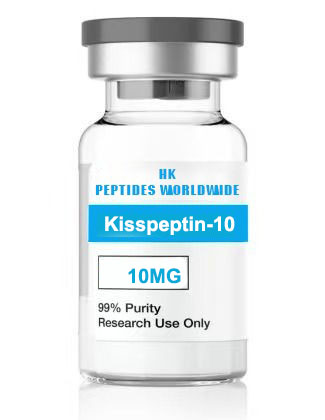
10 5 mg
Product Identity & Specifications
Kisspeptin-10 is a C-terminal amidated decapeptide (Tyr-Asn-Trp-Asn-Ser-Phe-Gly-Leu-Arg-Phe-NH₂) representing the minimal receptor-binding sequence of the endogenous KISS1R (GPR54) ligand, metastin (kisspeptin-54). Discovered through the convergence of cancer metastasis research and reproductive endocrinology, the kisspeptin signaling system has emerged as the master gatekeeper of the hypothalamic-pituitary-gonadal (HPG) axis, governing the onset of puberty, the regulation of reproductive cyclicity, and the feedback control of gonadotropin secretion. Kisspeptin-10, corresponding to residues 45-54 of the full-length 54-amino acid metastin peptide, retains the complete receptor binding affinity and full agonistic potency of the parent peptide, making it the most widely employed molecular probe in kisspeptin signaling research. The 5 mg format is optimized for precision in-vitro studies, dose-response characterization, and receptor pharmacology investigations.
| Specification | Detail |
|---|---|
| Peptide Name | Kisspeptin-10 (Metastin 45-54, KP-10) |
| Amino Acid Sequence | Tyr-Asn-Trp-Asn-Ser-Phe-Gly-Leu-Arg-Phe-NH₂ |
| Sequence (Single Letter) | YNWNSFGLRF-NH₂ |
| CAS Registry Number | 374675-21-5 |
| Molecular Formula | C₆₃H₈₃N₁₇O₁₄ |
| Molecular Weight | 1302.45 g/mol (monoisotopic); 1303.46 g/mol (average) |
| Number of Amino Acids | 10 |
| C-Terminal Modification | Amidation (-NH₂) |
| Purity (HPLC) | ≥98% |
| Physical Appearance | White to off-white lyophilized powder |
| Solubility | ≥1 mg/mL in H₂O, PBS, and 0.9% saline; higher in DMSO |
| Storage Condition | -20°C, desiccated, protected from light |
| Shelf Life (Lyophilized) | 24 months at recommended storage |
| Research Use Classification | Research Use Only (RUO) — Not for human or veterinary use |
Reviewed by: HKPEPTIDE WORLDWIDE Research Team | Last Updated: August 08, 2026
Research Background
Discovery of the Kisspeptin Signaling System: From Metastasis to Reproduction
The kisspeptin story began in 1996 when a research team at the Pennsylvania State University College of Medicine identified the KISS1 gene as a metastasis suppressor in malignant melanoma and breast carcinoma cell lines. The gene was named “KISS1” after the famous Hershey’s “Kisses” chocolates — a nod to the location of the discovery in Hershey, Pennsylvania. The KISS1 gene product, a 145-amino acid precursor polypeptide, is proteolytically processed to generate a family of C-terminally amidated peptides of varying lengths, collectively termed kisspeptins: kisspeptin-54 (metastin), kisspeptin-14, kisspeptin-13, and kisspeptin-10. The common C-terminal decapeptide — Kisspeptin-10 — encompasses the minimal sequence sufficient for high-affinity receptor binding and full biological activity (Lee et al., 1996; Ohtaki et al., 2001).
The Orphan Receptor GPR54 Finds Its Ligand
In 2001, Ohtaki and colleagues deorphanized the G-protein-coupled receptor GPR54 (subsequently designated KISS1R) by demonstrating that all kisspeptin isoforms bind to and activate this receptor with high affinity. The C-terminal amidated decapeptide (Kisspeptin-10) was shown to possess binding affinity (Kd ≈ 0.2-0.4 nM) and calcium mobilization potency (EC₅₀ ≈ 0.5-1 nM) indistinguishable from full-length kisspeptin-54, establishing it as the defining pharmacophore of the system. The receptor-ligand pair was renamed KISS1R/kisspeptin in accordance with IUPHAR nomenclature conventions (Ohtaki et al., 2001; Kirby et al., 2010).
The Reproductive Endocrinology Revolution: 2003
The pivotal connection between kisspeptin signaling and reproductive function emerged in 2003 when two independent research groups — one led by de Roux in Paris and the other by Seminara in Boston — reported that loss-of-function mutations in GPR54 (KISS1R) cause idiopathic hypogonadotropic hypogonadism (IHH) in humans, a condition characterized by absent pubertal development and low circulating gonadotropins (LH, FSH) and sex steroids. Concurrently, Seminara and colleagues demonstrated that Gpr54 knockout mice exhibit a phenotype that phenocopies human IHH, with arrested pubertal maturation, hypogonadism, and infertility despite normal hypothalamic GnRH neuron populations. These landmark discoveries positioned the kisspeptin-KISS1R system as an indispensable gatekeeper of the reproductive axis, essential for the initiation of pulsatile GnRH secretion at puberty and the maintenance of reproductive competence in adulthood (de Roux et al., 2003; Seminara et al., 2003).
Kisspeptin Neurons: The GnRH Pulse Generator
Subsequent neuroanatomical and electrophysiological investigations identified two major populations of kisspeptin-expressing neurons in the hypothalamus that project to and synapse upon GnRH neurons in the preoptic area and median eminence: (1) Kisspeptin neurons in the arcuate nucleus (ARC), co-expressing neurokinin B (NKB) and dynorphin (termed KNDy neurons), which are believed to constitute the GnRH pulse generator; and (2) Kisspeptin neurons in the anteroventral periventricular nucleus (AVPV), which mediate the positive feedback effect of estradiol to generate the preovulatory LH surge in females. Kisspeptin-10, acting via KISS1R expressed on GnRH neuron cell bodies and terminals, directly depolarizes GnRH neurons through the activation of TRPC (transient receptor potential canonical) cation channels and inhibition of potassium channels, leading to action potential firing and GnRH secretion (Oakley et al., 2009; Clarkson et al., 2017; Herbison, 2016).
Beyond Reproduction: Expanding Research Frontiers
While the reproductive neuroendocrinology of kisspeptin remains the dominant research focus, the expression of KISS1 and KISS1R in the pancreas, adipose tissue, liver, cardiovascular system, and placenta has motivated investigations into non-reproductive roles. Kisspeptin signaling has been implicated in the regulation of insulin secretion (islet β-cell KISS1R), trophoblast invasion during placentation, and the modulation of vascular tone. These diverse physiological contexts position Kisspeptin-10 as a versatile molecular probe with applications spanning neuroendocrinology, metabolism, and cardiovascular research (Hauge-Evans et al., 2006; Bilban et al., 2004; Mead et al., 2007).
Molecular Mechanisms
Mechanism 1: KISS1R/GPR54 Receptor Activation and Gαq/11-Phospholipase C Signaling
Kisspeptin-10 binds to the KISS1R (GPR54) receptor, a member of the rhodopsin-like class A G-protein-coupled receptor (GPCR) superfamily. The C-terminal RF-amide motif (Arg-Phe-NH₂) of Kisspeptin-10 inserts into an orthosteric binding pocket within the transmembrane helical bundle of KISS1R, forming critical hydrogen bonds and hydrophobic interactions with residues in transmembrane domains 5, 6, and 7. Agonist binding induces a conformational rearrangement in KISS1R, facilitating coupling to the heterotrimeric G-protein Gαq/11. Activated Gαq/11 stimulates phospholipase C-β (PLC-β) to hydrolyze phosphatidylinositol 4,5-bisphosphate (PIP₂) into the second messengers inositol 1,4,5-trisphosphate (IP₃) and diacylglycerol (DAG). IP₃ binds to IP₃ receptors on the endoplasmic reticulum, triggering Ca²⁺ release from intracellular stores and a consequent rise in cytosolic Ca²⁺ concentration. Simultaneously, DAG activates protein kinase C (PKC), which phosphorylates downstream targets including ERK1/2. This Gαq/11-PLC-β-IP₃-Ca²⁺ axis is the canonical signaling pathway for kisspeptin-induced GnRH neuron depolarization, as the IP₃-mediated Ca²⁺ signal activates TRPC channels and depolarizing non-selective cation currents (Ohtaki et al., 2001; Kotani et al., 2001; Stafford et al., 2002).
Mechanism 2: ERK1/2 and MAP Kinase Cascade Activation
In addition to the rapid Ca²⁺ mobilization response, Kisspeptin-10 stimulates sustained phosphorylation and activation of extracellular signal-regulated kinases 1 and 2 (ERK1/2, p44/p42 MAPK). ERK1/2 activation occurs downstream of both the Gαq/11-PKC pathway and the β-arrestin-2-mediated scaffolding pathway, with the latter contributing to a more prolonged, spatially confined ERK signal. The functional consequences of ERK1/2 activation include phosphorylation of transcription factors (Elk-1, c-Fos, c-Jun) and modulation of gene expression programs relevant to GnRH biosynthesis, ion channel expression, and neuronal plasticity. Importantly, ERK1/2 phosphorylation in GnRH neurons has been implicated in the induction of the preovulatory LH surge, representing a signaling nexus that integrates acute electrical responses with longer-term transcriptional adaptations (Pampillo et al., 2009; Novaira et al., 2016).
Mechanism 3: KNDy Neuron Network Dynamics and Synchronization
Within the arcuate nucleus, kisspeptin neurons co-express neurokinin B (NKB, acting via the tachykinin NK3 receptor) and dynorphin (acting via the kappa opioid receptor, KOR) — giving rise to the acronym KNDy (Kisspeptin/Neurokinin B/Dynorphin) neurons. These neurons form an interconnected network wherein NKB acts as an excitatory synchronizing signal, while dynorphin provides inhibitory feedback, generating an autoregulatory oscillatory circuit that drives episodic kisspeptin release onto GnRH neurons. Kisspeptin-10, as the output signal of the KNDy network, translates the frequency-coded information from this pulse generator into the pulsatile pattern of GnRH secretion that is obligatory for gonadotropin release. This mechanism explains how the same kisspeptin signal can encode both pulse frequency (via episodic release from ARC KNDy neurons) and surge amplitude (via sustained release from AVPV kisspeptin neurons in response to estradiol positive feedback) (Navarro et al., 2009; Lehman et al., 2010; Wakabayashi et al., 2010).
Mechanism 4: GPCR Signaling Bias and Functional Selectivity
Recent pharmacological studies using biased Kisspeptin-10 analogs have demonstrated that KISS1R can engage distinct intracellular signaling programs depending on the chemical structure of the bound ligand — a phenomenon known as biased agonism or functional selectivity. Certain Kisspeptin-10 analogs preferentially activate Gαq/11-Ca²⁺ signaling over β-arrestin recruitment, or vice versa. The biological significance of KISS1R signaling bias is an active area of investigation, with implications for understanding how different kisspeptin isoforms (kisspeptin-54, -14, -13, -10) may produce qualitatively distinct downstream biological effects despite engaging the same receptor. Furthermore, the development of biased KISS1R ligands may enable dissection of the signaling pathways responsible for specific reproductive outcomes (GnRH pulsatility versus surge generation versus placental function) (Millar & Newton, 2014; Thompson et al., 2016; Ahow et al., 2014).
Research Applications
Kisspeptin-10 5 mg is deployed in a variety of specialized research contexts:
-
GnRH Neuron Electrophysiology: Whole-cell patch-clamp recordings from GnRH-GFP-labeled neurons in acute hypothalamic slice preparations, examining kisspeptin-10-induced depolarization, action potential firing, and modulation of intrinsic membrane conductances (Ih, IA, IK).
-
Gonadotropin Secretion Dynamics: Static and perifused primary pituitary cell cultures (rat, mouse, ovine) quantifying LH and FSH secretion (ELISA/RIA) in response to pulsatile versus continuous Kisspeptin-10 stimulation, exploring the encoding of GnRH pulse frequency information.
-
KISS1R/GPR54 Receptor Pharmacology: Heterologous expression systems (HEK293, CHO, COS-7) for radioligand binding assays ([¹²⁵I]-kisspeptin), IP₁ accumulation (IP-One HTRF), Ca²⁺ mobilization (Fluo-4, Fura-2), ERK phosphorylation (AlphaScreen/AlphaLISA), and β-arrestin-2 recruitment (BRET, PathHunter).
-
Puberty and Reproductive Development Research: Peripubertal rodent models examining kisspeptin fiber apposition to GnRH neurons, KISS1/KISS1R gene expression changes across pubertal transition, and the effects of chronic versus acute kisspeptin administration on pubertal timing markers.
-
Metabolic-Reproductive Interface: Investigation of kisspeptin signaling under conditions of metabolic stress (fasting, caloric restriction, high-fat diet) and its role in mediating the suppression of reproductive function during negative energy balance.
-
Placental and Trophoblast Biology: Studies of KISS1/KISS1R expression in first-trimester trophoblast cell lines (HTR-8/SVneo, JEG-3) examining effects on invasion, migration, and matrix metalloproteinase (MMP) secretion.
Quality Control & Analytical Specifications
| Analytical Method | Specification | Acceptance Criteria |
|---|---|---|
| RP-HPLC Purity | C18, 214 nm UV detection | ≥98.0% peak area |
| ESI-TOF Mass Spectrometry | Positive ion mode | ⁺ 1303.5 ± 1.0 Da; ²⁺ 652.3 ± 0.5 Da |
| Amino Acid Analysis | Post-column ninhydrin detection | ±10% of theoretical composition |
| Peptide Content (Net Peptide) | Elemental analysis (N%) | ≥80% |
| Residual TFA | Ion chromatography | ≤1.0% |
| Water Content (Karl Fischer) | Coulometric titration | ≤8.0% w/w |
| Endotoxin | LAL kinetic chromogenic | ≤1.0 EU/mg |
| Appearance | Visual inspection | White to off-white lyophilized powder |
| Solubility | 1 mg/mL in H₂O | Clear, colorless solution |
| C-Terminal Amidation | Mass spectrometry | Confirmed; [M-OH] impurity ≤2% |
Available Configurations
| Product Variant | Catalog Number | Quantity | Format |
|---|---|---|---|
| Kisspeptin-10 5 mg (current page) | KP10-005-USA | 5 mg per vial | Individual vial |
| Custom Bulk Orders | KP10-BULK-USA | Inquire | Custom quantities for institutional procurement |
Frequently Asked Questions (FAQ)
1. What is Kisspeptin-10 and its relationship to metastin?
Kisspeptin-10 is the minimal C-terminal decapeptide of metastin (kisspeptin-54), the endogenous ligand for the KISS1R (GPR54) receptor. The KISS1 gene encodes a 145-amino acid preprohormone that undergoes proteolytic processing by furin and related prohormone convertases to yield several biologically active C-terminally amidated peptides of varying length: kisspeptin-54 (metastin, residues 68-121), kisspeptin-14 (residues 108-121), kisspeptin-13 (residues 109-121), and kisspeptin-10 (residues 112-121). The C-terminal decapeptide, with the sequence Tyr-Asn-Trp-Asn-Ser-Phe-Gly-Leu-Arg-Phe-NH₂, represents the minimal fragment that retains full receptor binding affinity and agonistic potency. The C-terminal RF-amide motif (Arg-Phe-NH₂) is absolutely critical — removal of the amide group or substitution of the terminal phenylalanine eliminates receptor activation. This structural economy makes Kisspeptin-10 the most synthetically accessible and widely utilized molecular probe in kisspeptin-KISS1R research.
2. What is the role of Kisspeptin-10 in reproductive neuroendocrinology research?
Kisspeptin-10 functions as the most potent endogenous activator of the hypothalamic-pituitary-gonadal (HPG) axis. Kisspeptin-expressing neurons in the arcuate nucleus (ARC) and anteroventral periventricular nucleus (AVPV) of the hypothalamus project to and synapse upon GnRH neuron cell bodies and their dendritic tree. Kisspeptin-10 released from these terminals binds to KISS1R receptors on GnRH neurons, triggering Gαq/11-mediated PLC-β activation, IP₃-dependent Ca²⁺ mobilization, and depolarization of the GnRH neuron membrane potential. This results in action potential firing and the pulsatile secretion of GnRH into the hypophyseal portal circulation, which in turn stimulates LH and FSH release from anterior pituitary gonadotropes. The KNDy neuron subpopulation (co-expressing kisspeptin, neurokinin B, and dynorphin) in the ARC is now widely considered to constitute the GnRH pulse generator, with Kisspeptin-10 serving as the critical output signal that conveys frequency-encoded information to the GnRH neuronal network. The discovery that loss-of-function mutations in KISS1R cause idiopathic hypogonadotropic hypogonadism (IHH) — a failure of pubertal onset — confirmed that kisspeptin-KISS1R signaling is an absolute requirement for reproductive maturation and function in humans.
3. How should Kisspeptin-10 5 mg be stored in the laboratory?
Lyophilized Kisspeptin-10 5 mg must be stored at -20°C in a desiccated, light-protected environment, achieving 24-month stability under these conditions. For reconstitution, sterile water for injection, phosphate-buffered saline (PBS, pH 7.4), or 0.9% sterile saline is recommended. The peptide is soluble at ≥1 mg/mL in aqueous buffers; brief sonication (5-10 seconds) may assist dissolution. For experiments requiring higher stock concentrations, dimethyl sulfoxide (DMSO) can be employed as a co-solvent, though the final DMSO concentration in cell culture should not exceed 0.1%. Upon reconstitution, prepare single-use or limited-use aliquots in sterile polypropylene or low-protein-binding tubes and store at -20°C. Reconstituted peptide retains >90% bioactivity for 21 days at -20°C. Avoid repeated freeze-thaw cycles. The C-terminal amidation is essential for receptor recognition and bioactivity — researchers should avoid prolonged exposure to strongly alkaline conditions (pH > 9.0) that may promote deamidation. Additionally, the tryptophan residue (Trp³) is susceptible to oxidation; protect reconstituted solutions from light and avoid oxidizing agents.
4. What are common in-vitro concentrations used for Kisspeptin-10 research?
In-vitro KISS1R signaling studies typically employ Kisspeptin-10 across a wide concentration range depending on the assay endpoint and receptor expression level. For recombinant KISS1R expressed in HEK293 or CHO cell lines at moderate-to-high receptor density, EC₅₀ values for Ca²⁺ mobilization (Fluo-4/Fura-2) and IP₁ accumulation are generally in the subnanomolar to low nanomolar range (0.1-5 nM). ERK1/2 phosphorylation assays typically require similar or slightly higher concentrations (1-10 nM). For endogenous KISS1R in GnRH neuronal cell lines (GT1-7) or primary GnRH neuron cultures, effective concentrations may be somewhat higher (1-100 nM) due to lower receptor expression levels. Pulsatile stimulation protocols in perifused pituitary cell columns commonly use Kisspeptin-10 at 1-10 nM for short pulse durations (5-15 minutes), mimicking the physiological pulsatile kisspeptin release pattern. Researchers should establish full dose-response curves (0.01-1000 nM) for their specific experimental system. The 5 mg vial provides sufficient material for approximately 380 standard 96-well calcium assays at 10 nM (100 μL assay volume).
5. What purity level is verified for Kisspeptin-10 5 mg?
HKPEPTIDE WORLDWIDE supplies Kisspeptin-10 5 mg at ≥98% purity as verified by reverse-phase HPLC analysis using a C18 column with UV detection at 214 nm. Peptide identity and molecular weight are confirmed by electrospray ionization time-of-flight mass spectrometry (ESI-TOF MS), with the expected monoisotopic ⁺ ion at m/z 1303.46 (±1.0 Da) and the doubly charged ²⁺ ion at m/z 652.23 (±0.5 Da). C-terminal amidation integrity is confirmed by mass spectrometric analysis, with the free acid ([M-OH]) impurity specified at ≤2%. Each batch includes a comprehensive Certificate of Analysis (CoA) documenting HPLC chromatogram, mass spectrum, peptide content (net peptide analysis via elemental nitrogen determination), residual trifluoroacetic acid (TFA), Karl Fischer water content, and LAL endotoxin level. Researchers may request batch-specific CoA documentation for regulatory compliance, grant reporting, or publication support.
References & Further Reading
-
Ohtaki, T., Shintani, Y., Honda, S., Matsumoto, H., Hori, A., Kanehashi, K., Terao, Y., Kumano, S., Takatsu, Y., Masuda, Y., Ishibashi, Y., Watanabe, T., Asada, M., Yamada, T., Suenaga, M., Kitada, C., Usuki, S., Kurokawa, T., Onda, H., Nishimura, O., & Fujino, M. (2001). Metastasis suppressor gene KiSS-1 encodes peptide ligand of a G-protein-coupled receptor. Nature, 411(6837), 613–617.
-
Lee, J. H., Miele, M. E., Hicks, D. J., Phillips, K. K., Trent, J. M., Weissman, B. E., & Welch, D. R. (1996). KiSS-1, a novel human malignant melanoma metastasis-suppressor gene. Journal of the National Cancer Institute, 88(23), 1731–1737.
-
de Roux, N., Genin, E., Carel, J. C., Matsuda, F., Chaussain, J. L., & Milgrom, E. (2003). Hypogonadotropic hypogonadism due to loss of function of the KiSS1-derived peptide receptor GPR54. Proceedings of the National Academy of Sciences, 100(19), 10972–10976.
-
Seminara, S. B., Messager, S., Chatzidaki, E. E., Thresher, R. R., Acierno, J. S., Shagoury, J. K., Bo-Abbas, Y., Kuohung, W., Schwinof, K. M., Hendrick, A. G., Zahn, D., Dixon, J., Kaiser, U. B., Slaugenhaupt, S. A., Gusella, J. F., O’Rahilly, S., Carlton, M. B., Crowley, W. F., Aparicio, S. A., & Colledge, W. H. (2003). The GPR54 gene as a regulator of puberty. New England Journal of Medicine, 349(17), 1614–1627.
-
Kotani, M., Detheux, M., Vandenbogaerde, A., Communi, D., Vanderwinden, J. M., Le Poul, E., Brézillon, S., Tyldesley, R., Suarez-Huerta, N., Vandeput, F., Blanpain, C., Schiffmann, S. N., Vassart, G., & Parmentier, M. (2001). The metastasis suppressor gene KiSS-1 encodes kisspeptins, the natural ligands of the orphan G protein-coupled receptor GPR54. Journal of Biological Chemistry, 276(37), 34631–34636.
-
Oakley, A. E., Clifton, D. K., & Steiner, R. A. (2009). Kisspeptin signaling in the brain. Endocrine Reviews, 30(6), 713–743.
-
Navarro, V. M., Gottsch, M. L., Chavkin, C., Okamura, H., Clifton, D. K., & Steiner, R. A. (2009). Regulation of gonadotropin-releasing hormone secretion by kisspeptin/dynorphin/neurokinin B neurons in the arcuate nucleus of the mouse. Journal of Neuroscience, 29(38), 11859–11866.
-
Lehman, M. N., Coolen, L. M., & Goodman, R. L. (2010). Minireview: Kisspeptin/neurokinin B/dynorphin (KNDy) cells of the arcuate nucleus: A central node in the control of gonadotropin-releasing hormone secretion. Endocrinology, 151(8), 3479–3489.
-
Herbison, A. E. (2016). Control of puberty onset and fertility by gonadotropin-releasing hormone neurons. Nature Reviews Endocrinology, 12(8), 452–466.
-
Stafford, L. J., Xia, C., Ma, W., Cai, Y., & Liu, M. (2002). Identification and characterization of mouse metastasis-suppressor KiSS1 and its G-protein-coupled receptor. Cancer Research, 62(19), 5399–5404.
-
Millar, R. P., & Newton, C. L. (2014). The year in G protein-coupled receptor research. Molecular Endocrinology, 24(1), 261–274.
-
Pampillo, M., Camuso, N., Taylor, J. E., Szereszewski, J. M., Ahow, M. R., Zajac, M., Millar, R. P., Bhattacharya, M., & Babwah, A. V. (2009). Regulation of GPR54 signaling by GRK2 and β-arrestin. Molecular Endocrinology, 23(12), 2060–2074.
Related Research & Resources
| Resource | Description |
|---|---|
| Healing Regenerative Peptides Hub | Complete research overview & methodology hub |
| Kisspeptin 10 5 Mg Metastin Research Pep | Related research peptide product |
| Aicar 5 Mg Research Compound Usa | Related research peptide product |
| Peptides On The Rise Exploring The Newest Advances In Scientific Research | Latest research insights & methodology |
View Complete Research Guide »
Compliance Statement
This Kisspeptin-10 5 mg research peptide is supplied exclusively as a Research Use Only (RUO) product for in-vitro laboratory investigations and preclinical scientific research conducted within qualified research facilities. It is not manufactured in accordance with current Good Manufacturing Practice (cGMP) regulations and is not intended, approved, or labeled for human administration, veterinary therapeutic use, clinical diagnosis, treatment of any disease or medical condition, or any form of therapeutic application whatsoever. Researchers bear sole responsibility for ensuring compliance with all applicable federal, state, and institutional regulations governing laboratory chemical and peptide handling, storage, use, and disposal. Any research protocol involving this product must receive appropriate institutional oversight, including IACUC approval for in-vivo research. HKPEPTIDE WORLDWIDE expressly disclaims any liability arising from improper use, misuse, diversion, or unauthorized application of this compound. By purchasing this product, the researcher acknowledges and agrees to these terms of use.
For Certificate of Analysis requests, technical inquiries, or institutional procurement, contact the HKPEPTIDE WORLDWIDE Research Support Team.