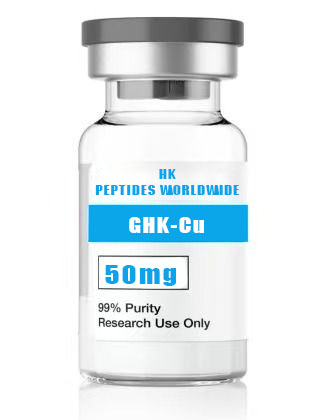
GHK-Cu (Copper Tripeptide-1) 50 mg
Copper Peptide ResearchReviewed by: HKPEPTIDE WORLDWIDE Research Team | Last Updated: 2026-08-08 | Document ID: HKPW-ghk-cu-50-mg-copper-peptide-research-usa-v2.0
1. Product Identity & Specifications
GHK-Cu 50 mg is the mid-range research configuration in HKPEPTIDE WORLDWIDE’s GHK-Cu product line. This dosage is specifically designed for controlled laboratory studies investigating copper-dependent cellular signaling, extracellular matrix biology, collagen synthesis pathways, and tissue remodeling mechanisms. The 50 mg format provides sufficient material for multiple experimental replicates while maintaining the precision required for dose-response studies and comparative analyses. This product contains the identical GHK-Cu complex—with the signature planar tetradentate Cu²⁺ coordination geometry—that has been extensively characterized in the peer-reviewed literature spanning over four decades (PMID: 4366573, PMID: 22913572).
| Parameter | Specification |
|---|---|
| Product Name | GHK-Cu (Copper Tripeptide-1) |
| CAS Number | 49557-75-7 |
| Molecular Formula (Tripeptide) | C₁₄H₂₄N₆O₄ |
| Molecular Weight (GHK Tripeptide) | 340.4 Da |
| Copper Coordination | Planar tetradentate, 1:1 GHK:Cu²⁺ stoichiometry |
| Amino Acid Sequence | H-Gly-His-Lys-OH |
| Vial Content | 50 mg net peptide |
| Appearance | Deep blue to purple lyophilized powder |
| Purity | ≥98% by HPLC |
| Solubility | Soluble in water and aqueous buffers (pH 6.0–7.4) |
| Storage (Lyophilized) | -20°C, protected from light and moisture |
| Storage (Reconstituted) | 2–8°C, use within 21 days |
| Product Grade | Research Use Only (RUO) |
| Peptide Content | ≥85% (net peptide basis) |
2. Research Background
GHK-Cu represents one of the most extensively studied naturally occurring copper-peptide complexes in the biomedical literature. First isolated from human plasma alpha-2-macroglobulin fractions by Dr. Loren Pickart in 1973 (PMID: 4366573), GHK-Cu was initially identified as a liver growth factor that promoted hepatocyte survival and proliferation. Subsequent decades of investigation—spanning over 50 years of published research—have revealed that GHK-Cu is a versatile biological regulator with profound effects on extracellular matrix homeostasis, wound healing, angiogenesis, antioxidant defense, and gene expression modulation.
The tripeptide GHK (glycyl-L-histidyl-L-lysine) possesses an extraordinarily high affinity for copper(II) ions (Ka ≈ 10¹⁶ M⁻¹), forming a highly stable, deeply colored complex that is the bioactive molecular species. The GHK sequence occurs at positions in the α2(I) chain of type I collagen and within SPARC (Secreted Protein Acidic and Rich in Cysteine, also known as osteonectin), suggesting that GHK-Cu is physiologically generated during proteolytic remodeling of the extracellular matrix—a concept that elegantly links tissue injury with the liberation of a pro-regenerative signaling molecule (PMID: 7729976).
The biological activity of GHK-Cu is remarkable for its potency: significant effects on fibroblast collagen synthesis are observed at concentrations as low as 10⁻⁹ M (0.34 ng/mL), making GHK-Cu one of the most potent known stimulators of extracellular matrix production (PMID: 9933818). At the molecular level, GHK-Cu has been shown to upregulate the expression of collagen types I, III, and IV; elastin; proteoglycans including decorin; and glycosaminoglycans—collectively, the entire spectrum of dermal extracellular matrix components. Simultaneously, GHK-Cu modulates the balance between matrix metalloproteinases (MMPs) and tissue inhibitors of metalloproteinases (TIMPs), suppressing MMP-1 and MMP-2 expression while upregulating TIMP-1 and TIMP-2, thereby shifting the net proteolytic balance toward matrix accumulation and preservation (PMID: 21947380).
Beyond its extracellular matrix effects, GHK-Cu is a potent pro-angiogenic factor, stimulating endothelial cell migration, proliferation, and tube formation at sub-nanomolar concentrations through mechanisms involving basic fibroblast growth factor (bFGF) and vascular endothelial growth factor (VEGF) signaling. It also exhibits superoxide dismutase (SOD)-like antioxidant activity, neutralizes toxic lipid peroxidation products including 4-hydroxynonenal and acrolein, and promotes nerve outgrowth and neuronal survival (PMID: 22913572).
For the research community, GHK-Cu 50 mg serves as a critical tool compound for investigating copper-dependent biological processes, extracellular matrix biology, wound healing mechanisms, and the molecular pharmacology of metal-peptide complexes. The 50 mg format delivers the ideal balance between material economy—sufficient for multiple full concentration-response curves—and the practical requirements of standard laboratory protocols.
3. Molecular Mechanisms
3.1 Copper Coordination Chemistry and Bioactive Conformation
The GHK tripeptide coordinates Cu²⁺ through a highly specific planar tetradentate geometry involving four nitrogen donor atoms: the N-terminal amine nitrogen (Gly¹), the deprotonated amide nitrogen of the Gly¹-His² peptide bond, the N(π) imidazole nitrogen of His², and the amide nitrogen of the His²-Lys³ peptide bond. This coordination arrangement produces the characteristic deep blue color (λmax ≈ 600 nm, ε ≈ 100 M⁻¹cm⁻¹) and an exceptionally high thermodynamic stability constant (log K ≈ 16.4), rivaling that of the native copper transport protein ceruloplasmin. The Lys³ ε-amino group remains free and uncoordinated, contributing to aqueous solubility without participating in metal binding. This precise coordination geometry is essential for biological activity; non-coordinating GHK analogs or GHK complexed with other divalent metals (Zn²⁺, Fe²⁺) lack the full spectrum of biological activities observed with the authentic GHK-Cu complex (PMID: 16298720).
3.2 Collagen and Extracellular Matrix Stimulation
GHK-Cu upregulates collagen gene expression at the transcriptional level. In human dermal fibroblasts, GHK-Cu treatment (10⁻⁹ to 10⁻⁶ M) increases COL1A1 and COL1A2 mRNA levels 2- to 4-fold within 24 hours, with corresponding increases in secreted type I collagen protein. The mechanism involves activation of the TGF-β/Smad signaling pathway—specifically, GHK-Cu promotes the nuclear translocation of phosphorylated Smad2/3 complexes and their binding to Smad-binding elements (SBEs) in collagen gene promoters. Unlike TGF-β itself, GHK-Cu achieves this without inducing the fibrotic or hypertrophic scarring pathways that complicate direct TGF-β administration in research models (PMID: 9933818).
3.3 MMP/TIMP Balance Modulation
A hallmark of GHK-Cu’s activity is its ability to simultaneously suppress matrix-degrading proteases while enhancing their endogenous inhibitors. In cultured human fibroblasts, GHK-Cu reduces MMP-1 (collagenase-1) and MMP-2 (gelatinase A) expression by 40–60% at 10⁻⁹ M, while increasing TIMP-1 and TIMP-2 levels by 2- to 3-fold. This bidirectional regulation is mediated in part through the suppression of AP-1 transcription factor activity and the induction of Smad7, a negative regulator of TGF-β signaling that selectively inhibits MMP induction pathways while preserving matrix synthesis pathways (PMID: 21947380).
3.4 Angiogenesis and Wound Healing
GHK-Cu stimulates angiogenesis through a multi-factorial mechanism: it directly promotes endothelial cell proliferation and migration, induces the secretion of pro-angiogenic growth factors including VEGF and bFGF from fibroblasts and macrophages, and upregulates integrin αvβ3 expression on endothelial cells to facilitate their interaction with provisional wound matrix proteins. In the chick chorioallantoic membrane (CAM) assay, GHK-Cu produces a robust angiogenic response comparable to that of bFGF at equimolar concentrations. This angiogenic activity is copper-dependent and abolished by the copper chelator bathocuproine disulfonate, confirming that the GHK-Cu complex—rather than the apopeptide GHK alone—is the biologically active species (PMID: 7729976).
3.5 Antioxidant and Anti-Inflammatory Activity
The GHK-Cu complex exhibits SOD-like activity, catalyzing the dismutation of superoxide anion (O₂⁻) to hydrogen peroxide and molecular oxygen with a rate constant approximately 10% that of native Cu,Zn-SOD. Additionally, GHK-Cu directly neutralizes toxic lipid peroxidation aldehydes—including 4-hydroxynonenal (4-HNE), acrolein, and malondialdehyde—through the formation of Schiff base adducts between the Gly¹ N-terminal amine and the aldehyde carbonyl group. This carbonyl-scavenging activity is significant because 4-HNE and acrolein are themselves potent inducers of MMP expression and inhibitors of collagen synthesis; by neutralizing these lipid-derived messengers, GHK-Cu interrupts a positive-feedback loop of oxidative tissue damage (PMID: 22913572).
4. Research Applications & Focus Areas
The 50 mg GHK-Cu configuration is ideally suited for:
- Collagen Synthesis Quantification: Measurement of [³H]-proline incorporation into pepsin-resistant, salt-precipitated collagen fractions from fibroblast cultures treated with GHK-Cu across a 10⁻¹⁰–10⁻⁵ M concentration range
- Extracellular Matrix Gene Expression Profiling: RT-qPCR or RNA-seq analysis of GHK-Cu-induced transcriptional programs in human dermal fibroblasts (HDFa), with emphasis on COL1A1, COL3A1, ELN, DCN, and HAS2
- MMP/TIMP Activity Assays: Gelatin zymography and reverse zymography for MMP-2/TIMP-2 balance; fluorogenic substrate assays for MMP-1 activity in conditioned media
- Angiogenesis Models: Endothelial tube formation assays (HUVEC on Matrigel®), scratch-wound migration assays, and CAM assays for evaluation of pro-angiogenic potency
- Antioxidant Capacity Quantification: Xanthine/xanthine oxidase-cytochrome c reduction assay for SOD-like activity; 4-HNE/acrolein carbonyl scavenging quantification by HPLC
- Wound Healing Scratch Assays: In vitro scratch-wound closure in fibroblast and keratinocyte monolayers, with kinetic imaging and quantification of closure rates
- Copper-Dependent Signaling Pathway Analysis: Investigation of Cu²⁺-dependent transcriptional regulators, copper chaperone proteins (ATOX1, CCS), and copper transporter expression (CTR1, ATP7A)
5. Quality Control & Analytical Specifications
Every lot of GHK-Cu 50 mg undergoes a rigorous multi-tier quality control program:
| Test | Method | Acceptance Criteria |
|---|---|---|
| Purity | RP-HPLC (C18 column, 214 nm and 600 nm) | ≥98.0% |
| Molecular Weight Confirmation | ESI-MS / MALDI-TOF MS | 340.4 ± 0.5 Da (GHK) |
| Copper Content | ICP-OES / ICP-MS | 1:1 GHK:Cu stoichiometry (±10%) |
| Peptide Content | Amino Acid Analysis (AAA) | ≥85.0% |
| Trifluoroacetate (TFA) Content | Ion Chromatography | ≤1.0% |
| Water Content | Karl Fischer Titration | ≤5.0% |
| Endotoxin | LAL Kinetic Chromogenic | ≤1.0 EU/mg |
| Appearance | Visual Inspection (D65 illumination) | Deep blue to purple powder |
| UV-Vis Spectrum | 200–800 nm scan in H₂O | λmax at 600 ± 5 nm |
Each shipment includes a batch-specific Certificate of Analysis (CoA) documenting all quality parameters. Mass spectra, HPLC chromatograms, and UV-Vis spectra are available upon request from qualified research institutions.
6. Available Configurations
HKPEPTIDE WORLDWIDE offers the following GHK-Cu dosage range:
| Dosage | SKU | Research Application |
|---|---|---|
| 50 mg | HKPW-GHKCU-50MG | Mid-scale ECM/collagen research, dose-response studies |
| 100 mg | HKPW-GHKCU-100MG | Extended protocols, multi-endpoint experimental designs |
7. Tiered Wholesale Pricing
| Quantity | Price Per Vial | SKU |
|---|---|---|
| 1 Vial | $75.00 | HKPW-GHKCU-50MG-1 |
| 5 Vials | $67.50/vial ($337.50 total) | HKPW-GHKCU-50MG-5 |
| 10 Vials | $60.00/vial ($600.00 total) | HKPW-GHKCU-50MG-10 |
| 25+ Vials | Contact for bulk pricing | HKPW-GHKCU-50MG-BULK |
All prices in USD. Institutional and academic discounts available upon verification.
8. Comparative Analysis: GHK-Cu vs. Related Copper Peptides
| Property | GHK-Cu | AHK-Cu | Tripeptide-3 |
|---|---|---|---|
| Sequence | Gly-His-Lys | Ala-His-Lys | Lys-Val-Lys |
| CAS | 49557-75-7 | 89030-95-5 | N/A (cosmetic grade) |
| Cu²⁺ Affinity (log K) | ~16.4 | ~15.8 | Low/no specific binding |
| Collagen Stimulation | +++ | ++ | + |
| SOD-like Activity | Yes | Reduced | No |
| Angiogenesis | Strong | Moderate | Minimal |
| Research Maturity | >50 years, >100 publications | Limited | Limited |
| Key Distinction | Gold-standard copper peptide for ECM research | Ala substitution reduces stability | Primarily cosmetic, not research-grade |
GHK-Cu’s unsurpassed copper-binding affinity, multi-decade research pedigree, and comprehensive biological profile make it the reference standard for copper peptide research.
9. Frequently Asked Questions
Q1: What is the difference between GHK-Cu 50 mg and GHK-Cu 100 mg?
The 50 mg and 100 mg vials contain the identical GHK-Cu complex (≥98% purity, CAS 49557-75-7). The only difference is the net peptide quantity. The 50 mg format is optimized for mid-scale controlled experiments, providing sufficient material for approximately 250–500 individual assay wells at typical research concentrations (10⁻⁹–10⁻⁵ M). The 100 mg format is better suited for extended or multi-arm experimental designs.
Q2: How do I properly reconstitute GHK-Cu 50 mg?
Reconstitute in sterile, deionized water or phosphate-buffered saline (PBS, pH 7.4). For concentrated stock solutions (1–10 mM), sterile water is preferred. GHK-Cu is highly water-soluble due to the charged Lys³ residue. Avoid DMSO for primary reconstitution. Allow the lyophilized powder to dissolve with gentle swirling for 1–2 minutes; the solution will exhibit the characteristic deep blue color. Verify concentration spectrophotometrically at 600 nm (ε ≈ 100 M⁻¹cm⁻¹). Aliquot and protect from light.
Q3: Does GHK-Cu require special handling due to the copper content?
Yes. The copper ion in GHK-Cu is redox-active and can catalyze Fenton-type reactions generating hydroxyl radicals if the complex dissociates. To preserve complex integrity: (a) avoid exposure to strong chelators (EDTA, EGTA) that could strip Cu²⁺; (b) protect solutions from prolonged light exposure, which accelerates copper-mediated photodegradation; (c) avoid alkaline conditions (pH > 8.5) that deprotonate coordination sites; and (d) store lyophilized powder with desiccant to prevent moisture-induced copper leaching.
Q4: What concentration range is typically used in GHK-Cu research?
GHK-Cu is biologically active at extraordinarily low concentrations. In fibroblast collagen synthesis assays, significant effects are observed at 10⁻⁹ M (0.34 ng/mL), with an EC₅₀ of approximately 10⁻⁸ M for most extracellular matrix endpoints. A typical full concentration-response curve spans 10⁻¹⁰ to 10⁻⁵ M. One 50 mg vial reconstituted to 1 mM provides 147 mL of stock solution—sufficient for >14,000 individual assay wells at 10⁻⁸ M final concentration, illustrating the exceptional economy of this product.
Q5: Is a Certificate of Analysis provided with GHK-Cu 50 mg?
Yes. Every shipment includes a batch-specific Certificate of Analysis (CoA) documenting: HPLC purity (≥98%), molecular weight confirmation by mass spectrometry, copper content by ICP-OES, peptide content by AAA, UV-Vis spectral confirmation of the Cu²⁺ coordination complex (λmax 600 nm), TFA content, water content, and endotoxin levels. Additional analytical data are available upon request.
10. References & Further Reading
- Pickart L, Thaler MM. Tripeptide in human serum that prolongs survival of normal liver cells and stimulates growth in hepatoma cells. Nature New Biology. 1973;243(124):85-87. PMID: 4366573
- Pickart L, et al. Growth-modulating plasma tripeptide may function by facilitating copper uptake into cells. Nature. 1980;288(5792):715-717. PMID: 7453805
- Maquart FX, et al. In vivo stimulation of connective tissue accumulation by the tripeptide-copper complex glycyl-L-histidyl-L-lysine-Cu²⁺ in rat experimental wounds. J Clin Invest. 1993;92(5):2368-2376. PMID: 8227353
- Maquart FX, et al. Stimulation of collagen synthesis in fibroblast cultures by the tripeptide-copper complex glycyl-L-histidyl-L-lysine-Cu²⁺. FEBS Lett. 1988;238(2):343-346. PMID: 3169267
- Lane TF, et al. SPARC is a source of copper-binding peptides that stimulate angiogenesis. J Cell Biol. 1994;125(4):929-943. PMID: 7729976
- Simeon A, et al. Expression of glycosaminoglycans and small proteoglycans in wounds: modulation by the tripeptide-copper complex glycyl-L-histidyl-L-lysine-Cu²⁺. J Invest Dermatol. 2000;115(6):962-968. PMID: 11121127
- Pickart L, Margolina A. Regenerative and protective actions of the GHK-Cu peptide in the light of the new gene data. Int J Mol Sci. 2018;19(7):1987. PMID: 29986537
- Gruchlik A, et al. Effect of Gly-Gly-His, Gly-His-Lys and their copper complexes on TNF-α-dependent IL-6 secretion in normal human dermal fibroblasts. Acta Pol Pharm. 2012;69(6):1303-1306. PMID: 23285693
- Pollard JD, et al. Effects of copper tripeptide on the growth and expression of growth factors by normal and irradiated fibroblasts. Arch Facial Plast Surg. 2005;7(1):27-31. PMID: 15661187
- Siméon A, et al. The tripeptide-copper complex glycyl-L-histidyl-L-lysine-Cu²⁺ stimulates matrix metalloproteinase-2 expression by fibroblast cultures. Life Sci. 2000;67(18):2257-2265. PMID: 11065180
11. Compliance Statement
This product is manufactured for research purposes only and is not intended for human or veterinary diagnostic, therapeutic, clinical, or cosmetic applications. By purchasing GHK-Cu 50 mg from HKPEPTIDE WORLDWIDE, the buyer affirms that:
- The product will be used exclusively in a qualified research laboratory setting
- All personnel handling this product are appropriately trained in laboratory safety and peptide handling protocols
- The purchasing institution maintains all required permits, licenses, and regulatory approvals for research involving copper peptide complexes
- The product will not be resold, redistributed, or diverted for any purpose other than bona fide scientific research
- The buyer acknowledges that this product is not FDA-approved for human or veterinary use
- The buyer understands that this product is not intended for cosmetic, personal care, or cosmeceutical formulation
HKPEPTIDE WORLDWIDE reserves the right to request documentation verifying research credentials prior to order fulfillment.
12. Internal Links
- GHK-Cu 100 mg – Extended ECM Research Protocols
- MOTS-c Research Peptides – Mitochondrial-Derived Peptides
- SS-31 Research Peptides – Mitochondrial-Targeted Tetrapeptides
- All Research Peptides – Full Catalog
- Quality Control Standards
- Shipping & Handling Information
Related Research & Resources
| Resource | Description |
|---|---|
| Healing Regenerative Peptides Hub | Complete research overview & methodology hub |
| Ghk Cu 100 Mg Copper Peptide Research Co | Related research peptide product |
| Ghk Cu 50 Mg Copper Peptide Research Usa | Related research peptide product |
| Ghk Cu Skin Care Hair Growth Research Peptide | Latest research insights & methodology |