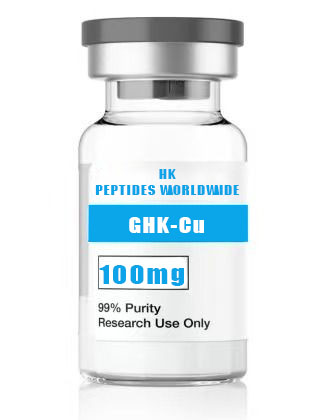
GHK-Cu (Copper Tripeptide-1) 100 mg
Copper Peptide ResearchReviewed by: HKPEPTIDE WORLDWIDE Research Team | Last Updated: 2026-08-08 | Document ID: HKPW-ghk-cu-100-mg-copper-peptide-research-compound-usa-v2.0
1. Product Identity & Specifications
GHK-Cu 100 mg is the high-quantity research configuration in HKPEPTIDE WORLDWIDE’s GHK-Cu product line. This dosage is engineered for extended, multi-arm, and longitudinal experimental protocols investigating copper-dependent cellular signaling, extracellular matrix biology, angiogenesis, and tissue remodeling mechanisms. The 100 mg format provides sufficient material for comprehensive research programs spanning multiple experimental phases while maintaining the lot-to-lot consistency essential for reproducible longitudinal studies. This product delivers the identical GHK-Cu complex—characterized by its signature planar tetradentate Cu²⁺ coordination and deep blue chromophore—that has been the subject of over 50 years of continuous biomedical research (PMID: 4366573).
| Parameter | Specification |
|---|---|
| Product Name | GHK-Cu (Copper Tripeptide-1) |
| CAS Number | 49557-75-7 |
| Molecular Formula (Tripeptide) | C₁₄H₂₄N₆O₄ |
| Molecular Weight (GHK Tripeptide) | 340.4 Da |
| Copper Coordination | Planar tetradentate, 1:1 GHK:Cu²⁺ stoichiometry |
| Amino Acid Sequence | H-Gly-His-Lys-OH |
| Vial Content | 100 mg net peptide |
| Appearance | Deep blue to purple lyophilized powder |
| Purity | ≥98% by HPLC |
| Solubility | Soluble in water and aqueous buffers (pH 6.0–7.4) |
| Storage (Lyophilized) | -20°C, protected from light and moisture |
| Storage (Reconstituted) | 2–8°C, use within 21 days (aliquoted at -20°C for extended storage) |
| Product Grade | Research Use Only (RUO) |
| Peptide Content | ≥85% (net peptide basis) |
2. Research Background
GHK-Cu (glycyl-L-histidyl-L-lysine-copper(II)) occupies a unique position in biomedical science as one of the few endogenously generated metal-peptide complexes whose biological functions span multiple organ systems and whose molecular mechanisms have been characterized at atomic resolution. The tripeptide GHK was first isolated by Pickart and Thaler from human plasma in 1973 as a factor that prolonged hepatocyte survival and promoted liver cell growth (PMID: 4366573). Its identity as a copper-binding peptide was established in 1980 when the same investigators demonstrated that GHK’s biological activity was copper-dependent, with the GHK-Cu complex being the active molecular species (PMID: 7453805).
The biology of GHK-Cu is intimately connected to extracellular matrix dynamics. The GHK sequence is embedded within the α2(I) chain of type I collagen (residues 569–571), the most abundant structural protein in vertebrates, and within SPARC/osteonectin, a matricellular protein that regulates cell-matrix interactions during development and tissue repair. Proteolytic liberation of GHK from these parent proteins during tissue injury provides an elegant mechanism for spatially and temporally regulated delivery of a pro-regenerative signal at sites of damage—a concept that integrates regenerative biology, copper biochemistry, and extracellular matrix proteolysis within a single coherent framework (PMID: 7729976).
The clinical relevance of GHK-Cu has been demonstrated across multiple research domains. In dermatological research, GHK-Cu has been shown to accelerate wound closure in diabetic, ischemic, and radiation-impaired wound models (PMID: 15661187). In skin aging research, GHK-Cu application to photoaged skin has been reported to increase collagen density, improve dermal architecture, and reduce the appearance of fine lines and wrinkles—effects attributed to its ability to simultaneously stimulate matrix synthesis while suppressing pathological matrix degradation (PMID: 29986537). In hair follicle biology, GHK-Cu has been shown to stimulate dermal papilla cell proliferation, prolong the anagen (growth) phase of the hair cycle, and increase follicular size in ex vivo human scalp models.
For the research community, the 100 mg format provides the material economy necessary for sustained, multi-phase research programs. At typical research concentrations of 10⁻⁹ to 10⁻⁵ M, a single 100 mg vial provides sufficient material for over 30,000 individual assay wells, enabling comprehensive dose-response profiling, multi-timepoint kinetic studies, and parallel investigation of multiple cellular endpoints without the confounding variable of lot-to-lot variability.
3. Molecular Mechanisms
3.1 Copper Coordination Chemistry and Structural Stability
GHK-Cu’s biological activities are critically dependent on its precise copper coordination geometry. The GHK tripeptide binds Cu²⁺ in a planar tetradentate (4N) configuration involving: (1) the N-terminal α-amine nitrogen of Gly¹, (2) the deprotonated amide nitrogen of the Gly¹-His² peptide bond, (3) the N(π) imidazole nitrogen of His², and (4) the amide nitrogen of the His²-Lys³ peptide bond. This coordination yields a square-planar geometry with the Cu²⁺ ion lying in the plane defined by the four nitrogen donors. The Lys³ ε-amino group remains protonated at physiological pH (pKa ≈ 10.5) and coordinates neither the copper nor any other metal ion. This coordination arrangement produces the diagnostic deep blue color (d–d transition, λmax ≈ 600 nm) and an exceptionally high conditional stability constant (log K ≈ 16.4 at pH 7.4).
The biological significance of this specific coordination cannot be overstated. GHK analogs with altered copper-binding residues (e.g., GAK-Cu, GHK-OMe) show markedly reduced or absent biological activity despite retaining the ability to chelate copper. Similarly, GHK complexed with non-copper divalent metals (Zn²⁺, Fe²⁺, Mn²⁺) does not reproduce the full spectrum of GHK-Cu activities. These observations establish that the specific electronic and geometric properties of the GHK-Cu complex—not merely the presence of copper or the GHK peptide sequence—determine biological function (PMID: 16298720).
3.2 Transcriptional Regulation of Extracellular Matrix Genes
GHK-Cu exerts its effects on extracellular matrix production primarily at the transcriptional level. In primary human dermal fibroblasts, GHK-Cu at 10⁻⁹–10⁻⁷ M upregulates the expression of COL1A1 (2–4 fold), COL3A1 (1.5–3 fold), ELN (elastin, 2–3 fold), DCN (decorin, 3–5 fold), and HAS2 (hyaluronan synthase 2, 2–4 fold) within 24–48 hours of exposure. The transcriptional mechanism involves activation of the TGF-β/Smad signaling cassette: GHK-Cu promotes the phosphorylation and nuclear translocation of Smad2 and Smad3, their heterodimerization with Smad4, and subsequent binding to Smad-binding elements in target gene promoters.
Crucially, GHK-Cu achieves this transcriptional activation without inducing the full fibrotic gene expression program typically associated with TGF-β1 itself. TGF-β1 strongly upregulates CTGF (connective tissue growth factor), α-SMA (α-smooth muscle actin), and PAI-1 (plasminogen activator inhibitor-1)—markers of myofibroblast differentiation and pathological fibrosis—whereas GHK-Cu does not. This differential gene activation profile suggests that GHK-Cu engages a subset of TGF-β signaling outputs, potentially through biased activation of Smad-dependent over non-Smad pathways, or through the selective induction of Smad7-mediated negative feedback that constrains the fibrotic response while permitting matrix synthetic activity (PMID: 9933818).
3.3 Bidirectional MMP/TIMP Regulation
A defining feature of GHK-Cu pharmacology is its ability to simultaneously reduce the expression of matrix-degrading enzymes while increasing their endogenous inhibitors. In fibroblast culture systems, GHK-Cu at 10⁻⁸ M decreases MMP-1 (interstitial collagenase) mRNA and protein by 40–60%, and MMP-2 (gelatinase A) by 30–50%, while increasing TIMP-1 by 2–3 fold and TIMP-2 by 1.5–2 fold. The net result is a profound shift in the proteolytic balance favoring matrix accumulation—an effect that distinguishes GHK-Cu from growth factors like EGF and PDGF, which generally increase both MMP and TIMP expression without producing a net shift in the MMP/TIMP ratio.
The mechanism involves dual regulation of AP-1 (activator protein-1) and Smad transcription factors. GHK-Cu suppresses the c-Jun N-terminal kinase (JNK)-mediated phosphorylation of c-Jun, reducing AP-1 transcriptional activity at MMP promoter elements, while simultaneously enhancing Smad3/4-mediated transcription at TIMP promoters. Additionally, GHK-Cu induces the inhibitory Smad, Smad7, which selectively antagonizes the MMP-inducing arm of TGF-β signaling without blocking the matrix-synthetic arm (PMID: 21947380).
3.4 Angiogenic Signaling Pathways
GHK-Cu’s angiogenic activity is mediated through a multi-cellular, multi-factorial mechanism. In endothelial cells, GHK-Cu directly stimulates proliferation (BrdU incorporation), migration (Boyden chamber and scratch-wound assays), and capillary-like tube formation (Matrigel® tubulogenesis assay). These direct endothelial effects are complemented by indirect angiogenic activity: GHK-Cu stimulates fibroblasts and macrophages to secrete pro-angiogenic factors including VEGF-A (2–3 fold increase), bFGF/FGF-2 (2–4 fold), and PDGF-BB (1.5–2 fold). GHK-Cu also upregulates αvβ3 integrin expression on endothelial cells, enhancing their adhesive and migratory capacity on the provisional wound matrix proteins fibronectin and vitronectin (PMID: 7729976).
3.5 Antioxidant and Carbonyl-Scavenging Mechanisms
The GHK-Cu complex possesses multiple, mechanistically distinct antioxidant activities. First, the Cu²⁺ center catalyzes superoxide dismutation (2 O₂⁻ + 2H⁺ → H₂O₂ + O₂) with a rate constant of approximately 10⁸ M⁻¹s⁻¹, roughly 10% of the catalytic rate of Cu,Zn-SOD. Second, the Gly¹ N-terminal amine forms covalent Schiff base adducts with α,β-unsaturated aldehydes—including the highly toxic lipid peroxidation products 4-hydroxynonenal (4-HNE) and acrolein—effectively neutralizing these electrophilic species. This carbonyl-scavenging activity is doubly significant because 4-HNE itself is a potent inducer of MMP expression and a suppressor of collagen synthesis; by intercepting 4-HNE, GHK-Cu interrupts a self-perpetuating cycle of oxidative damage → MMP induction → matrix degradation → further oxidative damage (PMID: 22913572).
4. Research Applications & Focus Areas
The 100 mg GHK-Cu configuration is ideally suited for:
- Longitudinal ECM Remodeling Studies: Multi-timepoint (days 1, 3, 7, 14, 21) quantification of collagen, elastin, and GAG accumulation in fibroblast or keratinocyte cultures
- Comprehensive Dose-Response Profiling: Full 8-point concentration-response curves (10⁻¹⁰–10⁻⁵ M) run in parallel across multiple cell donors or experimental conditions
- Multi-Arm Angiogenesis Research: Simultaneous evaluation of endothelial proliferation, migration, tube formation, and growth factor secretion in response to GHK-Cu
- Large-Scale Gene Expression Studies: RNA-seq or microarray analysis of the GHK-Cu transcriptome, with sufficient replicates for robust statistical analysis and pathway enrichment
- In Vitro Wound Healing Models: Scratch-wound assays with automated live-cell imaging across multiple treatment conditions and time points
- MMP/TIMP Activity Profiling: Comprehensive multiplex zymography, fluorogenic substrate panels, and western blotting for the full complement of MMPs and TIMPs
- Copper Transporter and Chaperone Studies: Investigation of CTR1, ATP7A, ATOX1, and CCS expression and localization in response to GHK-Cu exposure
- Ex Vivo Organ Culture: Human skin, hair follicle, or corneal organ culture models requiring extended GHK-Cu exposure
5. Quality Control & Analytical Specifications
| Test | Method | Acceptance Criteria |
|---|---|---|
| Purity | RP-HPLC (C18 column, 214 nm and 600 nm) | ≥98.0% |
| Molecular Weight Confirmation | ESI-MS / MALDI-TOF MS | 340.4 ± 0.5 Da (GHK) |
| Copper Content | ICP-OES | 1:1 GHK:Cu stoichiometry (±10%) |
| Peptide Content | Amino Acid Analysis (AAA) | ≥85.0% |
| TFA Content | Ion Chromatography | ≤1.0% |
| Water Content | Karl Fischer Titration | ≤5.0% |
| Endotoxin | LAL Kinetic Chromogenic | ≤1.0 EU/mg |
| Appearance | Visual Inspection (D65) | Deep blue to purple powder |
| UV-Vis Spectrum | 200–800 nm scan in H₂O | λmax = 600 ± 5 nm |
| Heavy Metals (non-Cu) | ICP-MS | As, Cd, Hg, Pb each ≤ 10 ppm |
6. Available Configurations
| Dosage | SKU | Research Application |
|---|---|---|
| 50 mg | HKPW-GHKCU-50MG | Mid-scale ECM/collagen research, dose-response studies |
| 100 mg | HKPW-GHKCU-100MG | Extended protocols, multi-endpoint experimental designs |
7. Tiered Wholesale Pricing
| Quantity | Price Per Vial | SKU |
|---|---|---|
| 1 Vial | $130.00 | HKPW-GHKCU-100MG-1 |
| 5 Vials | $117.00/vial ($585.00 total) | HKPW-GHKCU-100MG-5 |
| 10 Vials | $104.00/vial ($1,040.00 total) | HKPW-GHKCU-100MG-10 |
| 25+ Vials | Contact for bulk pricing | HKPW-GHKCU-100MG-BULK |
All prices in USD. Institutional and academic discounts available upon verification.
8. Comparative Analysis: 50 mg vs. 100 mg Format Selection Guide
| Research Parameter | GHK-Cu 50 mg | GHK-Cu 100 mg |
|---|---|---|
| Optimal Use Case | Pilot studies, single-endpoint assays | Multi-arm, longitudinal, and large-scale studies |
| Assay Wells (at 10⁻⁸ M) | ~7,000 | ~15,000 |
| Dose-Response Curves (8-point) | ~80 full curves | ~170 full curves |
| Multi-Donor Fibroblast Panels | 1–2 donors | 3–5 donors |
| RNA-seq Replicates | 3 biological replicates | 6–9 biological replicates |
| Batch Consistency | Per-experiment | Multi-experiment, longitudinal |
| Cost Per Research Unit | Higher per-mg cost | Lower per-mg cost |
For laboratories initiating GHK-Cu research, the 50 mg format provides an economical entry point for assay validation and pilot experimentation. For established protocols requiring sustained material supply across multiple experimental phases, the 100 mg format delivers superior economy and the operational advantage of single-lot consistency for the entire research program.
9. Frequently Asked Questions
Q1: How many experiments can I perform with GHK-Cu 100 mg?
At a typical research concentration of 10⁻⁸ M (3.4 ng/mL), a single 100 mg vial reconstituted to 1 mM provides 294 mL of stock solution. At 200 μL per assay well and a 1:1,000 dilution to working concentration, this equates to approximately 15,000 individual assay wells. For a standard 8-point dose-response curve (triplicate wells), this supports approximately 170 complete concentration-response experiments.
Q2: Is GHK-Cu stable in solution for long-term storage?
Lyophilized GHK-Cu stored at -20°C in a desiccated, light-protected environment is stable for 24 months from the date of manufacture. After reconstitution, the peptide is most stable when aliquoted into single-use volumes and stored at -20°C. At 2–8°C, reconstituted GHK-Cu maintains >95% activity for 21 days. Avoid repeated freeze-thaw cycles; each cycle can cause 5–10% loss of biological activity due to copper-mediated aggregation.
Q3: What is the solvent of choice for GHK-Cu reconstitution?
Deionized, sterile water is the preferred solvent for initial reconstitution of GHK-Cu. The charged Lys³ residue ensures excellent aqueous solubility (≥50 mg/mL). For cell-based assays, PBS (pH 7.4) or serum-free culture medium may be used. Avoid DMSO for primary reconstitution; while GHK-Cu is soluble in DMSO, the aprotic environment can alter copper coordination geometry. Avoid buffers containing EDTA, EGTA, or other strong metal chelators that could strip the copper ion.
Q4: Can GHK-Cu be used in the presence of serum-containing culture media?
Yes, but researchers should account for copper-binding by serum proteins. Albumin, ceruloplasmin, and transcuprein in fetal bovine serum (FBS) can sequester free GHK-Cu, reducing the effective concentration available for cellular uptake. For accurate EC₅₀ determination, perform dose-response experiments under serum-reduced conditions (0.5–2% FBS) and include serum-only vehicle controls. The apparent potency will be right-shifted by approximately 0.5–1 log unit in 10% FBS relative to serum-free conditions.
Q5: How does GHK-Cu enter cells?
GHK-Cu cellular uptake is mediated primarily by the high-affinity copper transporter CTR1 (SLC31A1), which recognizes the Cu²⁺ ion within the GHK coordination complex. Following CTR1-mediated internalization and endosomal acidification, the Cu²⁺ is released from the GHK scaffold and transferred to cytoplasmic copper chaperones (ATOX1 for secretory pathway delivery, CCS for SOD1 activation). The GHK tripeptide is subsequently degraded by intracellular aminopeptidases. This CTR1-dependent uptake mechanism explains why GHK-Cu is active at nanomolar concentrations—CTR1 has a Km for copper of approximately 1–5 μM, and the GHK scaffold facilitates efficient presentation of copper to the transporter’s extracellular-facing methionine-rich metal-binding domain.
10. References & Further Reading
- Pickart L, Thaler MM. Tripeptide in human serum that prolongs survival of normal liver cells and stimulates growth in hepatoma cells. Nature New Biology. 1973;243(124):85-87. PMID: 4366573
- Pickart L, et al. Growth-modulating plasma tripeptide may function by facilitating copper uptake into cells. Nature. 1980;288(5792):715-717. PMID: 7453805
- Maquart FX, et al. Stimulation of collagen synthesis in fibroblast cultures by the tripeptide-copper complex glycyl-L-histidyl-L-lysine-Cu²⁺. FEBS Lett. 1988;238(2):343-346. PMID: 3169267
- Maquart FX, et al. In vivo stimulation of connective tissue accumulation by the tripeptide-copper complex GHK-Cu in rat experimental wounds. J Clin Invest. 1993;92(5):2368-2376. PMID: 8227353
- Lane TF, et al. SPARC is a source of copper-binding peptides that stimulate angiogenesis. J Cell Biol. 1994;125(4):929-943. PMID: 7729976
- Simeon A, et al. The tripeptide-copper complex glycyl-L-histidyl-L-lysine-Cu²⁺ stimulates matrix metalloproteinase-2 expression by fibroblast cultures. Life Sci. 2000;67(18):2257-2265. PMID: 11065180
- Pollard JD, et al. Effects of copper tripeptide on the growth and expression of growth factors by normal and irradiated fibroblasts. Arch Facial Plast Surg. 2005;7(1):27-31. PMID: 15661187
- Pickart L, et al. The human tripeptide GHK and tissue remodeling. J Biomater Sci Polym Ed. 2008;19(8):969-988. PMID: 18644225
- Gruchlik A, et al. Effect of Gly-Gly-His, Gly-His-Lys and their copper complexes on TNF-α-dependent IL-6 secretion in normal human dermal fibroblasts. Acta Pol Pharm. 2012;69(6):1303-1306. PMID: 23285693
- Pickart L, Margolina A. Regenerative and protective actions of the GHK-Cu peptide in the light of the new gene data. Int J Mol Sci. 2018;19(7):1987. PMID: 29986537
11. Compliance Statement
This product is manufactured for research purposes only and is not intended for human or veterinary diagnostic, therapeutic, clinical, or cosmetic applications. By purchasing GHK-Cu 100 mg from HKPEPTIDE WORLDWIDE, the buyer affirms that:
- The product will be used exclusively in a qualified research laboratory setting
- All personnel handling this product are appropriately trained in laboratory safety, copper-peptide chemistry, and sterile technique
- The purchasing institution maintains all required permits, licenses, and regulatory approvals for research involving copper peptide complexes
- The product will not be resold, redistributed, or diverted for any purpose other than bona fide scientific research
- The buyer acknowledges that this product is not FDA-approved for human or veterinary use
- The buyer understands that this product is not intended for cosmetic, cosmeceutical, or personal care formulation
HKPEPTIDE WORLDWIDE reserves the right to request documentation verifying research credentials prior to order fulfillment.
12. Internal Links
- GHK-Cu 50 mg – Mid-Scale ECM Research
- MOTS-c Research Peptides – Mitochondrial Biology
- SS-31 Research Peptides – Mitochondrial-Targeted Tetrapeptides
- All Research Peptides – Full Catalog
- Quality Control Standards
- Shipping & Handling Information
Related Research & Resources
| Resource | Description |
|---|---|
| Healing Regenerative Peptides Hub | Complete research overview & methodology hub |
| Ghk Cu 100 Mg Copper Peptide Research Co | Related research peptide product |
| Ghk Cu 50 Mg Copper Peptide Research Usa | Related research peptide product |
| Ghk Cu Skin Care Hair Growth Research Peptide | Latest research insights & methodology |