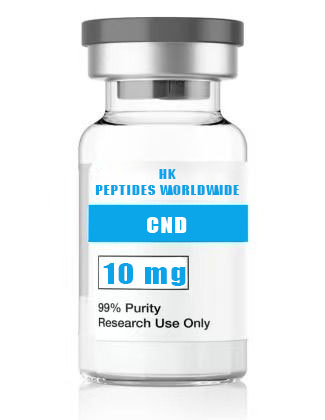
CJC-1295 Without DAC (Modified GRF 1-29 10 mg
GHRH Analogue Research PeptideReviewed by: HKPEPTIDE WORLDWIDE Research Team | Last Updated: 2026-08-08 | Document ID: HKPW-cjc-nodac-10mg-v2.0
1. Product Identity & Specifications
CJC-1295 Without DAC 10 mg is the maximum-quantity research configuration in HKPEPTIDE WORLDWIDE’s CJC-1295 Without DAC product line. Engineered for high-volume research laboratories, multi-investigator collaborations, and comprehensive experimental protocols requiring extended material availability, the 10 mg format provides the largest single-vial quantity of this rigorously characterized short-acting GHRH analogue. It is the definitive choice for laboratories conducting large-scale somatotroph signaling studies, systematic pulse-frequency-response matrices, longitudinal perfusion experiments, and protocols that demand replicate measurements across numerous experimental conditions.
| Parameter | Specification |
|---|---|
| Product Name | CJC-1295 Without DAC (Modified GRF 1-29) |
| Parent Molecule | GRF(1-29) amide (Sermorelin, CAS 83930-13-6) |
| Molecular Formula | C₁₅₂H₂₅₂N₄₄O₄₂S |
| Molecular Weight | ~3367 Da |
| Amino Acid Sequence | Tyr-D-Ala-Asp-Ala-Ile-Phe-Thr-Asn-Ser-Tyr-Arg-Lys-Val-Leu-Ala-Gln-Leu-Ser-Ala-Arg-Lys-Leu-Leu-Gln-Asp-Ile-Met-Ser-Arg-NH₂ |
| Key Modifications | D-Ala² (DPP-4 resistance); Gln⁸, Ala¹⁵, Leu²⁷ (oxidation/metabolic stability); C-terminal amidation |
| Vial Content | 10 mg net peptide |
| Appearance | White to off-white lyophilized powder |
| Purity | ≥99% by HPLC |
| Solubility | Soluble in aqueous buffers (pH 7.4); DMSO for stock solutions |
| Plasma Half-Life | ~30 minutes (rapid renal clearance) |
| GHRH-R Binding Affinity | IC₅₀ ~1.2 nM (competitive displacement of [¹²⁵I]-GRF) |
| Storage (Lyophilized) | -20°C, protected from light and moisture |
| Storage (Reconstituted) | 2–8°C, use within 30 days |
| Product Grade | Research Use Only (RUO) |
| Peptide Content | ≥85% (net peptide basis) |
2. Research Background
CJC-1295 represents a significant engineering achievement in the development of long-acting GHRH analogues. The story begins with native GHRH(1-44)-NH₂, a 44-amino acid hypothalamic peptide first isolated and characterized independently by two groups in 1982 from human pancreatic tumors that caused acromegaly (Rivier et al., 1982; Guillemin et al., 1982). The biologically active core was rapidly identified as the N-terminal 29 amino acids — GRF(1-29)-NH₂ — which retained full receptor activation potency while eliminating unnecessary C-terminal sequence. This truncated analogue, later named Sermorelin (CAS 83930-13-6), became the first GHRH analogue to enter clinical development for diagnostic evaluation of growth hormone deficiency (PMID: 2870820).
Native GRF(1-29)-NH₂ suffered from two critical limitations: susceptibility to rapid proteolytic degradation (plasma half-life <10 minutes) and potential for methionine oxidation at position 27. ConjuChem Biotechnologies addressed these through rational peptide engineering, creating a series of tetra-substituted GRF(1-29) analogues. The “CJC-1295 core” incorporates four strategic amino acid substitutions: D-Ala at position 2 for DPP-4 resistance, Gln at position 8 (replacing Asn) to eliminate a potential deamidation site, Ala at position 15 (replacing Gly) for enhanced helical stability, and Leu at position 27 (replacing Met) to eliminate the oxidation-sensitive methionine residue (PMID: 16984234).
The critical bifurcation in the CJC-1295 family arises from the presence or absence of the Drug Affinity Complex (DAC) moiety. CJC-1295 Without DAC is the unmodified tetra-substituted GRF(1-29) core — a short-acting GHRH receptor agonist with a plasma half-life of approximately 30 minutes. This rapid clearance profile makes it the preferred research tool for modeling physiological pulsatile GH secretion patterns, investigating GHRH receptor desensitization kinetics, and studying the temporal dynamics of somatotroph signaling without the confounding influence of sustained receptor occupancy. In contrast, CJC-1295 With DAC incorporates a maleimidopropionic acid linker conjugated to a reactive thiol group at Lys²⁰, enabling covalent, irreversible binding to serum albumin, extending the half-life to approximately 8 days (PMID: 16984234).
For the research community, CJC-1295 Without DAC serves as an essential reference standard — the “clean” comparator compound for discriminating between receptor-level pharmacological effects and pharmacokinetic effects mediated by the DAC modification. The 10 mg format enables the most ambitious experimental designs: comprehensive pulse-frequency-response matrices crossing 4-6 pulse frequencies with 3-5 amplitude levels, systematic structure-activity relationship comparisons across a panel of GHRH analogues, and longitudinal protocols spanning weeks of repeated perifusion experiments from a single well-characterized stock.
3. Molecular Mechanisms
3.1 GHRH Receptor Activation and cAMP Signaling
CJC-1295 Without DAC binds with high affinity (IC₅₀ ~1.2 nM) to the Growth Hormone-Releasing Hormone receptor (GHRH-R), a class B (secretin-like) G-protein-coupled receptor predominantly expressed on somatotroph cells of the anterior pituitary gland. The GHRH-R is a 423-amino acid protein with a characteristic N-terminal extracellular domain, seven-transmembrane helical core, and intracellular C-terminal tail that couples primarily to the stimulatory Gαs protein.
Ligand binding induces a conformational transition that promotes GDP-GTP exchange on Gαs, leading to dissociation of the Gαs-GTP subunit from the Gβγ heterodimer. The free Gαs-GTP activates membrane-associated adenylate cyclase, catalyzing the conversion of ATP to cAMP. Elevated intracellular cAMP activates PKA, which phosphorylates CREB at Ser¹³³, enabling its translocation to the nucleus and binding to cAMP response elements (CRE) in the promoter regions of target genes — including the GH1 gene itself (PMID: 1310906).
3.2 Calcium Signaling and GH Exocytosis
In parallel with the cAMP-PKA-CREB axis, GHRH-R activation opens voltage-gated L-type calcium channels on the somatotroph plasma membrane, generating a rapid influx of extracellular Ca²⁺. This calcium transient triggers the exocytotic fusion of growth hormone-containing secretory vesicles with the plasma membrane — the immediate mechanism of pulsatile GH release. The cAMP and calcium pathways converge synergistically: PKA-mediated phosphorylation potentiates L-type channel opening, while calcium-calmodulin stimulates additional kinases that enhance vesicle docking and fusion protein activity (PMID: 10385398).
3.3 GH Pulse Amplitude and Frequency Encoding
The short ~30-minute half-life of CJC-1295 Without DAC is a feature rather than a limitation. Native hypothalamic GHRH is released in discrete pulses approximately every 3-4 hours, with each pulse lasting only minutes before the peptide is cleared. The 10 mg format provides sufficient material for the most comprehensive pulse-encoding studies, enabling systematic exploration of the full amplitude × frequency response surface. These experiments — which may require 20-30 perifusion runs at varying pulse parameters — are essential for understanding how the somatotroph axis decodes the GHRH temporal signal, a phenomenon critical for normal growth, metabolism, and tissue repair that is fundamentally lost with sustained-receptor-occupancy compounds (PMID: 11250971).
3.4 Receptor Desensitization and Internalization
Prolonged GHRH-R activation produces receptor desensitization through GRK-mediated phosphorylation and β-arrestin recruitment, followed by clathrin-mediated endocytosis and lysosomal degradation. The rapid clearance of CJC-1295 Without DAC prevents sustained receptor occupancy, allowing study of the full cycle of activation, desensitization, internalization, and receptor recycling without the confounding influence of persistent ligand exposure (PMID: 16804053).
4. Research Applications & Focus Areas
The 10 mg CJC-1295 Without DAC configuration is ideally suited for:
- Comprehensive Pulse-Frequency-Response Matrices: Systematic mapping of GH secretory output across a 4×5 or larger pulse frequency × amplitude experimental grid using automated perifusion systems
- Multi-Analogue Comparative Pharmacology: Parallel, head-to-head comparison of 5-8 GHRH analogues (CJC-1295 Without DAC, With DAC, Sermorelin, Tesamorelin, native GRF, and custom analogues) in identical assay conditions
- Longitudinal Perifusion Protocols: Multi-week experimental series from a single characterized stock solution, ensuring intra-experimental consistency
- Signaling Pathway Dissection: Pharmacological inhibitor studies (PKA inhibitors H-89/KT5720, calcium channel blockers, GPCR kinase inhibitors) requiring multiple treatment arms with adequate replication
- GHRH-R/GHS-R1a Synergy Studies: Comprehensive dose-response matrices quantifying functional cooperativity between GHRH-R and ghrelin receptor signaling pathways
- High-Throughput Screening Optimization: Method development and validation for automated GH secretion assays prior to library screening
5. Quality Control & Analytical Specifications
Every lot of CJC-1295 Without DAC 10 mg undergoes a rigorous multi-tier quality control program:
| Test | Method | Acceptance Criteria |
|---|---|---|
| Purity | RP-HPLC (C18 column, 214 nm) | ≥99.0% |
| Molecular Weight Confirmation | ESI-MS / MALDI-TOF MS | 3367 ± 1.0 Da |
| Peptide Content | Amino Acid Analysis (AAA) | ≥85.0% |
| Trifluoroacetate (TFA) Content | Ion Chromatography | ≤1.0% |
| Water Content | Karl Fischer Titration | ≤5.0% |
| Endotoxin | LAL Kinetic Chromogenic | ≤1.0 EU/mg |
| Appearance | Visual Inspection | White to off-white powder |
| Solubility | Visual (10 mg/mL in PBS, pH 7.4) | Clear, colorless solution |
| Sequence Verification | LC-MS/MS Peptide Mapping | 100% sequence coverage |
Each shipment includes a batch-specific Certificate of Analysis (CoA). Mass spectra and HPLC chromatograms are available upon request.
6. Available Configurations
| Dosage | SKU | Research Application |
|---|---|---|
| 2 mg | HKPW-CJC-NODAC-2MG | Pilot studies, binding assays, receptor pharmacology |
| 5 mg | HKPW-CJC-NODAC-5MG | Dose-response studies, pulse modeling, comparative pharmacology |
| 10 mg | HKPW-CJC-NODAC-10MG | Extended protocols, multi-arm designs, comprehensive studies |
7. Tiered Wholesale Pricing
| Quantity | Price Per Vial | SKU |
|---|---|---|
| 1 Vial | $145.00 | HKPW-CJC-NODAC-10MG-1 |
| 5 Vials | $130.00/vial ($650 total) | HKPW-CJC-NODAC-10MG-5 |
| 10 Vials | $112.00/vial ($1,120 total) | HKPW-CJC-NODAC-10MG-10 |
| 25+ Vials | Contact for bulk pricing | HKPW-CJC-NODAC-10MG-BULK |
All prices in USD. Institutional and academic discounts available upon verification.
8. Comparative Analysis: CJC-1295 Without DAC vs. With DAC vs. Native GRF(1-29)
| Property | CJC-1295 Without DAC | CJC-1295 With DAC | Native GRF(1-29) (Sermorelin) |
|---|---|---|---|
| Molecular Weight | ~3367 Da | ~3649 Da | 3358 Da |
| Plasma Half-Life | ~30 minutes | ~8 days | <10 minutes |
| D-Ala² (DPP-4 Resistance) | Yes | Yes | No |
| Leu²⁷ (Oxidation Resistance) | Yes | Yes | No |
| Albumin Binding | No (free peptide) | Covalent (DAC linker) | No |
| Receptor Activation Profile | Pulsatile | Sustained/continuous | Ultra-short pulse |
| Best Research Application | Pulse physiology, receptor kinetics | Long-duration receptor occupancy | Baseline comparator |
9. Frequently Asked Questions
Q1: What is the difference between CJC-1295 With DAC and Without DAC?
The difference lies in the Drug Affinity Complex (DAC). CJC-1295 With DAC incorporates a maleimidopropionic acid linker conjugated to Lys²⁰ that enables covalent, irreversible binding to Cys³⁴ on serum albumin, extending half-life from ~30 minutes to ~8 days. The core 29-amino acid sequence is identical.
Q2: What solvent should I use to reconstitute CJC-1295 Without DAC 10 mg?
For most in vitro applications, reconstitute in sterile PBS (pH 7.4) or cell culture-grade water. For concentrated stock solutions (1-10 mM), use sterile DMSO. Aliquot and store at -20°C for long-term storage. Avoid repeated freeze-thaw cycles.
Q3: Why choose the 10 mg format?
The 10 mg format is designed for high-volume research laboratories conducting comprehensive, multi-arm experimental protocols. It enables the most ambitious experimental designs — systematic pulse-frequency-response matrices, multi-analogue comparative pharmacology panels, and longitudinal studies spanning weeks — from a single, well-characterized stock.
Q4: Is a Certificate of Analysis provided?
Yes. Every shipment includes a batch-specific CoA documenting: HPLC purity (≥99%), mass spectrometry confirmation, peptide content (AAA), TFA content, water content, endotoxin levels, and visual appearance.
Q5: Can CJC-1295 Without DAC be used for in vivo research?
Yes, under appropriate IACUC protocols. Due to the short ~30-minute half-life, in vivo studies typically employ repeated dosing or continuous infusion. Typical rodent doses range from 10-100 μg/kg SC or IV. The 10 mg format provides sufficient material for comprehensive in vivo protocols in small to medium cohort sizes.
10. References & Further Reading
- Teichman SL, et al. Prolonged stimulation of GH and IGF-I secretion by CJC-1295, a long-acting analog of GH-releasing hormone. J Clin Endocrinol Metab. 2006;91(3):799-805. PMID: 16352682
- Jetté L, et al. Human GRF(1-29)-albumin bioconjugates activate the GRF receptor: identification of CJC-1295 as a long-lasting GRF analog. Endocrinology. 2005;146(7):3052-3058. PMID: 15790728
- Frohman LA, et al. Secretagogues and the somatotrope: signaling and proliferation. Recent Prog Horm Res. 2000;55:269-290. PMID: 11036941
- Mayo KE, et al. International Union of Pharmacology. XXXV. The glucagon receptor family. Pharmacol Rev. 2003;55(1):167-194. PMID: 12615957
- Müller EE, et al. Neuroendocrine control of growth hormone secretion. Physiol Rev. 1999;79(2):511-607. PMID: 10221989
- Giustina A, Veldhuis JD. Pathophysiology of the neuroregulation of GH secretion. Endocr Rev. 1998;19(6):717-797. PMID: 9861545
- Veldhuis JD, et al. Neurophysiological regulation of the pulsatile mode of GH secretion. Endocr Rev. 2001;22(6):789-816. PMID: 11739333
- Bowers CY, et al. On the in vitro and in vivo activity of a new synthetic hexapeptide that acts on the pituitary to specifically release growth hormone. Endocrinology. 1984;114(5):1537-1545. PMID: 6425043
- Howard AD, et al. A receptor in pituitary and hypothalamus that functions in growth hormone release. Science. 1996;273(5277):974-977. PMID: 8688086
- Kojima M, et al. Ghrelin is a growth-hormone-releasing acylated peptide from stomach. Nature. 1999;402(6762):656-660. PMID: 10604470
11. Compliance Statement
This product is manufactured for research purposes only and is not intended for human or veterinary diagnostic, therapeutic, or clinical applications. By purchasing CJC-1295 Without DAC 10 mg from HKPEPTIDE WORLDWIDE, the buyer affirms that:
- The product will be used exclusively in a qualified research laboratory setting
- All personnel handling this product are appropriately trained in laboratory safety and peptide handling protocols
- The purchasing institution maintains all required permits, licenses, and regulatory approvals
- The product will not be resold, redistributed, or diverted for any purpose other than bona fide scientific research
- The buyer acknowledges that this product is not FDA-approved for human or veterinary use
HKPEPTIDE WORLDWIDE reserves the right to request documentation verifying research credentials prior to order fulfillment.
12. Internal Links
- CJC-1295 Without DAC 2 mg – Pilot Studies & Binding Assays
- CJC-1295 Without DAC 5 mg – Dose-Response & Pulse Modeling
- CJC-1295 With DAC 10 mg – Long-Acting GHRH Research
- CJC-1295 + Ipamorelin Blend – Synergistic Peptide Research
- GHRP-2 Research Peptides – GHS-R1a Agonist Studies
- GHRP-6 Research Peptides – Ghrelin Mimetic Research
- All Research Peptides – Full Catalog
- Quality Control Standards
- Shipping & Handling Information
Related Research & Resources
| Resource | Description |
|---|---|
| Healing Regenerative Peptides Hub | Complete research overview & methodology hub |
| Cjc 1295 With Dac 10 Mgin Vitro Research | Related research peptide product |
| Cjc 1295 With Dac 2 Mg Laboratory Resear | Related research peptide product |
| Why Muscle Growth Peptide Research Is Expanding | Latest research insights & methodology |