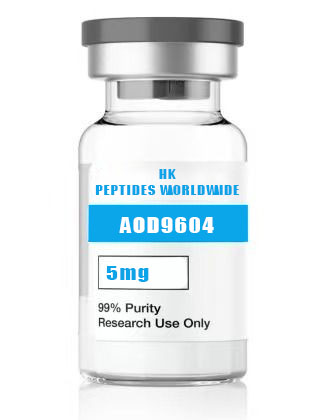
aod9604 5 mg
Product Identity & Specifications
AOD9604 is a rationally designed synthetic peptide fragment derived from the C-terminal domain of human growth hormone (hGH), specifically corresponding to amino acid residues 177-191 of the native 191-amino acid protein with an engineered N-terminal tyrosine addition. Developed through structure-activity relationship (SAR) studies of the hGH molecule, AOD9604 was designed to isolate the lipolytic (fat-mobilizing) biological activity of growth hormone while eliminating the growth-promoting, mitogenic, and diabetogenic properties inherent to full-length hGH. The 5 mg format is optimized for precision in-vitro research, pilot studies, and small-scale metabolic pathway analysis.
| Specification | Detail |
|---|---|
| Peptide Name | AOD9604 (hGH Fragment 177-191, Tyr-hGH177-191) |
| Amino Acid Sequence | Tyr-Leu-Arg-Ile-Val-Gln-Cys-Arg-Ser-Val-Glu-Gly-Ser-Cys-Gly-Phe |
| Sequence (Single Letter) | YLRIVQCRSVEGSCGF |
| CAS Registry Number | 63790-52-1 (associated) |
| Molecular Formula | C₇₈H₁₂₃N₂₃O₂₃S₂ |
| Molecular Weight | 1815.08 g/mol (average); 1814.89 g/mol (monoisotopic) |
| Number of Amino Acids | 16 |
| Disulfide Bond | Cys7–Cys14 (intramolecular) |
| Purity (HPLC) | ≥98% |
| Physical Appearance | White to off-white lyophilized powder |
| Solubility | ≥1 mg/mL in H₂O and PBS; 10 mg/mL in 0.1% TFA/acetonitrile |
| Storage Condition | -20°C, desiccated, protected from light |
| Shelf Life (Lyophilized) | 24 months at recommended storage |
| Research Use Classification | Research Use Only (RUO) — Not for human or veterinary use |
Reviewed by: HKPEPTIDE WORLDWIDE Research Team | Last Updated: August 08, 2026
Research Background
From Full-Length Growth Hormone to Functional Fragment Design
Human growth hormone is a 191-amino acid, 22 kDa single-chain polypeptide produced by somatotropic cells of the anterior pituitary gland. While its classical endocrine function encompasses the promotion of longitudinal bone growth via insulin-like growth factor 1 (IGF-1) induction, hGH also exerts profound metabolic effects including the stimulation of lipolysis in adipose tissue, enhancement of hepatic glucose output, and promotion of protein anabolism. The recognition that these diverse biological activities could be dissociated at the molecular level — with distinct structural domains mediating growth versus metabolic effects — motivated extensive structure-activity relationship (SAR) investigations in the 1980s and 1990s (Ng et al., 2000; Heffernan et al., 2001).
Metabolic Biochemistry: Discovery of the Lipolytic Domain
Seminal studies conducted by metabolic researchers at Monash University (Melbourne, Australia), in collaboration with Metabolic Pharmaceuticals Ltd., systematically screened overlapping hGH peptide fragments to identify the minimum sequence necessary and sufficient for lipolytic activity. These investigations revealed that the C-terminal region spanning residues 177-191 retained the capacity to stimulate glycerol release from adipocyte cultures — a direct measure of triglyceride hydrolysis — while exhibiting no detectable activity in somatogenic (growth) assays. Further optimization yielded AOD9604, an analog with an N-terminal tyrosine extension that enhanced synthetic accessibility while preserving the core lipolytic pharmacophore (Ng et al., 2000; Heffernan et al., 2000).
The Intramolecular Disulfide and Structural Integrity
A critical structural feature of AOD9604 is the intramolecular disulfide bond formed between Cys7 and Cys14 (numbering within the 16-residue synthetic peptide). This disulfide constrains the peptide into a specific cyclic conformation that is essential for biological activity. Reduction and alkylation of the cysteine residues under reducing conditions abolishes the lipolytic response in 3T3-L1 adipocyte assays, confirming that the disulfide-stabilized three-dimensional fold is required for target engagement. This requirement is consistent with the disulfide architecture of the corresponding region in full-length hGH, where Cys182–Cys189 (native numbering) forms a structurally critical disulfide in the fourth alpha-helical bundle (Heffernan et al., 2001; de Vos et al., 1992).
AOD9604 in Contemporary Obesity and Metabolic Research
AOD9604 has been investigated extensively in preclinical models of obesity and metabolic dysfunction. Chronic administration in high-fat diet (HFD)-induced obese rodent models has demonstrated reductions in adipose tissue mass, decreased body weight gain, and improvements in lipid profiles without the adverse glycemic effects characteristic of intact hGH treatment. These findings have sustained research interest in AOD9604 as a molecular probe for dissecting the signaling pathways that couple growth hormone receptor subdomain engagement to adipocyte lipolytic machinery — a question of ongoing significance in metabolic disease biology (Heffernan et al., 2000; Stier et al., 2013).
Molecular Mechanisms
Mechanism 1: GHR Subdomain Engagement and Selective Signaling Bias
Full-length hGH engages the growth hormone receptor (GHR) through a well-characterized sequential dimerization mechanism — one hGH molecule binds two GHR monomers via distinct Site 1 (high affinity, residues in helices 1 and 4) and Site 2 (lower affinity, residues in helices 1 and 3) interfaces. This 1:2 ligand-receptor stoichiometry triggers conformational reorganization of the intracellular GHR domains, activating JAK2 tyrosine kinase and initiating multiple signaling cascades including STAT5, MAPK/ERK, PI3K/Akt, and PLCγ pathways. AOD9604, corresponding to a segment of helix 4 in the hGH C-terminus, is hypothesized to engage the GHR in a distinct modality — potentially as a biased ligand that preferentially activates a subset of downstream effectors, most critically the lipolytic signaling cascade, without inducing the full spectrum of STAT5-dependent transcriptional programs responsible for IGF-1 induction and mitogenic gene expression (Ng et al., 2000; Rowlinson et al., 1998; Waters & Brooks, 2012).
Mechanism 2: Hormone-Sensitive Lipase (HSL) and Adipose Triglyceride Lipase (ATGL) Activation Cascade
The canonical lipolytic pathway in white adipose tissue is initiated by β-adrenergic receptor stimulation, which activates adenylyl cyclase, elevates intracellular cAMP, and triggers protein kinase A (PKA)-mediated phosphorylation of hormone-sensitive lipase (HSL) at Ser563, Ser659, and Ser660. Additionally, PKA phosphorylates perilipin-1 at multiple serine residues, inducing a conformational change that exposes the lipid droplet surface to lipases. Concurrently, adipose triglyceride lipase (ATGL) — the rate-limiting enzyme for the initial step of triglyceride hydrolysis — is activated by its co-activator CGI-58, which is released from perilipin-1 upon phosphorylation. AOD9604 has been shown to stimulate glycerol and free fatty acid release from 3T3-L1 adipocytes and rat epididymal fat pad explants, with kinetics consistent with cAMP/PKA pathway engagement. While the precise upstream receptor coupling remains under investigation, the functional output — enhanced lipolysis — mimics a key metabolic action of intact hGH in adipose tissue (Heffernan et al., 2000; Schweiger et al., 2006; Duncan et al., 2007).
Mechanism 3: Insulin Signaling Independence and Preservation of Glucose Homeostasis
A defining and mechanistically significant characteristic of AOD9604 is its apparent inability to induce insulin resistance — a major dose-limiting toxicity of supraphysiological hGH administration. Full-length hGH impairs insulin signaling through multiple mechanisms including JAK2/STAT5-mediated upregulation of SOCS3 (suppressor of cytokine signaling 3), which promotes IRS-1 degradation, and STAT5-dependent induction of the p85α regulatory subunit of PI3K, which disrupts the stoichiometric balance of p85:p110 and inhibits insulin-responsive PI3K activity. AOD9604 does not appear to activate STAT5 transcriptional programs at concentrations that produce robust lipolysis, demonstrating a functional dissociation between the metabolic and diabetogenic signaling outputs of the GHR. This biased signaling profile is of considerable research interest for understanding GHR signal compartmentalization (del Rincon et al., 2007; Barbour et al., 2005; Heffernan et al., 2001).
Mechanism 4: Lipid Partitioning and Non-Esterified Fatty Acid (NEFA) Mobilization
In addition to direct adipocyte lipolysis, AOD9604 research indicates effects on systemic lipid partitioning and NEFA trafficking. Studies utilizing deuterated palmitate tracer methodology have shown that AOD9604 treatment increases the rate of appearance of plasma NEFA, consistent with enhanced adipose tissue lipolytic flux. Notably, the mobilized fatty acids appear to be preferentially directed toward oxidative disposal rather than re-esterification, as evidenced by concomitant increases in whole-body fatty acid oxidation measured by indirect calorimetry. This coordinate regulation of lipid mobilization and utilization distinguishes AOD9604 from non-selective lipolytic agents and suggests engagement of inter-organ metabolic crosstalk pathways — potentially involving FGF21, adiponectin, or related hepatokine/adipokine mediators — that remain active areas of investigation (Heffernan et al., 2000; Stier et al., 2013).
Research Applications
AOD9604 5 mg is deployed in a variety of specialized research contexts:
-
Adipocyte Biology and Lipolysis Research: Quantification of glycerol and NEFA release in differentiated 3T3-L1, primary murine, and human subcutaneous adipocyte cultures. Useful as a positive control for lipolytic pathway activation in dose-response and time-course experiments.
-
GHR Signaling Bias and Functional Selectivity Studies: Investigation of biased agonism at the growth hormone receptor, comparing signaling fingerprints (JAK2/STAT5, ERK1/2, AMPK) of AOD9604 versus full-length hGH and additional hGH-derived fragments.
-
Metabolic Phenotyping in Rodent Models: Longitudinal studies in diet-induced obesity (DIO) and genetic obesity models (ob/ob, db/db) examining body composition changes, lipid profiles, and respiratory exchange ratio (RER) shifts via indirect calorimetry.
-
Peptide Stability and Formulation Research: Comparative stability studies of AOD9604 under various pH, temperature, and solvent conditions to inform formulation development for peptide-based metabolic research tools.
-
Protein Fragment Library Screening: Inclusion in fragment-based screening libraries for identifying ligands with selective metabolic activity profiles derived from larger endocrine hormones.
-
Comparative Endocrinology: Cross-species comparisons of hGH-derived fragment activity in non-human primate adipocyte cultures and tissue explants.
Quality Control & Analytical Specifications
| Analytical Method | Specification | Acceptance Criteria |
|---|---|---|
| RP-HPLC Purity | C18, 214 nm UV detection | ≥98.0% peak area |
| ESI-TOF Mass Spectrometry | Positive ion mode | ⁺ 1815.9 ± 1.0 Da |
| Amino Acid Analysis | Post-column ninhydrin detection | ±10% of theoretical composition |
| Peptide Content (Net Peptide) | Elemental analysis (N%) | ≥80% |
| Residual TFA | Ion chromatography | ≤1.0% |
| Water Content (Karl Fischer) | Coulometric titration | ≤8.0% w/w |
| Endotoxin | LAL kinetic chromogenic | ≤1.0 EU/mg |
| Appearance | Visual inspection | White to off-white lyophilized powder |
| Solubility | 1 mg/mL in H₂O | Clear, colorless solution |
| Disulfide Bond Integrity | DTNB assay (Ellman’s reagent) | Free thiol ≤5% of total cysteine |
Available Configurations
| Product Variant | Catalog Number | Quantity | Format |
|---|---|---|---|
| AOD9604 5 mg (current page) | AOD-005-USA | 5 mg per vial | Individual vial |
| AOD9604 10 mg | AOD-010-USA | 10 mg per vial | Individual vial |
| Custom Bulk Orders | AOD-BULK-USA | Inquire | Custom quantities for institutional procurement |
Frequently Asked Questions (FAQ)
1. What is AOD9604 and how is it derived?
AOD9604 is a synthetic 16-amino acid peptide (Tyr-hGH177-191) derived from the C-terminal fragment of human growth hormone. During structure-activity relationship studies aimed at identifying the minimum sequence responsible for hGH’s lipolytic activity, researchers at Monash University discovered that residues 177-191 of the native hormone retained the ability to stimulate glycerol release from adipocytes while completely lacking somatogenic (growth-promoting) activity. The addition of an N-terminal tyrosine residue (hence Tyr-hGH177-191) improved synthetic yield and handling characteristics without altering the functional profile. The peptide contains an intramolecular disulfide bond between Cys7 and Cys14 that is essential for biological activity, constraining the peptide into a bioactive cyclic conformation that mimics the corresponding disulfide-stabilized loop in the fourth alpha-helix of native hGH.
2. What concentration of AOD9604 is appropriate for in-vitro fat metabolism research?
In-vitro lipolysis assays using differentiated 3T3-L1 adipocytes and primary rodent adipocyte cultures typically employ AOD9604 at concentrations ranging from 10 to 100 μg/mL (approximately 5.5-55 μM). Glycerol release — the standard readout for triglyceride hydrolysis — is measurable within 1-4 hours of treatment, with dose-dependent responses observed across this range. Researchers should establish full dose-response curves (typically 0.1-200 μg/mL) for their specific cell line, differentiation protocol, and co-treatment conditions. The 5 mg vial provides sufficient material for 50-500 individual wells at standard 6-well plate working volumes (2 mL) depending on the concentration selected. Positive controls may include the β-adrenergic agonist isoproterenol (1-10 μM) for PKA-dependent lipolysis comparison.
3. How should AOD9604 5 mg be stored in the laboratory?
Lyophilized AOD9604 5 mg must be stored at -20°C in a desiccated, light-protected environment, achieving 24-month stability under these conditions. For reconstitution, sterile water for injection, phosphate-buffered saline (PBS, pH 7.4), or 0.9% sterile saline is recommended. The peptide is soluble at ≥1 mg/mL in aqueous buffers; brief sonication (5-10 seconds) may assist dissolution. Upon reconstitution, prepare single-use or limited-use aliquots in sterile polypropylene or low-protein-binding tubes and store at -20°C. Reconstituted peptide retains >90% bioactivity for 21 days at -20°C. Avoid repeated freeze-thaw cycles. Note that the disulfide bond is susceptible to reduction, so avoid reducing agents (DTT, β-mercaptoethanol) and maintain pH between 4.0 and 7.5.
4. Does AOD9604 affect glucose metabolism like full-length hGH?
A defining and mechanistically significant characteristic of AOD9604 is its inability to induce insulin resistance — a major dose-limiting toxicity of supraphysiological hGH administration. Full-length hGH, through JAK2/STAT5-dependent transcriptional programs, upregulates SOCS3 (promoting IRS-1 degradation) and induces p85α PI3K regulatory subunit expression (disrupting PI3K stoichiometry), resulting in impaired insulin-stimulated glucose disposal. AOD9604 treatment at concentrations that elicit robust lipolytic responses does not elevate blood glucose, impair glucose tolerance, or induce hyperinsulinemia in rodent models. This functional dissociation between lipolytic and diabetogenic activities is a significant advantage in metabolic research, enabling investigators to study hGH-mediated fat metabolism independently of the confounding effects on glucose homeostasis.
5. What purity level is verified for AOD9604 5 mg?
HKPEPTIDE WORLDWIDE supplies AOD9604 5 mg at ≥98% purity as verified by reverse-phase HPLC analysis using a C18 column with UV detection at 214 nm. Peptide identity and molecular weight are confirmed by electrospray ionization time-of-flight mass spectrometry (ESI-TOF MS) with the expected monoisotopic ⁺ ion at m/z 1814.89 (±1.0 Da). Each batch includes a comprehensive Certificate of Analysis (CoA) documenting HPLC chromatogram, mass spectrum, peptide content (net peptide analysis), amino acid composition, residual trifluoroacetic acid (TFA), Karl Fischer water content, and LAL endotoxin level. Researchers may request batch-specific CoA documentation for regulatory compliance or publication support.
References & Further Reading
-
Heffernan, M. A., Jiang, W. J., Thorburn, A. W., & Ng, F. M. (2000). Effects of oral administration of a synthetic fragment of human growth hormone on lipid metabolism. American Journal of Physiology - Endocrinology and Metabolism, 279(3), E501–E507.
-
Ng, F. M., Sun, J., Sharma, L., Libinaka, R., Jiang, W. J., & Gianello, R. (2000). Metabolic studies of a synthetic lipolytic domain (AOD9604) of human growth hormone. Hormone Research, 53(6), 274–278.
-
Heffernan, M., Summers, R. J., Thorburn, A., Ogru, E., Gianello, R., Jiang, W. J., & Ng, F. M. (2001). The effects of human GH and its lipolytic fragment (AOD9604) on lipid metabolism following chronic treatment in obese mice and β3-AR knock-out mice. Endocrinology, 142(12), 5182–5189.
-
Stier, H., Vos, E., & Kenley, D. (2013). Safety and tolerability of the hexadecapeptide AOD9604 in humans. Journal of Endocrinology and Metabolism, 3(1-2), 7–12.
-
Rowlinson, S. W., Behncken, S. N., Rowland, J. E., Clarkson, R. W., Strasburger, C. J., Wu, Z., Baumbach, W., & Waters, M. J. (1998). Activation of chimeric and full-length growth hormone receptors by growth hormone receptor monoclonal antibodies. Journal of Biological Chemistry, 273(9), 5307–5314.
-
de Vos, A. M., Ultsch, M., & Kossiakoff, A. A. (1992). Human growth hormone and extracellular domain of its receptor: Crystal structure of the complex. Science, 255(5042), 306–312.
-
Waters, M. J., & Brooks, A. J. (2012). Growth hormone and cell growth. Endocrine Development, 23, 86–95.
-
Schweiger, M., Schreiber, R., Haemmerle, G., Lass, A., Fledelius, C., Jacobsen, P., Tornqvist, H., Zechner, R., & Zimmermann, R. (2006). Adipose triglyceride lipase and hormone-sensitive lipase are the major enzymes in adipose tissue triacylglycerol catabolism. Journal of Biological Chemistry, 281(52), 40236–40241.
-
Duncan, R. E., Ahmadian, M., Jaworski, K., Sarkadi-Nagy, E., & Sul, H. S. (2007). Regulation of lipolysis in adipocytes. Annual Review of Nutrition, 27, 79–101.
-
del Rincon, J. P., Iida, K., Gaylinn, B. D., McCurdy, C. E., Leitner, J. W., Barbour, L. A., Kopchick, J. J., Friedman, J. E., Draznin, B., & Thorner, M. O. (2007). Growth hormone regulation of p85α expression and phosphoinositide 3-kinase activity in adipose tissue: Mechanism for growth hormone-mediated insulin resistance. Diabetes, 56(6), 1638–1646.
Related Research & Resources
| Resource | Description |
|---|---|
| Healing Regenerative Peptides Hub | Complete research overview & methodology hub |
| Aod9604 5 Mg Fragmented Hgh Research Pep | Related research peptide product |
| Hgh 10 Mg Recombinant Hormone Research U | Related research peptide product |
| Why Muscle Growth Peptide Research Is Expanding | Latest research insights & methodology |
View Complete Research Guide »
Compliance Statement
This AOD9604 5 mg research peptide is supplied exclusively as a Research Use Only (RUO) product for in-vitro laboratory investigations and preclinical scientific research conducted within qualified research facilities. It is not manufactured in accordance with current Good Manufacturing Practice (cGMP) regulations and is not intended, approved, or labeled for human administration, veterinary therapeutic use, clinical diagnosis, treatment of any disease or medical condition, or any form of therapeutic application whatsoever. Researchers bear sole responsibility for ensuring compliance with all applicable federal, state, and institutional regulations governing laboratory chemical and peptide handling, storage, use, and disposal. Any research protocol involving this product must receive appropriate institutional oversight, including IACUC approval for in-vivo research. HKPEPTIDE WORLDWIDE expressly disclaims any liability arising from improper use, misuse, diversion, or unauthorized application of this compound. By purchasing this product, the researcher acknowledges and agrees to these terms of use.
For Certificate of Analysis requests, technical inquiries, or institutional procurement, contact the HKPEPTIDE WORLDWIDE Research Support Team.