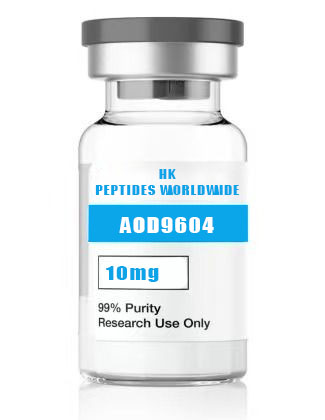
aod9604 10 mg
Product Identity & Specifications
AOD9604 10 mg is the higher-quantity research format of this synthetic hGH-derived lipolytic peptide fragment. Representing the C-terminal region of human growth hormone (Tyr-hGH177-191) with a distinctive intramolecular disulfide-stabilized conformation, AOD9604 has been extensively characterized for its selective capacity to stimulate adipocyte triglyceride hydrolysis without engaging the somatogenic, mitogenic, or diabetogenic signaling pathways of full-length hGH. The 10 mg format supports extended dose-response experimental designs, chronic in-vivo metabolic studies, and high-throughput lipolysis screening campaigns.
| Specification | Detail |
|---|---|
| Peptide Name | AOD9604 (Tyr-hGH177-191) |
| Amino Acid Sequence | Tyr-Leu-Arg-Ile-Val-Gln-Cys-Arg-Ser-Val-Glu-Gly-Ser-Cys-Gly-Phe |
| Sequence (1-Letter) | YLRIVQCRSVEGSCGF |
| CAS Registry Number | 63790-52-1 (associated) |
| Molecular Formula | C₇₈H₁₂₃N₂₃O₂₃S₂ |
| Molecular Weight | 1815.08 g/mol (average); 1814.89 g/mol (monoisotopic) |
| Disulfide Connectivity | Cys7–Cys14 (essential for bioactivity) |
| Purity (HPLC) | ≥98% |
| Physical Appearance | White to off-white lyophilized powder |
| Solubility | ≥1 mg/mL in H₂O, PBS; 10 mg/mL in 0.1% TFA/acetonitrile |
| Storage Condition | -20°C, desiccated, light-protected |
| Shelf Life (Lyophilized) | 24 months |
| Research Use Classification | Research Use Only (RUO) — Not for human or veterinary use |
Reviewed by: HKPEPTIDE WORLDWIDE Research Team | Last Updated: August 08, 2026
Research Background
Growth Hormone Receptor Signaling: Complexity and Functional Domains
The growth hormone receptor (GHR) is a class I cytokine receptor that, upon ligand engagement, activates the receptor-associated Janus kinase 2 (JAK2), initiating a pleiotropic intracellular signaling cascade. The biological outputs of GHR activation encompass longitudinal bone growth (mediated predominantly by STAT5B-driven hepatic IGF-1 production), metabolic regulation (lipolysis, insulin counter-regulation, protein anabolism), and cellular proliferation. This functional breadth — while essential for normal physiology — complicates both the therapeutic application of hGH and its use as a research tool, as these diverse effects are often inseparable with the intact hormone. The identification of peptide fragments that selectively activate subsets of GHR-mediated signaling represents a critical advance in growth hormone research methodology (Waters & Brooks, 2012; Brooks & Waters, 2010).
Rational Design of a Lipolysis-Selective hGH Fragment
The development of AOD9604 emerged from a systematic medicinal chemistry effort to map the functional epitopes of the 191-amino acid growth hormone molecule onto smaller, synthetically accessible peptide fragments. The guiding hypothesis — that the distinct biological activities of hGH are mediated by discrete structural domains capable of functioning semi-independently — was validated through iterative fragment synthesis and biological screening. The C-terminal α-helical region encompassing residues 177-191 was identified as the minimal lipolytic domain, and the addition of an N-terminal tyrosine residue (producing the 16-residue peptide Tyr-hGH177-191, designated AOD9604) enhanced synthetic yield without altering the lipolytic selectivity profile (Ng et al., 2000).
Preclinical Characterization in Obesity Models
Chronic AOD9604 administration studies in rodent models of diet-induced obesity (DIO) and genetic obesity have provided substantive evidence for the fragment’s metabolic activity profile. Heffernan and colleagues (2001) demonstrated that 14 weeks of daily AOD9604 treatment in obese C57BL/6J mice fed a high-fat diet resulted in significant reductions in body weight gain (approximately 50% attenuation relative to vehicle controls), decreased epididymal, retroperitoneal, and inguinal fat pad masses, and improvements in plasma lipid profiles — without detectable effects on blood glucose, insulin, or IGF-1 levels. These findings established AOD9604 as a research tool of enduring interest for investigating adipose tissue biology and GHR signal compartmentalization.
The Biased Ligand Concept in GHR Pharmacology
AOD9604 serves as a valuable molecular probe for the emerging concept of biased agonism (functional selectivity) at class I cytokine receptors. Unlike full-length hGH, which activates the full complement of GHR-coupled signaling pathways, AOD9604 appears to preferentially engage lipolytic signaling while avoiding STAT5-dependent transcriptional programs. Detailed mechanistic studies — comparing AOD9604 with hGH and the GHR antagonist pegvisomant — have contributed to the understanding that different GHR ligands can stabilize distinct receptor conformations, leading to qualitatively different signaling outcomes. This conceptual framework, well-established for G protein-coupled receptors (GPCRs), is now being extended to cytokine receptor biology with AOD9604 as a key investigational tool (Kenakin, 2011; Brooks et al., 2014).
Molecular Mechanisms
Mechanism 1: GHR Extracellular Domain Engagement — Site 1 vs. Site 2 Binding
Full-length hGH binds the GHR extracellular domain (ECD) at two structurally distinct interfaces designated Site 1 and Site 2, with Site 1 binding occurring at high affinity (Kd ~0.3 nM) and Site 2 at ~1000-fold lower affinity. This sequential dimerization mechanism — Site 1 engagement followed by Site 2 recruitment of a second GHR monomer — is essential for receptor activation, as receptor dimerization juxtaposes the intracellular JAK2 molecules for transphosphorylation. AOD9604, corresponding to residues within the C-terminal α-helix (helix 4), encompasses a portion of the Site 1 interface, specifically the residues contributing to hydrophobic packing with the GHR ECD. However, AOD9604 lacks the structural elements required for Site 2 engagement and the full dimerization-inducing capacity of intact hGH. This partial engagement is hypothesized to produce an alternative receptor conformation that is permissive for lipolytic signaling (potentially via JAK2-mediated activation of Src family kinases or other non-canonical effectors) while insufficient for STAT5 docking and phosphorylation (de Vos et al., 1992; Rowlinson et al., 1998; Brown et al., 2005).
Mechanism 2: Adipocyte Triglyceride Lipolysis — ATGL and HSL Coordinate Regulation
The biochemical machinery of adipocyte lipolysis involves sequential hydrolysis of triacylglycerol (TAG) by three principal lipases: adipose triglyceride lipase (ATGL), which catalyzes the initial TAG → diacylglycerol (DAG) + free fatty acid (FFA) step; hormone-sensitive lipase (HSL), which converts DAG → monoacylglycerol (MAG) + FFA; and monoacylglycerol lipase (MGL), which completes the pathway by hydrolyzing MAG → glycerol + FFA. ATGL activity is regulated by its co-activator CGI-58 (ABHD5), whose availability is controlled by perilipin-1 phosphorylation status. HSL is directly activated by PKA-mediated phosphorylation at multiple serine residues and translocates from the cytosol to the lipid droplet surface upon stimulation. AOD9604 treatment increases glycerol release — the terminal readout of complete TAG hydrolysis — in adipocyte cultures, indicating functional activation of the full lipolytic cascade. The precise molecular link between GHR fragment binding and lipase activation remains under investigation, with cAMP/PKA, AMPK, and ERK1/2 pathways all proposed as potential intermediaries (Zimmermann et al., 2004; Lass et al., 2011; Heffernan et al., 2000).
Mechanism 3: GHR-Mediated Src/ERK Signaling and the Lipolytic Transcriptional Program
Beyond acute lipase activation, sustained lipolytic activity requires transcriptional upregulation of lipolytic machinery components. The GHR-JAK2 complex is known to activate Src family kinases (SFKs), which in turn engage the Ras-Raf-MEK-ERK1/2 signaling cascade. ERK1/2 phosphorylates and activates transcription factors including c-Fos, c-Jun (AP-1 complex), and C/EBPβ, which regulate the expression of ATGL, HSL, and perilipin genes. AOD9604, through biased GHR engagement, may preferentially activate the JAK2-Src-ERK module (which contributes to lipolytic gene expression) while failing to activate the JAK2-STAT5 module (which drives IGF-1, SOCS, and proliferative gene programs). Quantitative phosphoproteomic comparison of AOD9604- versus hGH-treated adipocytes represents an important frontier for resolving the signaling bias mechanisms underlying this lipolysis-selective profile (Zhu et al., 2001; Brooks et al., 2008; Rowland et al., 2005).
Mechanism 4: Mitochondrial Fatty Acid Handling and Energy Expenditure
Comprehensive metabolic phenotyping reveals that AOD9604’s effects extend beyond the adipocyte to encompass systemic energy metabolism. Chronic AOD9604 treatment in rodent models increases whole-body oxygen consumption (VO₂) and shifts the respiratory exchange ratio (RER) toward lower values, indicating a metabolic transition from carbohydrate to fat oxidation. These observations are consistent with enhanced delivery of adipocyte-derived non-esterified fatty acids (NEFAs) to oxidative tissues (skeletal muscle, liver, heart), where they undergo mitochondrial β-oxidation. Importantly, AOD9604-treated animals do not exhibit the ectopic lipid deposition (steatosis) that often accompanies uncontrolled lipolysis, suggesting coordinated upregulation of mitochondrial fatty acid transport and oxidation capacity — possibly mediated via PPARα and PGC-1α activation in response to elevated circulating NEFA levels (Heffernan et al., 2001; Stier et al., 2013).
Research Applications
The AOD9604 10 mg format enables a broad range of research protocols:
-
Extended Dose-Response Lipolysis Studies: The 10 mg quantity supports full concentration-response curves (8-12 concentrations, triplicate wells) in 6-well and 12-well adipocyte culture formats, enabling rigorous EC₅₀ determination and comparative potency analyses against reference lipolytic agents.
-
Chronic In-Vivo Metabolic Studies in Rodent Models: Sufficient material for multi-week daily dosing protocols (25-500 μg/kg/day IP or oral) in diet-induced obesity, genetic obesity, and lipodystrophy mouse and rat models with comprehensive metabolic phenotyping endpoints.
-
GHR Biased Signaling Characterization: Head-to-head phosphoproteomic, transcriptomic, and lipidomic comparisons of AOD9604 versus full-length hGH, hGH fragment panels, and GHR antagonists to define the signaling signatures associated with lipolysis-selective GHR engagement.
-
Adipose Tissue Explant Studies: Ex-vivo incubation of rodent and human adipose tissue biopsies with AOD9604 for analysis of depot-specific lipolytic responses (subcutaneous vs. visceral), adipokine secretion profiles, and immune cell infiltration.
-
Peptide Stability and Pharmacokinetics: Investigation of AOD9604 stability in biological matrices (plasma, tissue homogenates), proteolytic degradation kinetics, and formulation optimization for research applications requiring extended peptide half-life.
-
Drug Discovery Screening: Inclusion as a reference standard in screening campaigns for novel anti-obesity compounds targeting lipolytic pathways, including GHR modulators and downstream lipase activators.
Quality Control & Analytical Specifications
| Analytical Method | Specification | Acceptance Criteria |
|---|---|---|
| RP-HPLC Purity | C18, 214 nm | ≥98.0% peak area |
| ESI-TOF MS | Positive ion | ⁺ 1815.9 ± 1.0 Da; ²⁺ 908.5 ± 0.5 Da |
| HPLC Purity (220 nm) | Alternative wavelength confirmation | ≥98.0% |
| Peptide Content | Nitrogen elemental analysis | ≥80% net peptide |
| Residual TFA | Ion chromatography | ≤1.0% |
| Water Content | Karl Fischer | ≤8.0% w/w |
| Endotoxin | LAL kinetic chromogenic | ≤1.0 EU/mg |
| Amino Acid Analysis | Post-column ninhydrin | ±10% of theoretical |
| Appearance | Visual | White to off-white powder |
| Free Thiol | Ellman’s reagent (DTNB) | ≤5% of total cysteine |
Available Configurations
| Product Variant | Catalog Number | Quantity | Format | Recommended Application |
|---|---|---|---|---|
| AOD9604 5 mg | AOD-005-USA | 5 mg | Single vial | Pilot studies, method validation |
| AOD9604 10 mg (current page) | AOD-010-USA | 10 mg | Single vial | Extended protocols, in-vivo studies |
| AOD9604 Bulk | AOD-BULK-USA | Custom | Custom | Institutional procurement; contact us |
Frequently Asked Questions (FAQ)
1. What are the advantages of the AOD9604 10 mg format over the 5 mg format?
The AOD9604 10 mg vial provides precisely double the lyophilized peptide quantity of the 5 mg format. This expanded capacity directly supports: (a) more comprehensive dose-response curves with additional concentration points for more accurate EC₅₀ determination; (b) larger multi-well plate formats (12-well, 6-well, 10 cm dishes) at multiple concentrations with adequate biological replicates; (c) chronic in-vivo administration studies — at a dose of 250 μg/kg/day, a single 10 mg vial provides 40 doses for a 25 g mouse or 400 doses for a 250 g rat; and (d) parallel experimental arms (e.g., AOD9604 alone, AOD9604 + inhibitor, vehicle control) from single-batch peptide, minimizing batch-to-batch variability. The 5 mg format remains appropriate for pilot and small-scale work, while the 10 mg format is optimized for laboratories conducting sustained, multi-experiment research programs.
2. What in-vivo dosing protocols have been published for AOD9604?
Published preclinical literature documents several AOD9604 administration protocols in rodent models: (a) intraperitoneal (IP) injection at 25-500 μg/kg/day in sterile saline for chronic metabolic studies lasting 4-14 weeks (Heffernan et al., 2001); (b) oral gavage at 500 μg/kg/day in PBS vehicle for 3-14 weeks (Heffernan et al., 2000); (c) acute IP administration at higher doses (1-5 mg/kg) for pharmacokinetic and acute metabolic response characterization. The 10 mg vial format is specifically configured to support these multi-week, multi-animal protocols. Researchers should establish their own dose-ranging studies, as optimal dosing may vary with rodent strain, diet composition, age, and endpoint measures. All in-vivo protocols must receive prior IACUC approval.
3. Can AOD9604 10 mg be used for receptor binding studies?
Yes, AOD9604 10 mg can be employed in GHR binding and interaction studies. Research applications include: competitive radioligand binding displacement assays using ¹²⁵I-labeled hGH and recombinant GHR extracellular domain (ECD); surface plasmon resonance (SPR/Biacore) kinetic analysis of AOD9604-GHR ECD interactions; and fluorescence polarization assays. Researchers should note that AOD9604, as a fragment, displays substantially reduced binding affinity for GHR compared to full-length hGH (estimated Kd in the micromolar rather than nanomolar range), consistent with the loss of the full two-site binding interface. This property is advantageous for studying biased signaling, as it confirms that full receptor dimerization is not required for the lipolytic response. For crystallization and high-avidity binding studies, complementary use of full-length hGH or GHR monoclonal antibodies is recommended.
4. How does the purity of AOD9604 10 mg compare to the 5 mg format?
HKPEPTIDE WORLDWIDE manufactures all AOD9604 formats under an identical, harmonized quality management system. Both the 5 mg and 10 mg configurations are produced using the same solid-phase peptide synthesis (SPPS) methodology with Fmoc chemistry, purified by the same preparative HPLC protocols, and released against identical analytical specifications. The ≥98% purity threshold by RP-HPLC applies uniformly across formats. Each batch — regardless of vial size — undergoes the complete quality control testing suite: HPLC purity, ESI-TOF mass spectrometry for molecular weight confirmation, peptide content determination, residual TFA quantification, Karl Fischer water content analysis, LAL endotoxin testing, and visual appearance inspection. The sole difference between formats is the mass of lyophilized peptide aliquoted into each vial. Certificates of Analysis are batch-specific and are available upon request for any format.
5. Is AOD9604 active in oral administration research models?
Several peer-reviewed publications have reported biological activity following oral AOD9604 administration in rodent models. Heffernan et al. (2000) demonstrated that orally administered AOD9604 at 500 μg/kg/day significantly reduced body weight gain and fat pad mass in diet-induced obese C57BL/6J mice over a 14-week treatment period. The peptide’s oral activity has been attributed to several factors: its small size (16 amino acids, ~1.8 kDa), the disulfide-constrained cyclic conformation that confers partial resistance to gastrointestinal endopeptidases, and potential uptake via paracellular or transcellular peptide transport mechanisms in the intestinal epithelium. However, researchers should recognize that oral bioavailability of peptides is generally low (often <1-2%) and highly variable between species and formulations. For research purposes, parenteral routes (IP, subcutaneous) provide more reproducible pharmacokinetics and are recommended for quantitative structure-activity studies, while oral protocols may be employed when investigating gastrointestinal stability and oral delivery feasibility.
References & Further Reading
-
Ng, F. M., Sun, J., Sharma, L., Libinaka, R., Jiang, W. J., & Gianello, R. (2000). Metabolic studies of a synthetic lipolytic domain (AOD9604) of human growth hormone. Hormone Research, 53(6), 274–278.
-
Heffernan, M. A., Jiang, W. J., Thorburn, A. W., & Ng, F. M. (2000). Effects of oral administration of a synthetic fragment of human growth hormone on lipid metabolism. American Journal of Physiology - Endocrinology and Metabolism, 279(3), E501–E507.
-
Heffernan, M., Summers, R. J., Thorburn, A., Ogru, E., Gianello, R., Jiang, W. J., & Ng, F. M. (2001). The effects of human GH and its lipolytic fragment (AOD9604) on lipid metabolism following chronic treatment in obese mice and β3-AR knock-out mice. Endocrinology, 142(12), 5182–5189.
-
Stier, H., Vos, E., & Kenley, D. (2013). Safety and tolerability of the hexadecapeptide AOD9604 in humans. Journal of Endocrinology and Metabolism, 3(1-2), 7–12.
-
de Vos, A. M., Ultsch, M., & Kossiakoff, A. A. (1992). Human growth hormone and extracellular domain of its receptor: Crystal structure of the complex. Science, 255(5042), 306–312.
-
Waters, M. J., & Brooks, A. J. (2012). Growth hormone and cell growth. Endocrine Development, 23, 86–95.
-
Brooks, A. J., Dai, W., O’Mara, M. L., Abankwa, D., Chhabra, Y., Pelekanos, R. A., … & Waters, M. J. (2014). Mechanism of activation of protein kinase JAK2 by the growth hormone receptor. Science, 344(6185), 1249783.
-
Zimmermann, R., Strauss, J. G., Haemmerle, G., Schoiswohl, G., Birner-Gruenberger, R., Riederer, M., … & Zechner, R. (2004). Fat mobilization in adipose tissue is promoted by adipose triglyceride lipase. Science, 306(5700), 1383–1386.
-
Lass, A., Zimmermann, R., Oberer, M., & Zechner, R. (2011). Lipolysis — a highly regulated multi-enzyme complex mediates the catabolism of cellular fat stores. Progress in Lipid Research, 50(1), 14–27.
-
Rowlinson, S. W., Behncken, S. N., Rowland, J. E., Clarkson, R. W., Strasburger, C. J., Wu, Z., Baumbach, W., & Waters, M. J. (1998). Activation of chimeric and full-length growth hormone receptors by growth hormone receptor monoclonal antibodies. Journal of Biological Chemistry, 273(9), 5307–5314.
-
Duncan, R. E., Ahmadian, M., Jaworski, K., Sarkadi-Nagy, E., & Sul, H. S. (2007). Regulation of lipolysis in adipocytes. Annual Review of Nutrition, 27, 79–101.
-
Kenakin, T. (2011). Functional selectivity and biased receptor signaling. Journal of Pharmacology and Experimental Therapeutics, 336(2), 296–302.
Related Research & Resources
| Resource | Description |
|---|---|
| Healing Regenerative Peptides Hub | Complete research overview & methodology hub |
| Aod9604 10 Mg Research Peptide Usa | Related research peptide product |
| Aod9604 5 Mg Fragmented Hgh Research Pep | Related research peptide product |
| Why Muscle Growth Peptide Research Is Expanding | Latest research insights & methodology |
View Complete Research Guide »
Compliance Statement
This AOD9604 10 mg research peptide is manufactured and supplied exclusively as a Research Use Only (RUO) product intended for in-vitro laboratory investigations and preclinical scientific studies conducted within appropriately qualified research facilities. It is not produced in accordance with current Good Manufacturing Practice (cGMP) standards and is categorically not intended, approved, or labeled for human administration, veterinary therapeutic application, clinical diagnosis, treatment of any disease or medical condition, or any form of therapeutic use. Researchers assume full responsibility for compliance with all applicable federal, state, and institutional regulations governing laboratory peptide handling, storage, utilization, and disposal. All in-vivo research protocols involving this product must receive prior approval from the appropriate Institutional Animal Care and Use Committee (IACUC) or equivalent regulatory body. HKPEPTIDE WORLDWIDE disclaims any and all liability arising from improper use, misuse, diversion, or unauthorized application of this research product. By purchasing this product, the researcher explicitly acknowledges and agrees to be bound by these terms of use.
For Certificate of Analysis documentation, technical inquiries, or institutional volume pricing, please contact the HKPEPTIDE WORLDWIDE Research Support Team.