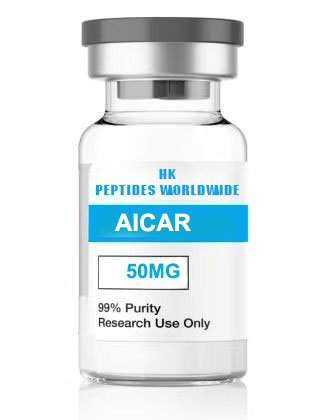
aicar 50 mg
Product Identity & Specifications
AICAR (5-Aminoimidazole-4-carboxamide ribonucleotide) 50 mg is the high-quantity research format of one of biomedical science’s most consequential pharmacological tools for probing AMP-activated protein kinase (AMPK) signaling. This 50 mg configuration provides sufficient compound for extended experimental protocols, chronic in-vivo administration studies, high-throughput screening campaigns, and large-volume cell culture investigations. As the direct metabolic precursor of the AMP-mimetic ZMP, AICAR remains the gold-standard small-molecule activator for interrogating cellular energy-sensing pathways.
| Specification | Detail |
|---|---|
| Full Chemical Name | 5-Aminoimidazole-4-carboxamide ribonucleotide |
| CAS Registry Number | 2627-69-2 |
| Molecular Formula | C₉H₁₅N₄O₈P |
| Molecular Weight | 338.21 g/mol |
| Synonyms | Acadesine, AICA Ribonucleotide, AICA-RP, ZMP prodrug |
| Purity (HPLC) | ≥98% |
| Physical Appearance | White to off-white lyophilized powder |
| Solubility | ≥10 mg/mL in H₂O, PBS, saline; ≥50 mg/mL in DMSO |
| Storage Condition | -20°C, desiccated, protected from light |
| Shelf Life (Lyophilized) | 24 months from date of manufacture |
| Research Use Classification | Research Use Only (RUO) — Not for human or veterinary use |
Reviewed by: HKPEPTIDE WORLDWIDE Research Team | Last Updated: August 08, 2026
Research Background
The AMPK Signaling Axis: A Central Regulator of Cellular Energy Homeostasis
AMP-activated protein kinase (AMPK) has emerged as one of the most intensively studied signaling kinases in eukaryotic biology, functioning as the principal sensor and regulator of cellular energy status. In response to metabolic stressors that elevate the AMP:ATP ratio — including nutrient deprivation, hypoxia, ischemia, and muscular contraction — AMPK orchestrates a comprehensive program of catabolic activation and anabolic suppression to restore energy balance. This central role has positioned AMPK as a therapeutic target of immense interest across metabolic disease, oncology, cardiovascular medicine, and aging research (Hardie, 2007; Steinberg & Kemp, 2009).
AICAR as a Pharmacological Probe: From Cardioprotection Agent to Metabolic Research Tool
The scientific trajectory of AICAR represents a compelling case study in drug repurposing within research tool development. Originally advanced to Phase III clinical trials by Gensia Pharmaceuticals (subsequently acquired by Schering-Plough) as “Acadesine” for the prevention of myocardial ischemia-reperfusion injury during coronary artery bypass grafting (CABG) surgery, the compound demonstrated mixed efficacy outcomes that ultimately precluded regulatory approval (Mangano et al., 1997; Newman et al., 1997). However, concurrent basic science investigations by D. Grahame Hardie’s laboratory at the University of Dundee revealed that AICAR’s mechanism of action — intracellular phosphorylation to the AMP-mimetic ZMP — provided a uniquely tractable method for pharmacological AMPK activation in intact cellular systems (Corton et al., 1995).
The Exercise Mimetic Concept and Beyond
A pivotal conceptual advance in AICAR research was formalized by Narkar and colleagues (2008) in their seminal Cell publication demonstrating that combinatorial AICAR and GW1516 (PPARδ agonist) treatment in sedentary mice recapitulated a substantial fraction of the transcriptional and metabolic adaptations to endurance exercise training. This “exercise mimetic” paradigm — the notion that pharmacological agents could partially substitute for the metabolic benefits of physical activity — generated intense scientific and public interest, catalyzing research programs across academic and pharmaceutical sectors aimed at developing AMPK-targeted interventions for metabolic syndrome, type 2 diabetes, and muscle wasting conditions (Narkar et al., 2008; Hawley et al., 2014).
Contemporary Research Landscape
The 50 mg AICAR format addresses the practical requirements of laboratories conducting sustained research programs in AMPK biology. Contemporary applications span from CRISPr-mediated dissection of AMPK subunit isoform function (α1/α2, β1/β2, γ1/γ2/γ3) to metabolomic and phosphoproteomic profiling of AICAR-responsive signaling networks. The compound continues to serve as a critical validation reagent in high-impact publications investigating the intersection of cellular energy sensing with autophagy regulation (via ULK1 phosphorylation), lipid metabolism (via ACC2), mitochondrial quality control (via mitophagy), and lifespan determination in model organisms (Apfeld et al., 2004; Egan et al., 2011; Kim et al., 2011).
Molecular Mechanisms
Mechanism 1: Adenosine Kinase-Mediated ZMP Accumulation and AMPK γ-Subunit Engagement
The obligate first step in AICAR pharmacology is cellular uptake via equilibrative nucleoside transporters (ENT1/ENT2), followed by phosphorylation at the 5’-hydroxyl position of the ribose moiety by adenosine kinase (ADK). This conversion yields ZMP (AICA ribonucleotide monophosphate), which accumulates to millimolar intracellular concentrations due to its resistance to deamination by AMP deaminase. ZMP competes with ATP for occupancy of the CBS3 nucleotide-binding pocket on the AMPK γ-subunit. At elevated ZMP:ATP ratios, ZMP occupancy at CBS3 induces a conformational shift that simultaneously enhances upstream kinase access to the α-subunit activation loop Thr172 residue and opposes dephosphorylation by protein phosphatases (PP2A/PP2C). This dual-lock mechanism ensures that AMPK activation is both rapid and sustained (Xiao et al., 2011; Gowans et al., 2013).
Mechanism 2: LKB1-STRAD-MO25 Complex Recruitment and Amplified Kinase Cascade
The tumor suppressor kinase LKB1 (STK11), in obligate heterotrimeric complex with the pseudokinase STRAD (STE20-related adaptor) and the scaffold protein MO25 (mouse protein 25), serves as the dominant upstream AMPK kinase in most tissues. AICAR-induced ZMP binding to AMPK γ facilitates the docking of the LKB1-STRAD-MO25 complex, increasing the local effective concentration of kinase activity at the AMPK α-subunit. Quantitative phosphoproteomic analyses have established that LKB1 accounts for approximately 70-80% of AICAR-stimulated AMPK Thr172 phosphorylation in liver and skeletal muscle, with the remaining fraction mediated by CaMKKβ in calcium-excitable tissues including neurons and endothelial cells (Hawley et al., 2003; Woods et al., 2003; Shaw et al., 2004).
Mechanism 3: ACC2 Inactivation and Mitochondrial Fatty Acid Flux
AICAR-activated AMPK directly phosphorylates acetyl-CoA carboxylase 2 (ACC2) at Ser212 (human numbering; Ser221 in rodent), the muscle- and heart-specific isoform localized to the mitochondrial outer membrane. ACC2 phosphorylation reduces its enzymatic activity by >80%, collapsing malonyl-CoA concentrations at the mitochondrial surface. Malonyl-CoA is the endogenous allosteric inhibitor of carnitine palmitoyltransferase I (CPT-1), and its depletion relieves this brake on long-chain fatty acyl-CoA import into the mitochondrial matrix. The functional consequence — a 2- to 4-fold stimulation of β-oxidation rate — has been confirmed across perfused hindlimb preparations, isolated cardiomyocyte suspensions, and hepatocyte cultures (Merrill et al., 1997; Abu-Elheiga et al., 2001; O’Neill et al., 2014).
Mechanism 4: Epigenetic Reprogramming via HDAC and SIRT1 Crosstalk
Emerging evidence from the past decade indicates that chronic AMPK activation by AICAR extends beyond acute metabolic adjustments to encompass epigenetic and transcriptional reprogramming. AMPK-mediated phosphorylation of class IIa histone deacetylases (HDAC4/5/7) at conserved serine residues (Ser259/Ser498 for HDAC5) promotes 14-3-3 protein binding and nuclear export, thereby relieving HDAC-mediated transcriptional repression. Concurrently, AMPK-driven increases in the NAD⁺:NADH ratio — a byproduct of enhanced fatty acid oxidation — activate the NAD⁺-dependent deacetylase SIRT1, which deacetylates and activates PGC-1α, FOXO transcription factors, and additional targets. This coordinated HDAC/SIRT1 axis underpins the gene expression programs governing mitochondrial biogenesis, antioxidant defense, and metabolic flexibility observed with sustained AICAR exposure (Cantó et al., 2009; Mihaylova et al., 2011; Jäger et al., 2007).
Research Applications
The AICAR 50 mg format supports a comprehensive range of biomedical research applications, including:
-
Extended In-Vivo Metabolic Phenotyping: Chronic AICAR administration protocols in rodent models (0.25–0.5 g/kg/day IP) for assessment of glucose tolerance, insulin sensitivity (hyperinsulinemic-euglycemic clamp), body composition (DEXA/MRI), and energy expenditure (indirect calorimetry). The 50 mg vial provides sufficient material for multi-week intervention studies.
-
High-Throughput Compound Screening: AMPK-targeted drug discovery programs utilizing AICAR as a positive control in 96- and 384-well plate formats for luminescent AMPK activity assays, GLUT4 translocation imaging, or phospho-ACC AlphaScreen readouts.
-
Tissue-Specific AMPK Pathway Analysis: Comparative studies of AMPK isoform function employing tissue-specific AMPK knockout mouse lines (α1-flox, α2-flox, β1-flox, β2-flox) crossed with Cre-driver strains to dissect the relative contributions of AMPK subunits to AICAR responsiveness in liver, muscle, adipose, and hypothalamus.
-
Ischemia-Reperfusion Research: Langendorff perfused heart and isolated cardiomyocyte models of simulated ischemia, with AICAR preconditioning protocols evaluating infarct size, mitochondrial permeability transition pore (mPTP) opening, and contractile function recovery.
-
Cancer Cell Metabolism: Investigation of the LKB1-AMPK-mTOR tumor suppressor axis, metabolic stress sensitivity in AMPK-deficient versus AMPK-proficient cancer cell lines, and synergy screens combining AICAR with chemotherapeutic agents.
-
Neurobiology Applications: Examination of hypothalamic AMPK signaling in feeding behavior, AICAR effects on neuronal energy sensing in primary cortical and hippocampal cultures, and neuroprotection in oxygen-glucose deprivation models.
Quality Control & Analytical Specifications
HKPEPTIDE WORLDWIDE maintains rigorous quality management for every batch of AICAR 50 mg:
| Analytical Method | Specification | Acceptance Criteria |
|---|---|---|
| HPLC Purity | RP-C18, 260 nm UV | ≥98.0% peak area |
| LC-MS Identity | ESI+ full scan | ⁺ 339.1 ± 0.5 Da; [M+Na]⁺ 361.1 Da |
| ¹H-NMR Conformation | 400 MHz, D₂O | Characteristic imidazole C2-H at δ 7.8; ribose anomeric H at δ 5.8 |
| Residual Solvents (GC-HS) | USP <467> Method IV | Class 1: not detected; Class 2/3: ≤0.5% individually |
| Water Content (Karl Fischer) | Coulometric | ≤5.0% w/w |
| Endotoxin (LAL) | Kinetic chromogenic, 0.005 EU/mL sensitivity | ≤1.0 EU/mg |
| Heavy Metals | ICP-MS | As ≤1.5 ppm, Cd ≤1.0 ppm, Hg ≤1.5 ppm, Pb ≤1.0 ppm |
| Appearance | Visual | White to off-white lyophilized powder |
| Solubility | 10 mg/mL in H₂O, 37°C | Clear, colorless solution within 2 min |
| Bioactivity | p-AMPKα (Thr172) ELISA, C2C12, 1 h | ≥3.5-fold increase vs. vehicle at 1 mM |
Available Configurations
| Product Variant | Catalog Number | Quantity | Format | Recommended Use |
|---|---|---|---|---|
| AICAR 5 mg | AIC-005-USA | 5 mg | Single vial | Pilot studies, small-scale assays |
| AICAR 50 mg (current page) | AIC-050-USA | 50 mg | Single vial | Extended protocols, in-vivo models, HTS |
| AICAR Bulk | AIC-BULK-USA | Custom | Custom | Institutional procurement; contact HKPEPTIDE WORLDWIDE |
Frequently Asked Questions (FAQ)
1. What is the difference between AICAR 5 mg and AICAR 50 mg formats?
The AICAR 50 mg vial contains ten times the lyophilized compound mass of the 5 mg format, providing tenfold greater experimental capacity. This format is specifically intended for laboratories conducting high-throughput screening campaigns in 96- or 384-well platforms, extended chronic in-vivo administration protocols in rodent models, or large-volume cell culture experiments requiring multiple independent biological replicates. Both formats are manufactured under identical quality management systems and meet the same ≥98% purity specification. Researchers with modest in-vitro requirements may find the 5 mg format more economical, while those executing comprehensive experimental programs benefit from the 50 mg configuration.
2. How many in-vivo rodent experiments can the AICAR 50 mg format support?
At a standard acute intraperitoneal dose of 0.5 g/kg body weight, a single 50 mg vial provides sufficient compound for a 100 g rat (single administration). For chronic studies in mice employing daily doses of 0.25 g/kg, the 50 mg format supports approximately 8-10 daily doses in a 25 g mouse model. Researchers should calculate specific requirements based on their protocol’s dosing regimen, number of experimental groups, and duration of administration. Pre-formulation of daily aliquots from a single reconstitution is recommended to minimize freeze-thaw variability.
3. What are the recommended solvent and storage conditions for AICAR 50 mg?
Lyophilized AICAR 50 mg powder must be stored at -20°C in a desiccated, light-protected environment, achieving 24-month stability. For in-vitro reconstitution, sterile nuclease-free water, PBS (pH 7.4), or appropriate cell culture medium is recommended. The compound is freely soluble at ≥10 mg/mL in aqueous solvents. For in-vivo administration, sterile 0.9% saline is the standard vehicle. Upon reconstitution, prepare single-use or limited-use aliquots in sterile polypropylene tubes, store at -20°C, and utilize within 30 days. DMSO stock solutions at 50-100 mg/mL may be prepared for cell culture applications, with final DMSO concentration kept ≤0.1% v/v. Avoid repeated freeze-thaw cycles.
4. What analytical documentation accompanies AICAR 50 mg orders?
Every AICAR 50 mg shipment from HKPEPTIDE WORLDWIDE is accompanied by a batch-specific Certificate of Analysis (CoA) documenting the complete quality control testing suite: reverse-phase HPLC purity (≥98% at 260 nm), LC-MS identity confirmation (m/z 339.1 ⁺; m/z 361.1 [M+Na]⁺), residual solvent analysis by GC-HS per USP <467>, water content by Karl Fischer coulometric titration (≤5.0% w/w), Limulus amebocyte lysate (LAL) endotoxin quantification (≤1.0 EU/mg), and macroscopic appearance assessment. Additional analytical data, including ¹H-NMR spectra and heavy metal analysis (ICP-MS), are available upon request. Researchers may contact our Quality Control department for historical batch trending data.
5. Can AICAR 50 mg be used in combination with other AMPK modulators in research?
Absolutely. AICAR 50 mg is routinely deployed in sophisticated pharmacological study designs incorporating complementary tools for pathway validation and mechanistic dissection. Common combinatorial approaches include: (a) co-treatment with the AMPK inhibitor dorsomorphin (Compound C) at 5-20 μM to confirm AMPK-dependence of observed phenotypes; (b) pairing with metformin or phenformin to compare direct (ZMP-mediated) versus indirect (Complex I inhibition-mediated) AMPK activation; (c) A-769662 co-application to achieve supra-physiological AMPK activation via simultaneous allosteric (β-subunit) and phosphorylation-dependent mechanisms; (d) rapamycin co-treatment to distinguish AMPK-mTOR axis effects from mTOR-independent signaling outputs. These combinatorial paradigms are essential for rigorous AMPK pathway research.
References & Further Reading
-
Corton, J. M., Gillespie, J. G., Hawley, S. A., & Hardie, D. G. (1995). 5-Aminoimidazole-4-carboxamide ribonucleoside: A specific method for activating AMP-activated protein kinase in intact cells? European Journal of Biochemistry, 229(2), 558–565.
-
Hardie, D. G. (2007). AMP-activated/SNF1 protein kinases: Conserved guardians of cellular energy. Nature Reviews Molecular Cell Biology, 8(10), 774–785.
-
Hardie, D. G., Ross, F. A., & Hawley, S. A. (2012). AMPK: A nutrient and energy sensor that maintains energy homeostasis. Nature Reviews Molecular Cell Biology, 13(4), 251–262.
-
Narkar, V. A., Downes, M., Yu, R. T., Embler, E., Wang, Y. X., Banayo, E., Mihaylova, M. M., Nelson, M. C., Zou, Y., Juguilon, H., Kang, H., Shaw, R. J., & Evans, R. M. (2008). AMPK and PPARδ agonists are exercise mimetics. Cell, 134(3), 405–415.
-
Xiao, B., Sanders, M. J., Underwood, E., Heath, R., Mayer, F. V., Carmena, D., Jing, C., Walker, P. A., Eccleston, J. F., Haire, L. F., Saiu, P., Howell, S. A., Aasland, R., Martin, S. R., Carling, D., & Gamblin, S. J. (2011). Structure of mammalian AMPK and its regulation by ADP. Nature, 472(7342), 230–233.
-
Merrill, G. F., Kurth, E. J., Hardie, D. G., & Winder, W. W. (1997). AICA riboside increases AMP-activated protein kinase, fatty acid oxidation, and glucose uptake in rat muscle. American Journal of Physiology, 273(6), E1107–E1112.
-
Jørgensen, S. B., Viollet, B., Andreelli, F., Frøsig, C., Birk, J. B., Schjerling, P., Vaulont, S., Richter, E. A., & Wojtaszewski, J. F. (2004). Knockout of the α2 but not α1 5’-AMP-activated protein kinase isoform abolishes AICAR- but not contraction-induced glucose uptake in skeletal muscle. Journal of Biological Chemistry, 279(2), 1070–1079.
-
Hawley, S. A., Boudeau, J., Reid, J. L., Mustard, K. J., Udd, L., Mäkelä, T. P., Alessi, D. R., & Hardie, D. G. (2003). Complexes between the LKB1 tumor suppressor, STRADα/β and MO25α/β are upstream kinases in the AMP-activated protein kinase cascade. Journal of Biology, 2(4), 28.
-
Cantó, C., Gerhart-Hines, Z., Feige, J. N., Lagouge, M., Noriega, L., Milne, J. C., Elliott, P. J., Puigserver, P., & Auwerx, J. (2009). AMPK regulates energy expenditure by modulating NAD⁺ metabolism and SIRT1 activity. Nature, 458(7241), 1056–1060.
-
Gowans, G. J., Hawley, S. A., Ross, F. A., & Hardie, D. G. (2013). AMP is a true physiological regulator of AMP-activated protein kinase by both allosteric activation and enhancing net phosphorylation. Cell Metabolism, 18(4), 556–566.
-
Mihaylova, M. M., Vasquez, D. S., Ravnskjaer, K., Denechaud, P. D., Yu, R. T., Alvarez, J. G., Downes, M., Evans, R. M., Montminy, M., & Shaw, R. J. (2011). Class IIa histone deacetylases are hormone-activated regulators of FOXO and mammalian glucose homeostasis. Cell, 145(4), 607–621.
-
O’Neill, H. M., Lally, J. S., Galic, S., Thomas, M., Azizi, P. D., Fullerton, M. D., Smith, B. K., Pulinilkunnil, T., Chen, Z., Samaan, M. C., Jorgensen, S. B., Dyck, J. R., Holloway, G. P., Hawke, T. J., van Denderen, B. J., Kemp, B. E., & Steinberg, G. R. (2014). AMPK phosphorylation of ACC2 is required for skeletal muscle fatty acid oxidation and insulin sensitivity in mice. Diabetologia, 57(8), 1693–1702.
Related Research & Resources
| Resource | Description |
|---|---|
| Glp 1 Metabolic Peptides Hub | Complete research overview & methodology hub |
| Aicar 5 Mg Research Compound Usa | Related research peptide product |
| Aicar 50 Mg Research Compound Usa | Related research peptide product |
| Glp 1 Peptides Metabolic Research | Latest research insights & methodology |
View Complete Research Guide »
Compliance Statement
AICAR 50 mg is manufactured and supplied exclusively as a Research Use Only (RUO) product for in-vitro laboratory investigations and preclinical research in qualified scientific facilities. This product is not manufactured under current Good Manufacturing Practice (cGMP) standards and is not intended, approved, or labeled for human administration, veterinary use, clinical diagnosis, therapeutic intervention, or any form of medical application. Researchers are responsible for compliance with all applicable federal, state, and institutional regulations governing laboratory chemical handling, storage, use, and disposal, including but not limited to OSHA laboratory standards and EPA hazardous waste guidelines. The purchasing researcher bears sole responsibility for ensuring that research protocols involving this compound have received appropriate Institutional Animal Care and Use Committee (IACUC) or Institutional Biosafety Committee (IBC) approval where applicable. HKPEPTIDE WORLDWIDE expressly disclaims any liability arising from the misuse, diversion, or unauthorized application of this research compound. By acquiring this product, the researcher acknowledges and agrees to these terms of use.
For technical inquiries, batch-specific analytical documentation, or institutional volume pricing, please contact the HKPEPTIDE WORLDWIDE Research Support Team.